The aim of these guidelines is to provide a comprehensive range of evidence-based recommendations for interventions to be applied during the pre-, intra- and postoperative periods for the prevention o
This manual is part of a series of resources for improving the quality of care for severely ill children in health facilities. It supports the improved use and availability of oxygen therapy in low re
This third global survey of the WHO Global Observatory for eHealth (GOe) investigates how eHealth can support universal health coverage (UHC) in Member States. A total of 125 countries participated in
The Technical Series on Safer Primary Care is a series of nine monographs, which explore the magnitude and nature of harm in the primary care setting from a number of different angles, and through thi
The purpose of this handbook is to provide guidance to Member States on the practical aspects of maintaining sanitary standards at international borders at ports, airports, and ground crossings (point
This publication presents the results of a survey of the quality of 13 essential but overlooked life-saving commodities identified by the UN Commission on Life-Saving Commodities for Women and Childre
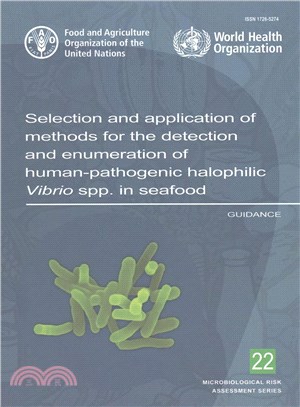
One of the challenges in the development of global risk assessments for halophilic Vibrio spp. has been the availability of appropriate datasets from around the world which could be considered to be r
Within the continuum of reproductive health care, antenatal care provides a platform for important health-care functions, including health promotion, screening and diagnosis, and disease prevention. I
Infectious disease outbreaks are frequently characterized by scientific uncertainty, social and institutional disruption, and an overall climate of fear and distrust. Invariably, the countries most af
As called for by the Sustainable Development Goals, Ministries of health and others involved in the delivery and design of health programs in all countries are grappling with the question of how to en
This report represents the conclusions of a Joint FAO/WHO Expert Committee convened to evaluate the safety of residues of certain veterinary drugs in food and to recommend maximum levels for such resi
This report identifies the current issues, challenges and opportunities in low-resource settings regarding the production and lifecycle of medical devices. It builds on the findings from phase I, whic
The objective of the compendium series of innovative medical devices, assistive devices and eHealth solutions is to provide a neutral platform for technologies which are likely to be suitable for use
This volume contains monographs prepared at the eightieth meeting of the Joint FAO/WHO Expert Committee on Food Additives (JECFA), which met in Rome, Italy, from 16 to 25 June 2015.The toxicological a
This report presents the recommendations of a WHO Expert Committee commissioned to coordinate activities leading to the adoption of international recommendations for the production and control of vacc
This study provides an approximate estimate of how much disease can be prevented by reducing the environmental risks to health. It includes a meta-synthesis of key evidence relating diseases and injur
The third global survey on eHealth conducted by the WHO Global Observatory for eHealth (GOe)1 has a special focus--the use of eHealth in support of universal health coverage. eHealth plays a vital rol
This is the second, updated version of the WHO's Clinical Management of Patients with Viral Haemorrhagic Fever: A Pocket Guide for Front-line Health Workers. Interim Emergency Guidance for Country Ada
This first WHO Global report on diabetes underscores the enormous scale of the diabetes problem, and also the potential to reverse current trends. The political basis for concerted action to address d
The first version of the WHO Malaria Microscopy Quality Assurance Manual (2009) was based on recommendations made at a series of informal consultations organized by WHO, particularly a bi-regional mee
This report represents the conclusions of a Joint FAO/WHO Expert Committee convened to evaluate the safety of various food additives and contaminants and to prepare specifications for identity and pur
In the face of recent pandemic threats (severe acute respiratory syndrome (SARS) avian influenza A H5N1pandemic influenza A H1N1 and the 2014 Ebola virus disease outbreak) and disasters in general deb
The toxicological monographs and monograph addenda contained in this volume were prepared by a WHO Core Assessment Group on Pesticide Residues that met with the FAO Panel of Experts on Pesticide Resid
This 48th edition, including amendments adopted up to 31 December 2014, brings together into one volume essential documents concerning the governance of the World Health Organization, including the Co
This report provides a comprehensive and up-to-date assessment of the TB epidemic and progress in implementing and financing TB prevention, care and control at global, regional and country levels usin
The WHO Expert Committee on Drug Dependence (ECDD) is responsible for assessing psychoactive substances for possible control under the international drug control conventions. The ECDD reviews the ther
This report aims to describe global health in 2015, looking back 15 years at the trends and positive forces during the MDG era and assessing the main challenges for the coming 15 years. The following
Cannabis is globally the most commonly used psychoactive substance under international control. In 2013, an estimated 181.8 million people aged 15-64 years used cannabis for nonmedical purposes global
The goal of the present guideline is to consolidate guidance for effective interventions that are needed to reduce the global burden of maternal infections and its complications around the time of chi
This WHO Global report on psoriasis brings the public health impact of psoriasis into focus. The report is written to help raise awareness of the range of ways that psoriasis can affect peoples' lives
The World Health Organization (WHO) Expert Committee on Specifications for Pharmaceutical Preparations advises the Director-General of WHO in the area of medicines quality assurance. It provides indep
This document presents the World Health Organization (WHO) Operational framework for building climate resilient health systems. The framework responds to the demand from Member States and partners for
This guide provides a full range of updated, evidence-based norms and standards that will enable health care providers to give high quality care during pregnancy, delivery and in the postpartum period
Up to now, the global burden of illness and deaths caused by foodborne disease has never been quantified. In order to fill this data vacuum, the World Health Organization (WHO) together with its part
This report is the first of its kind to measure health service coverage and financial protection to assess countries’ progress towards universal health coverage. It shows that at least 400 million peo
WHO’s Mental Health Atlas series has already established itself as the single most comprehensive and most widely used source of global information on the mental health situation. This new edition ofMe
This fifth edition of the Guidelines for surveillance of drug resistance in tuberculosis is an updated version of earlier editions published in 1994, 1997, 2003 and 2009. The document takes into accou
The goal of this course is to provide participants with the foundational skills needed to begin the development, implementation and ongoing improvement of a congenital anomalies surveillance program,
This document describes the current situation faced by many children with mental and intellectual disabilities in institutional (including mental health and social care facilities) settings in differe
This volume and previous volumes of JMPR toxicological evaluations, many of which were published in the FAOPlant Production and Protection Paper series, contain information that is useful to companies