A "marvelous" (Sports Illustrated) portrait of the three men whose lives were forever changed by WWI-era Boston and the Spanish flu: baseball star Babe Ruth, symphony conductor Karl Muck, and Harvard
From a Harvard scholar and former Obama official, a powerful proposal for curtailing violent crime in America Urban violence is one of the most divisive and allegedly intractable issues of our time,
A genetics professor at Harvard Medical School explains why he supports engineering genomes to make existing organisms more useful and describes how synthetic biology can create new life forms and re
In Leading Minds, Gardner and his research associate at Harvard Project Zero, Emma Laskin, apply a cognitive lens to leadership, drawing on Gardner’s groundbreaking work on intelligence and creativity
A Harvard Business Review Top-10 Business Book of 2001Gonzo Marketing is a knuckle-whitening ride to the place where social criticism, biting satire, and serious commerce meet--and where the outdated
Hobson (psychiatry, Harvard) and Leonard (medical journalist) examine how traditional approaches have led to the current debate over the treatment of patients with severe mental disorders, and they of
Offers a less conventional approach to the art of management as devised by a Harvard Business School professor, identifying ambition as a key ingredient while noting several contemporary and historica
Harvard psychologist Howard Gardner has been acclaimed as the most influential educational theorist since John Dewey. His ideas about intelligence and creativity - explicated in such bestselling book
The world-famous Harvard psychologist challenges many of psychology’s most deeply held assumptions about human development—arguing, for example, that early experience does not inexorably shape our liv
In this landmark work on corporate power, especially as it relates to women, Rosabeth Moss Kanter, the distinguished Harvard management thinker and consultant, shows how the careers and self-images o
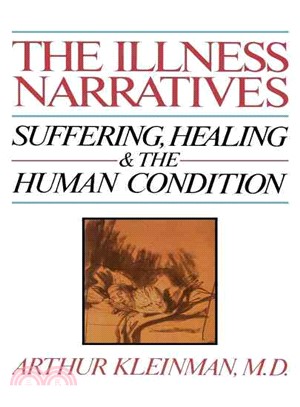
A Harvard psychiatrist and anthropologist argues that interpreting the illness experience is an art tragically neglected by modern medical training, and presents a compelling case for bridging the ga
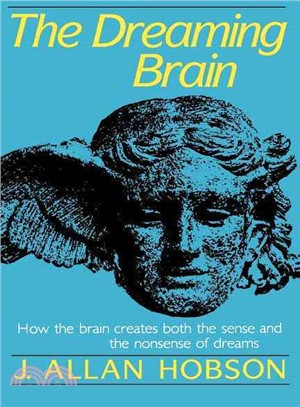
A Harvard Medical School psychiatrist and neuroscientist shows how dream science draws on psychology and neurobiology to provide new insight into the nature of the human mind.
Drawing on his experience in the MIT-Harvard Public Disputes Program, a leading mediator and his co-author provide the first jargon-free guide to consensual strategies for resolving public disputes—in
What makes a good school? A prominent Harvard educator looks for the answers in six schools that have earned reputations for excellence: George Washington Carver High School in Atlanta; John F. Kenned
With profound insight into the complexities of the human experience, Harvard psychologist Gordon Allport organized a mass of research to produce a landmark study on the roots and nature of prejudice.
Why do three out of four professional football players go bankrupt? How can illiterate jungle dwellers pass a test that tricks Harvard philosophers? And why do billionaires work so hard?only to give t
The only person in the history of the American Psychological Association to have won all three of its highest honors chronicles his life, from his impoverished upbringing to his tenure as a Harvard re
This volume developed out of the lecture notes from a course taught by Miron (Harvard U. and the Cato Institute) on "A Libertarian Perspective on Economic and Social Policy." It is organized as an A-t
The founder and director of the Yale Repertory Theater, as well as Harvard’s American Repertory Theater, and a drama critic for more than thirty years, Robert Brustein is a living legend in the
From respected academics like Carol Gilligan to pop-psych gurus like John Gray, and even the controversial Harvard President Lawrence Summers, the message has long been the same: Men and women are fu
This award-winning book by a Harvard landscape architect proves how important it is to understand the natural settings of cities—their air, water, geology, plant, and animal life—to create better, mor