Josephus, soldier, statesman, historian, was a Jew born at Jerusalem about 37 CE. A man of high descent, he early became learned in Jewish law and Greek literature and was a Pharisee. After pleading i
Josephus, soldier, statesman, historian, was a Jew born at Jerusalem about 37 CE. A man of high descent, he early became learned in Jewish law and Greek literature and was a Pharisee. After pleading i
Josephus, soldier, statesman, historian, was a Jew born at Jerusalem about 37 CE. A man of high descent, he early became learned in Jewish law and Greek literature and was a Pharisee. After pleading i
The Africans who came to ancient Greece and Italy participated in an important chapter of classical history. Although evidence indicated that the alien dark- and black-skinned people were of varied tr
An innovator in contemporary thought on economic and political development looks here at decline rather than growth. Albert O. Hirschman makes a basic distinction between alternative ways of reacting
Anthropologist Jean Briggs spent seventeen months living on a remote Arctic shore as the "adopted daughter" of an Eskimo family. Through vignettes of daily life she unfolds a warm and perceptive tale
Examines Shakespeare's development as a comic playwright through a critical analysis of the increasing complexity of characterization and comic devices apparent in his plays
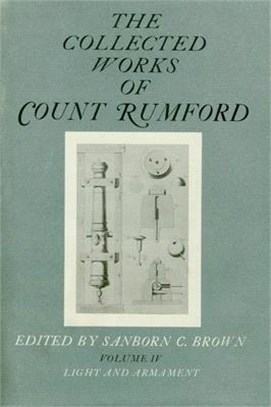
Like his countrymean and contemporary Franklin, Benjamin Thompson (later Count Rumford) aimed by his inventions and scientific research to increase the degree of comfort in daily life. During fourteen
From later antiquity down to the close of the eighteenth century, most philosophers and men of science and, indeed, most educated men, accepted without question a traditional view of the plan and str
A. Cornelius Celsus was author, probably during the reign of the Roman Emperor Tiberius (14?37 CE), of a general encyclopaedia of agriculture, medicine, military arts, rhetoric, philosophy, and jurisp
A. Cornelius Celsus was author, probably during the reign of the Roman Emperor Tiberius (14?37 CE), of a general encyclopaedia of agriculture, medicine, military arts, rhetoric, philosophy, and jurisp
Hippocrates, said to have been born in Cos in or before 460 BCE, learned medicine and philosophy; travelled widely as a medical doctor and teacher; was consulted by King Perdiccas of Macedon and Artax
Seneca, Lucius Annaeus, born at Corduba (Cordova) ca. 4 BCE, of a prominent and wealthy family, spent an ailing childhood and youth at Rome in an aunt's care. He became famous in rhetoric, philosophy,
This is the first of two volumes giving a selection of Greek papyri relating to private and public business. They cover a period from before 300 BCE to the eighth century CE. Most were found in rubbis
Vitruvius (Marcus V. Pollio), Roman architect and engineer, studied Greek philosophy and science and gained experience in the course of professional work. He was one of those appointed to be overseers
Sidonius Apollinaris, a Gallo-Roman, was born at Lugdunum (Lyon) about 430 CE. He married Papianilla, daughter of the Emperor Avitus in whose honour he recited at Rome on 1 January 456 a panegyric in
Dionysius of Halicarnassus was born before 53 BCE and went to Italy before 29 BCE. He taught rhetoric in Rome while studying the Latin language, collecting material for a history of Rome, and writing.
On Development is, as John Tyler Bonner says, “a book on ideas,” the ideas at stake in the contest to unravel the mechanisms of life. This fluent discussion of developmental biology synthesizes decade
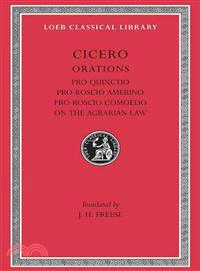
Cicero (Marcus Tullius, 106?43 BCE), Roman lawyer, orator, politician and philosopher, of whom we know more than of any other Roman, lived through the stirring era which saw the rise, dictatorship, an
The philosopher Philo was born about 20 BCE to a prominent Jewish family in Alexandria, the chief home of the Jewish Diaspora as well as the chief center of Hellenistic culture; he was trained in Gree
The philosopher Philo was born about 20 BCE to a prominent Jewish family in Alexandria, the chief home of the Jewish Diaspora as well as the chief center of Hellenistic culture; he was trained in Gree
The philosopher Philo was born about 20 BCE to a prominent Jewish family in Alexandria, the chief home of the Jewish Diaspora as well as the chief center of Hellenistic culture; he was trained in Gree
The Younger Pliny was born in 61 or 62 CE, the son of Lucius Caecilius of Comum (Como) and the Elder Pliny's sister. He was educated at home and then in Rome under Quintilian. He was at Misenum at the
Strabo (ca. 64 BCE to ca. 25 CE), an Asiatic Greek of Amasia in Pontus, studied at Nysa and after 44 BCE at Rome. He became a keen traveller who saw a large part of Italy, various near eastern regions
Libanius (314–393 CE) was one of the last great publicists and teachers of Greek paganism. His story, as presented in his Autobiography and the Life by Eunapius, is supplemented by information from a
Pliny the Elder, tireless researcher and writer, is author of the encyclopedic Natural History, in 37 books, an unrivaled compendium of Roman knowledge. The contents of the books are as follows. Book
Rischin paints a vivid picture of Jewish life in New York at the turn of the century. Here are the old neighborhoods and crowded tenements, the Rester Street markets, the sweatshops, the birth of Yidd
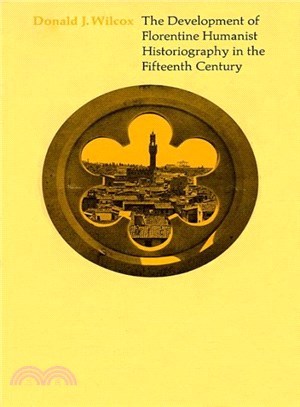
Presenting a new interpretation of humanist historiography, Donald J. Wilcox traces the development of the art of historical writing among Florentine humanists in the fifteenth century. He focuses on
Augustinus (354?430 CE), son of a pagan, Patricius of Tagaste in North Africa, and his Christian wife Monica, while studying in Africa to become a rhetorician, plunged into a turmoil of philosophical
This discussion considers the iconographic features and radiocarbon dates of two small wood figures reportedly found in the vicinity of Texcoco. One figure represents the water goddess Chalchiuhtlicue
Olsen's invaluable manual presents diagnostic characteristics of the fish, amphibian, and reptile bones commonly found in archaeological sites in the southeastern and southwestern United Stares. An ap
Most of Barnard's career was spent in executive practice. A Mount Hermon and Harvard education, cut off short of the bachelor's degree, was followed by nearly forty years in the American Telephone &
Strabo (ca. 64 BCE to ca. 25 CE), an Asiatic Greek of Amasia in Pontus, studied at Nysa and after 44 BCE at Rome. He became a keen traveller who saw a large part of Italy, various near eastern regions
The wonderful achievement of Greek mathematics is here illustrated in two volumes of selected mathematical works. Volume I (Loeb Classical Library no. 335) contains: The divisions of mathematics; math
Pliny the Elder, tireless researcher and writer, is author of the encyclopedic Natural History, in 37 books, an unrivaled compendium of Roman knowledge. The contents of the books are as follows. Book
Aristotle, great Greek philosopher, researcher, reasoner, and writer, born at Stagirus in 384 BCE, was the son of Nicomachus, a physician, and Phaestis. He studied under Plato at Athens and taught the
A classic and invaluable reference work for over thirty years. Soon after its initial publication, the Harvard Dictionary of Music by Willi Apel was firmly established as a standard and essential reso
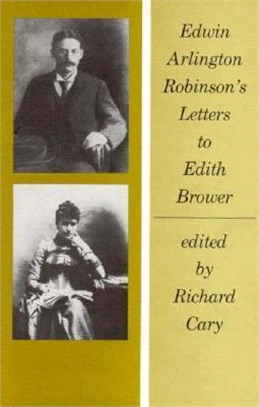
This volume contains 189 hitherto unpublished letters by Edwin Arlington Robinson. They were written between 1897 and 1930 to one of his first admirers, Edith Brower of Pennsylvania.The letters begin
An astonishing variety of theatrical performances may be seen today in the eight countries of Southeast Asia—Burma, Cambodia, Indonesia, Laos, Malaysia, the Philippines, Thailand, and Vietnam. James B
Cicero (Marcus Tullius, 106?43 BCE), Roman lawyer, orator, politician and philosopher, of whom we know more than of any other Roman, lived through the stirring era which saw the rise, dictatorship, an