Augustinus (354?430 CE), son of a pagan, Patricius of Tagaste in North Africa, and his Christian wife Monica, while studying in Africa to become a rhetorician, plunged into a turmoil of philosophical
Plotinus (204/5-270 CE) was the first and greatest of Neoplatonic philosophers. His writings were edited by his disciple Porphyry, who published them many years after his master's death in six sets of
Cannibals All! got more attention in William Lloyd Garrison's Liberator than any other book in the history of that abolitionist journal. And Lincoln is said to have been more angered by George Fitzhu
One of the most influential and important scientific works ever written, the 1865 paper “Experiments in Plant Hybridisation” was all but ignored in its day, and its author, Austrian priest and scienti
Columella (Lucius Iunius Moderatus) of Gades (Cadiz) lived in the reigns of the first emperors to about 70 CE. He moved early in life to Italy where he owned farms and lived near Rome. It is probable
Augustinus (354?430 CE), son of a pagan, Patricius of Tagaste in North Africa, and his Christian wife Monica, while studying in Africa to become a rhetorician, plunged into a turmoil of philosophical
Nonnos of Panopolis in Egypt, who lived in the fifth century of our era, composed the last great epic poem of antiquity. The Dionysiaca, in 48 books, has for its chief theme the expedition of Dionysus
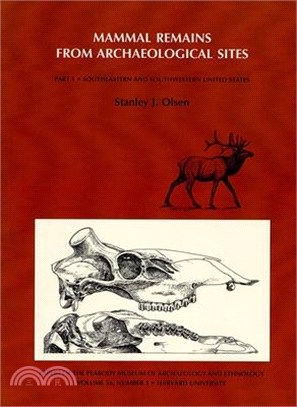
This classic work provides a guide to the identification of nonhuman animal bones. Olsen illustrates various diagnostic characteristics of rodents and dogs; jaguars and other members of the cat family
Jerome (Eusebius Sophronius Hieronymus), ca. 345–420, of Stridon, Dalmatia, son of Christian parents, at Rome listened to rhetoricians, legal advocates, and philosophers, and in 360 was baptized by Po
Augustinus (354?430 CE), son of a pagan, Patricius of Tagaste in North Africa, and his Christian wife Monica, while studying in Africa to become a rhetorician, plunged into a turmoil of philosophical
The effect of this "single, immortal, and dubious anecdote," and others like it, has made this book one of the most influential in the history of American folklore. Originally published as an eighty-p
Quintus was a poet who lived at Smyrna some four hundred years after Christ. His work, in fourteen books, is a bold and generally underrated attempt in Homer's style to complete the story of Troy from
Augustinus (354?430 CE), son of a pagan, Patricius of Tagaste in North Africa, and his Christian wife Monica, while studying in Africa to become a rhetorician, plunged into a turmoil of philosophical
The Library provides in three books a grand summary of traditional Greek mythology and heroic legends. Written in clear and unaffected style, the compendium faithfully follows the Greek literary sourc
Aelian (Claudius Aelianus), a Roman born ca. AD 170 at Praeneste, was a pupil of the rhetorician Pausanias of Caesarea, and taught and practised rhetoric. Expert in Attic Greek, he became a serious sc
For scientist and layman alike this book provides vivid evidence that the Copernican Revolution has by no means lost its significance today. Few episodes in the development of scientific theory show
Callimachus of Cyrene, 3rd century BCE, became after 284 a teacher of grammar and poetry at Alexandria. He was made a librarian in the new library there and prepared a catalogue of its books. He died
The philosopher Philo was born about 20 BCE to a prominent Jewish family in Alexandria, the chief home of the Jewish Diaspora as well as the chief center of Hellenistic culture; he was trained in Gree
The philosopher Philo was born about 20 BCE to a prominent Jewish family in Alexandria, the chief home of the Jewish Diaspora as well as the chief center of Hellenistic culture; he was trained in Gree
The ninety-three letters—and the poems, over thirty in all, which she included in the letters or sent in place of them—written by Emily Dickinson to her dear friends the Hollands, are intimate, sponta
Quintus Curtius was apparently a rhetorician who lived in the first century of the Roman empire and, early in the reign of Claudius (41?54 CE), wrote a history of Alexander the Great in 10 books in cl
One of the best loved of the American spirituals is here interpreted by an artist whose birthright is an authentic understanding of the spirituals. He gives us that understanding in terms of an art ha
Dionysius of Halicarnassus was born before 53 BCE and went to Italy before 29 BCE. He taught rhetoric in Rome while studying the Latin language, collecting material for a history of Rome, and writing.
Successfully used for a number of years by more than four hundred psychologists and psychiatrists, this set of pictures designed to reveal the determinants of psychological conflict is now made availa
Augustinus (354–430 CE), son of a pagan, Patricius of Tagaste in North Africa, and his Christian wife Monica, while studying in Africa to become a rhetorician, plunged into a turmoil of philosophical
Bede 'the Venerable,' English theologian and historian, was born in 672 or 673 CE in the territory of the single monastery at Wearmouth and Jarrow. He was ordained deacon (691?2) and priest (702?3) of
The philosopher Philo was born about 20 BCE to a prominent Jewish family in Alexandria, the chief home of the Jewish Diaspora as well as the chief center of Hellenistic culture; he was trained in Gree
Hippocrates, said to have been born in Cos in or before 460 BCE, learned medicine and philosophy; travelled widely as a medical doctor and teacher; was consulted by King Perdiccas of Macedon and Artax
Dio Cassius (Cassius Dio), ca. 150? 235 CE, was born at Nicaea in Bithynia in Asia Minor. On the death of his father (Roman governor of Cilicia) he went in 180 to Rome, entered the Senate, and under t
Aulus Gellius (ca. 123?170 CE) is known almost wholly from his Noctes Atticae, 'Attic Nights', so called because it was begun during the nights of an Attic winter. The work collects in twenty books (o
Seneca, Lucius Annaeus, born at Corduba (Cordova) ca. 4 BCE, of a prominent and wealthy family, spent an ailing childhood and youth at Rome in an aunt's care. He became famous in rhetoric, philosophy,
The Scriptores Historiae Augustae, or Historia Augusta, is a collection of biographies of Roman emperors, heirs, and claimants from Hadrian to Numerianus (117? 284 CE). The work, which is modeled on S
Hippocrates, said to have been born in Cos in or before 460 BCE, learned medicine and philosophy; travelled widely as a medical doctor and teacher; was consulted by King Perdiccas of Macedon and Artax
Of the distinguished Lemnian family of Philostrati, Flavius Philostratus 'the Athenian', ca. 170?205 CE, was a Greek sophist who studied at Athens and later lived in Rome. He was author of the admirab
Seneca, Lucius Annaeus, born at Corduba (Cordova) ca. 4 BCE, of a prominent and wealthy family, spent an ailing childhood and youth at Rome in an aunt's care. He became famous in rhetoric, philosophy,
The correspondence of Fronto--a much admired orator and rhetorician who was befriended by the emperor Antoninus Pius and teacher of his adopted sons Marcus Aurelius and Lucius Verus--offers an invalua
The correspondence of Fronto--a much admired orator and rhetorician who was befriended by the emperor Antoninus Pius and teacher of his adopted sons Marcus Aurelius and Lucius Verus--offers an invalua
Clement of Alexandria, famous Father of the Church, is known chiefly from his own works. He was born, perhaps at Athens, about 150 CE, son of non-Christian parents; he converted to Christianity probab
Dio Cassius (Cassius Dio), ca. 150? 235 CE, was born at Nicaea in Bithynia in Asia Minor. On the death of his father (Roman governor of Cilicia) he went in 180 to Rome, entered the Senate, and under t