Aristotle of Stagirus (384–322 BCE), the great Greek philosopher, researcher, logician, and scholar, studied with Plato at Athens and taught in the Academy (367–347). Subsequently he spent three years
Aristotle of Stagirus (384–322 BCE), the great Greek philosopher, researcher, logician, and scholar, studied with Plato at Athens and taught in the Academy (367–347). Subsequently he spent three years
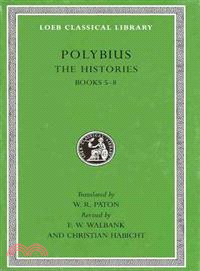
The historian Polybius (ca. 200–118 BCE) was born into a leading family of Megalopolis in the Peloponnese and served the Achaean League in arms and diplomacy for many years, favoring alliance with Rom
What survives from the Roman Empire is largely the words and lives of the rich and powerful: emperors, philosophers, senators. Yet the privilege and decadence often associated with the Roman elite was
Read the Bldg Blog interview with Mary Beard about the Wonders of the World series(Part I and Part II)Westminster Abbey is the most complex church in existence. National cathedral, coronation church,
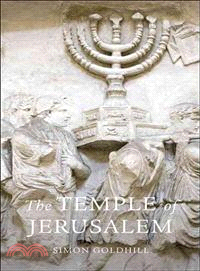
Read the Bldg Blog interview with Mary Beard about the Wonders of the World series(Part I and Part II)It was destroyed nearly 2000 years ago, and yet the Temple of Jerusalem--cultural memory, symbol,
For many of the 200,000 black soldiers sent to Europe with the American Expeditionary Forces in World War I, encounters with French civilians and colonial African troops led them to imagine a world be
With so much at stake and so much already lost, why did World War I end with a whimper—an arrangement between two weary opponents to suspend hostilities? After more than four years of desperate fighti
Bellah (emeritus, sociology, U. of California-Berkeley) explores how religious observances change people's perception of the world, and argues that the change is intertwined with human evolution for a
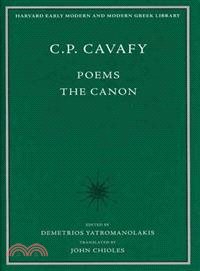
C.P. Cavafy (Konstantinos Petrou Kavafis) is one of the most important Greek poets since antiquity. He was born, lived, and died in Alexandria (1863-1933), with brief periods spent in England, Constan
Hosking (retired, Russian history, U. College London) necessarily draws with broad strokes as he profiles one of the largest, strongest, and oldest cultures on the planet. He warns Western policy make
Surgical Anatomy of the Head and Neck was immediately hailed as indispensable when it was first published in 2001. In demand ever since, this classic surgical atlas—packed with more than 700 exception
Understanding the causes of the racial achievement gap in American education—and then addressing it with effective programs—is one of the most urgent problems communities and educators face. For many
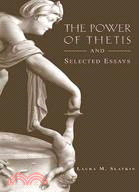
Laura Slatkin's influential and widely admired book, here published in a second edition together with six additional essays, explores the superficially minor role of Thetis in the Iliad. Highly char
With The Pioneers (1823), Cooper initiated his series of elegiac romances of frontier life and introduced the world to Natty Bumppo (or Leather-stocking). Set in 1793 in New York State, the novel depi
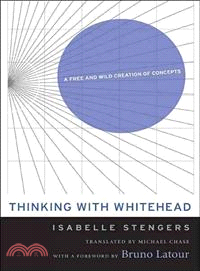
"If Whitehead's work is hard to approach," writes Stengers (philosophy of science, Free U. of Brussels), "it is because it demands, with utter discretion, that its readers accept the adventure of the
Read the Bldg Blog interview with Mary Beard about the Wonders of the World series(Part I and Part II)Byron and Hitler were equally entranced by Rome's most famous monument, the Colosseum. Mid-Victori
Read the Bldg Blog interview with Mary Beard about the Wonders of the World series(Part I and Part II)The Alhambra has long been a byword for exotic and melancholy beauty. In his absorbing new book, R
The historian Polybius (c. 200–118 BCE) was born into a leading family of Megalopolis in the Peloponnese and served the Achaean League in arms and diplomacy for many years, favoring alliance with Rome
The appearance of David R. Slavitt’s translation of Orlando Furioso (“Mad Orlando”), one of the great literary achievements of the Italian Renaissance, is a publishing event. With this lively new vers
Political constitutions, hammered out by imperfect human beings in periods of intense political controversy, are always compromises with injustice. What makes the U.S. Constitution legitimate, argues
The author has had a long relationship with Cairo since the early 1970s when he was a student there and became deeply fascinated with its Islamic heritage. AlSayyad is a professor of architecture, pla
Common sense has always been a cornerstone of American politics. In 1776, Tom Paine’s vital pamphlet with that title sparked the American Revolution. And today, common sense—the wisdom of ordinary peo
One hundred years ago a series of seminal documents, starting with the Flexner Report of 1910, sparked an enormous burst of energy to harness the power of science to transform higher education in heal
Since the 1960s, Martin Luther King, Jr., has personified black leadership with his use of direct action protests against white authority. A century ago, in the era of Jim Crow, Booker T. Washington p
Arguing that the rise of the digital world is on par with the historical role of religion in society, Doueihi, a professor of literature at the Univeriste Laval, Quebec, presents this discussion of th
This historical analysis of the remarkable diaries of Franz Goll, a working class German man who kept a detailed journal of his daily life, with political and social commentary, from 1916 until his de
In 1972, the U.S. Supreme Court handed down a 5–4 verdict in Milliken v. Bradley, thereby blocking the state of Michigan from merging the Detroit public school system with those of the surrounding sub
Listen to a ten-minute interview with Margaret HoganHost: Chris Gondek | Producer: Heron & CraneRead Margaret Hogan's HUP blog posting: "The Romance of John and Abigail Adams"Watch the video of Th
"Sitting down with a young and brilliant mathematician, I asked what he thought were his biggest problems in working toward tenure. Instead of describing difficulties with his equations or his softwar
What Did It Mean to be a wife, woman, or slave in a society in which a land-owning woman was forbidden to lie with her male slave but the same slave might he allowed to take concubines? Jurists of the
What should we do with teenagers who commit crimes? Are they children whose offenses are the result of immaturity and circumstances, or are they in fact criminals?“Adult time for adult crime&rd
"Allies of the State is a finely tuned laser of a book. With a rigorous yet elegant research design deployed with great dexterity, the argument unfolds in tantalizing layers, as Chen and Dickson get u
This work is a study of the twelve small gold lamellae from Crete, nine of them engraved with texts, that were tokens for entrance into a golden afterlife: the deceased who were buried or cremated wit
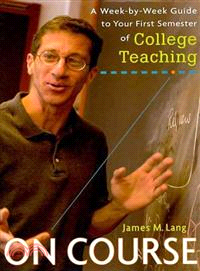
You go into teaching with high hopes: to inspire students, to motivate them to learn, to help them love your subject. Then you find yourself facing a crowd of expectant faces on the first day of the f
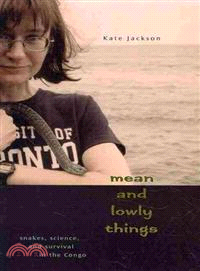
In 2005 Kate Jackson ventured into the remote swamp forests of the northern Congo to collect reptiles and amphibians. Her camping equipment was rudimentary, her knowledge of Congolese customs even mor
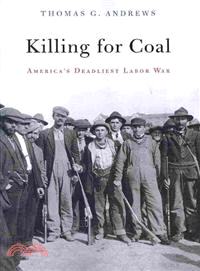
On a spring morning in 1914, in the stark foothills of southern Colorado, members of the United Mine Workers of America clashed with guards employed by the Rockefeller family, and a state militia beho
Pompeii is the most famous archaeological site in the world, visited by more than two million people each year. Yet it is also one of the most puzzling, with an intriguing and sometimes violent histor
At the confluence of the Potomac and Anacostia rivers, President Washington chose a diamond-shaped site for the city that would bear his name, along with the burdens and blessings of democracy. Situat
The economic sanctions imposed on Iraq from 1990 to 2003 were the most comprehensive and devastating of any established in the name of international governance. The sanctions, coupled with the bombing