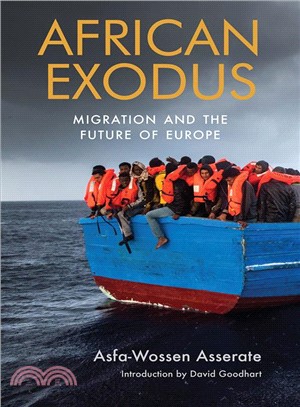
In 2015, an unprecedented number of people from Africa and the Near East took flight and sought refuge in Europe. By the end of that year, some 1.8 million migrants had arrived in the EU, the vast maj
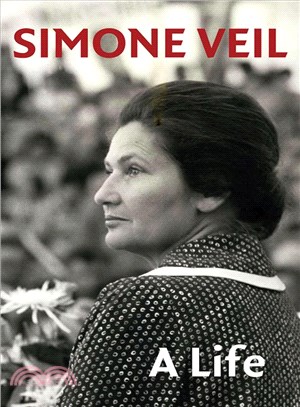
Simone Veil, the former French lawyer and politician who became the first President of the European Union, was born Simone Jacob in 1927. In A Life, she describes in vivid detail a childhood of happin
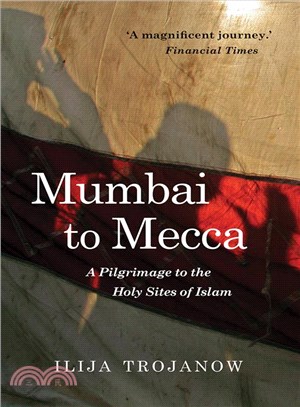
‘”From the very first moment they realize that the Hajj—the pilgrimage to Mecca—is among the duties of each and every Muslim, the faithful long to go.” This book prsents
In his famous report of 1942, the economist and social reformer William Beveridge wrote that World War II was a “revolutionary moment in the world’s history” and so a time “for
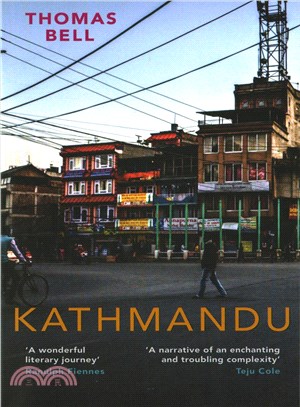
One of the greatest cities of the Himalaya, Kathmandu, Nepal, is a unique blend of thousand-year-old cultural practices and accelerated urban development. In this book, Thomas Bell recounts his experi
Part dark fairy tale, part mystery, Yiza is the story of three homeless street children on the run. One evening, not long after her arrival in Germany, six-year-old Yiza is abandoned at the market whe
The Silk Road is not a place, but a journey, a route from the edges of the Mediterranean to the central plains of China, through high mountains and inhospitable deserts. For thousands of years its his
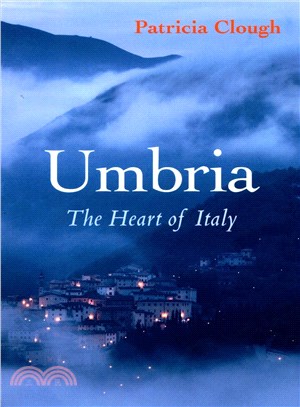
When Patricia Clough, a former foreign correspondent, bought a house in Umbria, she knew that buying her dream home did not mean that life would become a dream. By the end of this book, in which she d
Singer Nicholas Clapton first visited Budapest to record a recently discovered mass by an almost unknown eighteenth-century Hungarian composer. There, he discovered a striking sense of otherness in sp
Haile Selassie I, the last emperor of Ethiopia, was as brilliant as he was formidable. An early proponent of African unity and independence, Haile Selassie, who claimed to be a descendant of King Solo
In 1940 Hamzu Shehata gave a lecture at the Makkah Charitable Aid Association which, over four hours and reputedly utilising 121 handwritten notes, covered a staggering amount of social and cultural o
In July 2016 David Cameron rolled the dice on Britain's 43-year-old membership of the EU. Breaking Point explains where post-referendum Britain is heading, how we got here, and what lessons might be l
The recent crises in Ukraine have reminded us that Russia’s interests run counter to those of many other nations, but what of the Russian and Ukrainian people themselves? What kind of lives are they l
Ascension to Death, which launches Haus Publishing’s new Modern Arabic Classics series, is the first work of acclaimed Syrian writer Mamdouh Azzam to be published in English. Set against the backdrop
Abdelkrim Ghallab’s postcolonial We Buried the Past, originally published in 1966, was the first breakthrough Moroccan novel written in Arabic instead of French. Newly translated into English, this ed
A region steeped in fable and myth, Provence can accurately be called on the cultural crossroads of European history. A source of inspiration to artists, poets and troubadours it is also an enviable r
As David Owen notes in The UK’s In-Out Referendum, the European Union’s attempts at conflict resolution have left much to be desired. In the Ukraine, Baltic States, Turkey, and much of the Middle East
This omnibus edition brings together Nicholas Woodsworth’s critically acclaimed Mediterranean trilogy into a single volume for the first time, allowing readers to fully appreciate the scope of Woodswo
Each year, over 200,000 people pilgrimage to the Cathedral of Santiago de Compostela in Spain. Often called the Way of St. James, this journey has been an important Christian tradition for centuries.T
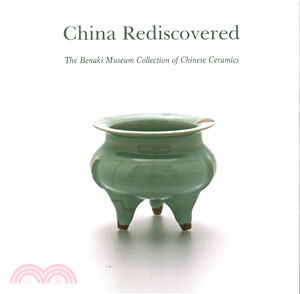
This richly illustrated book showcases a previously unseen and virtually unknown historical collection of Chinese ceramics, formed in the early twentieth century by George Eumorfopoulos, a pivotal fig
A mountain peak above the Monastery of St Catherine in Egypt, Mount Sinai is best known as the site where Moses received the Ten Commandments in the biblical Book of Exodus.An Armchair Traveller’s His
What—if anything—do the twenty-eight member states of the European Union have in common? Amidst all the variety, can one even speak of a European identity? In this timely book, Stephen Green explores
Ionel Bratianu, a major political force both in and out of power, was responsible for his country's presence at the Paris Peace Conference Romania came to Paris as a minor member but Bratianu felt tha
"A lyrical homage to India's holiest, moodiest, foulest river. . . .Trojanow is the perfect mix of insider and outsider. . . . It is a treasure of a book, a must-have for anyone spending time on the
The First World War marked the emergence of the Dominions on the world stage as independent nations, none more so than Australia. Australia was represented at Versailles by the Prime Minister, the col
The Great War profoundly affected both New Zealand and its Prime Minister William Massey (1856-1925). Farmer Bill oversaw the dispatch of a hundred thousand New Zealanders, including his own sons, to
The end of the First World War and the collapse of the Russian Empire offered momentary self-government to many of Russia's border natinalities. The Baltic states of Estonia, Latvia and Lithuania wer
The Greek Prime Minister Eleftherios Venizelos (1864-1936) was one of the stars of the Paris Peace Conference, impressing many of the Western delegates, already possessed of a romantic view of 'the gr
The Socialist politician Karl Renner (1870-1950) was prime minister of the government that took power in Vienna after the collapse of the Austro-Hungarian Empire. He lead the delegation to Paris, whic
The Czechoslovak state was created by two very different men: Toma? Masaryk and Eduard Bene?. Masaryk the stallion of the Czechoslovak cause, President of the Republic from 1918 to 1935; Bene? the Cz
The story of the Indian soldiery in the Great War needs new telling, and one important chapter in its history features the Maharajah of Bikaner. Dashing, autocratic, and a formidable public speaker, G
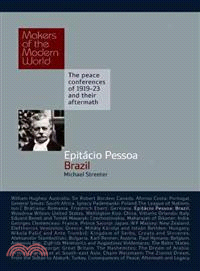
Brazil was one of the emerging world powers to be invited to the Paris Peace Conference in 1919. Having jettisoned her empire just thirty years before, the Portuguese-speaking nation was showing signs
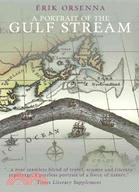
Concerned about the possible demise of the Gulf Stream, Érik Orsenna read, investigated, interviewed experts, and traveled from the violent swirls off the coast of Florida to the maelstroms of N
On ten strolls through London, Rudiger Gorner explores the literary landscape of the capital. He meets William Shakespeare, Heinrich Heine, and William?Hogarth south of the river; finds Virginia Woolf
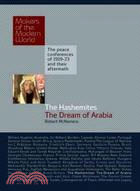
The Arab states at Versailles were widely considered to be pawns of the Great Powers. As the Ottoman Empire disintegrated, the Arab nationalists, led by Emir Faisal, fought for a voice within the mix
Although the Jewish people were not technically part of the reparations, dissolution, and remaking of new countries after WWI, they took the opportunity to express their needs and carve out a solutio
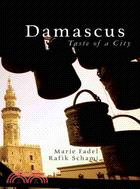
Damascus was Rafik Schami's home for twenty-five years before he sought exile in Europe, and this "Pearl of the Orient" is still the city he loves more than any other. Thirty years later, and now a pr
This is the first collection of parallel biographies of two key Yugoslav politicians of the early twentieth century: Nikola Pa?ic, a Serb, and Ante Trumbic, a Croat. It also offers a brief history of