What is the nature of our personal relationship with God? That's the core question of Fear and Trembling, published in 1843. If God asks us to do something we instinctively feel is unethical, must we
The first work written for the general public by the highly influential American economist Milton Friedman, Capitalism and Freedom argues that economies and societies work best when a free market func
How does a state control its citizens? Michel Foucault's Discipline and Punish answers this question by investigating the prison system. Foucault argues that prison created and merged into a wider sys
To the dismay of many commentators – who had hoped the world was evolving into a more tolerant and multicultural community of nations united under the umbrellas of supranational movements like the Eur
No philosopher could be a better example of creative thinking in action than Friedrich Nietzsche: a German iconoclast who systematically attacked the traditionally accepted views of academic philosoph
Franz Boas’s 1940 Race, Language and Culture is a monumentally important text in the history of its discipline, collecting the articles and essays that helped make Boas known as the ‘father of America
The modern world has been marked by social revolutions that have transformed the states where they occurred. Theda Skocpol examines three of these uprisings-the French, Russian, and Chinese revolution
Perhaps the most peculiar feature of a financial bubble – one that Charles Kindleberger's classic work Manias, Panics and Crashes draws particular attention to – is the inability of those trapped insi
There are few better examples of analysis – the critical thinking skill of understanding how an argument is built – than Robert Dahl’s Democracy and its Critics. In this work, the American political t
Mahmood Mamdani’s 1996 Citizen and Subject is a powerful work of analysis that lays bare the sources of the problems that plagued, and often still plague, African governments.Analysis is one of the br
Paul Kennedy owes a great deal to the editor who persuaded him to add a final chapter to this study of the factors that contributed to the rise and fall of European powers since the age of Spain's Phi
Keith Thomas's classic study of all forms of popular belief has been influential for so long now that it is difficult to remember how revolutionary it seemed when it first appeared.By publishing Relig
In His book Gender and the Politics of History (1998), Scott draws attention to the fact that despite gender equality's long-term recognition there has been no genuinely revolutionary change unlike ec
Amos Tversky and Daniel Kahneman’s 1974 paper ‘Judgement Under Uncertainty: Heuristics and Biases’ is a landmark in the history of psychology. Though a mere seven pages long, it has helped reshape the
Published in 2010, Bloodlands argues that accounts of World War II have paid too much attention to the atrocities of Adolf Hitler, and not enough to Joseph Stalin's. Snyder believes a definitive histo
Based on 20 months of fieldwork among the Azande people of South Sudan, Evans-Pritchard's work became the founding text in the anthropology of witchcraft. Although the book had little impact when it f
Before the publication of Nature's Metropolis in 1991, historians generally treated urban and rural areas as distinct from one another, each following separate lines of development and maturity.
Michael E. Porter’s 1980 book Competitive Strategy is a fine example of critical thinking skills in action. Porter used his strong evaluative skills to overturn much of the accepted wisdom in the worl
Michael E. Porter’s 1980 book Competitive Strategy is a fine example of critical thinking skills in action. Porter used his strong evaluative skills to overturn much of the accepted wisdom in the worl
The German sociologist Max Weber is considered to be one of the founding fathers of sociology, and ranks among the most influential writers of the 20th-century. His most famous book, The Protestant Et
The essay for which The Sacred Wood is primarily remembered is one of the most famous pieces of criticism in English: “Tradition and the Individual Talent” helped to re-orientate arguments about the s
John Maynard Keynes’s 1936 General Theory of Employment, Interest and Money is a perfect example of the global power of critical thinking. A radical reconsideration of some of the founding principles
Published in 1992, The End of History and the Last Man argues that capitalist democracy is the final destination for all societies. Fukuyama believed democracy triumphed during the Cold War because it
Riley-Smith's 1986 book gives convincing case for a 'revisionist' view of the crusades, challenging the common belief that the crusades were motivated by fanaticism and were designed to plunder the Ho
American author, journalist, and activist Jane Jacobs was born in 1916 in Scranton, Pennsylvania. She moved to New York City in 1934, where she became a journalist, writing for magazines including Arc
Goldstone examines the causes of revolutions and uprisings between 1500 and 1800 in both Europe and Asia. Many thinkers previously believed that Europe's distinctive history-particularly the rise of c
When it was published in 2008, Richard Thaler and Cass Sunstein’s Nudge: Improving Decisions about Health, Wealth, and Happiness quickly became one of the most influential books in modern economics an
Paul Kennedy owes a great deal to the editor who persuaded him to add a final chapter to this study of the factors that contributed to the rise and fall of European powers since the age of Spain’s Phi
The rise of China on the international stage is one of the most significant developments in contemporary geopolitics. Mainstream Western international relations theories argue that the rise of a new g
The end of the Cold War, which occurred early in the 1990s, brought joy and freedom to millions. But it posed a difficult question to the world's governments and to the academics who studied them: how
Published in 1994, The Bell Curve caused uproar. Herrnstein and Murray claim that intelligence is the key factor in determining success in life and that it is genetic and, more controversially still,
John Dower’s War Without Mercy is an attempt to resolve the problem of why the United States fought World War II so very differently in the Pacific and European theaters. Specifically, the author sets
Few historians can claim to have undertaken historical analysis on as grand a scale as Geoffrey Parker in his 2013 work Global Crisis: War, Climate Change and Catastrophe in the Seventeenth Century. I
Saba Mahmood’s 2005 Politics of Piety is an excellent example of evaluation in action.Mahmood’s book is a study of women’s participation in the Islamic revival across the Middle East. Mahmood – a femi
MacLeod's 1987 work, ground-breaking for the way it combines field research with theory, follows the lives of two groups of young men from a low-income housing project in the Boston area to show how p
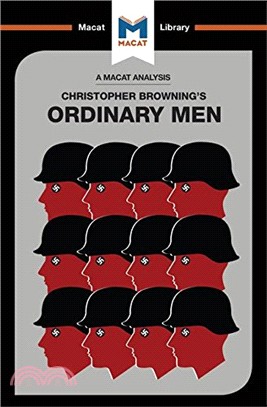
Of all the controversies facing historians today, few are more divisive or more important than the question of how the Holocaust was possible. What led thousands of Germans – many of them middle-aged
For those who lived through the Cold War period, and for many of the historians who study it, it seemed self-evident that the critical incidents that determined its course took place in the northern h
Henry Kissinger’s 2014 book World Order: Reflections on the Character of Nations and the Course of History not only offers a summary of thinking developed throughout a long and highly influential care
In his 1997 work Guns, Germs and Steel, Jared Diamond marshals evidence from five continents and across 13,000 years of human history in an attempt to answer the question of why that history unfolded
Goldstone examines the causes of revolutions and uprisings between 1500 and 1800 in both Europe and Asia. Many thinkers previously believed that Europe's distinctive history-particularly the rise of c