From rag-gatherers to royalty, from fish knives to Freemasons: everyday life in Victorian London.Like its acclaimed companion volumes, Elizabeth's London, Restoration London and Dr Johnson's London, t
Everyone wishes to live a life that is satisfying and fulfilling, in which there is achievement, pleasure, and respect. One of the fundamentals to living such a life is to reflect on the choices we m
Part financial scandal and part Greek tragedy, this book dramatically humanizes?the results of Madoff's scam?by?focusing on?his connection to, and catastrophic impact on, the Jewish community?Opening
Richard Hammond has had a longstanding love affair, bordering on the obsessive some might say, with caravans. He has researched their origins and history, celebrity owners, the uses to which they have
Damian Horner is scared that?15 years in advertising have turned him into a bastard. As he approaches his 40th birthday, he wants to see if he can be a good husband and a good father before it's too l
Anthony Armstrong-Jones was born to a Welsh father and English-Jewish mother. Creative and inventive, he attended Eton and then Cambridge. The engagement of this motorbike-riding freelance photographe
One of the most renowned historians of the English Civil War has written a crisp and lucid narrative of the complicated events of 1640 to 1660not just the war between King and Parliament of 164
It is 1834 and with the birth of the Industrial Revolution, railway fever sweeps the country. Pyke is uneasy with the luxury his aristocratic marriage has brought him, and when he is asked to unoffic
It was supposed to be "a lovely break." As their mutual friend Helena is the toast of Broadway, stand-up comedian Cissie O'Brien, who is the nation's darling with her popular television series, decid
Colin S. Gray has advised governments on both sides of the Atlantic about military affairs, and he looks into the future to provide some intriguing answers about the ways Western armed forces—w
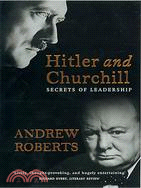
Choosing Adolf Hitler and Winston Churchill, two totally opposite leaders—both in what they stood for and in the way they appeared to lead—award-winning historian Andrew Roberts examines