Health care spending in the United States today is approaching 20 percent of GDP, yet levels of U.S. population health have been declining for decades relative to other wealthy and even some developin
In 2006, the United Nations reported on the feminization” of migration, noting that the number of female migrants had doubled over the last five decades. Likewise, global awareness of issues like huma
Barack Obama’s historic 2008 campaign exposed many white Americans more than ever before to a black individual who defied negative stereotypes. While Obama’s politics divided voters, Americans uniform
A volume in the American Sociological Association's Rose Series in SociologyWest Baltimore stands out in the popular imagination as the quintessential inner city”gritty, run-down, and marred by drugs
Today, roughly 70 percent of all visas for legal immigration are reserved for family members of permanent residents or American citizens. Family reunification—policies that seek to preserve family uni
The Civil Rights movement of the 1960s seemed to mark a historical turning point in advancing the American dream of equal opportunity for all citizens, regardless of race. Yet 50 years on, racial ineq
As one of the fastest-growing segments of the American population, the children of immigrants are poised to reshape the country’s political future. The massive rallies for immigration rights in 2006 a
The way Americans live and work has changed significantly since the creation of the Social Security Administration in 1935, but U.S. social welfare policy has failed to keep up with these changes. The
Social scientists have repeatedly uncovered a disturbing feature of economic inequality: people with larger incomes and better education tend to lead longer, healthier lives. This pattern holds across
Transnational adoption was once a rarity in the United States, but Americans have been choosing to adopt children from abroad with increasing frequency since the mid-twentieth century. Korean adoptees
The United States was founded on the principle of equal opportunity for all, and this ethos continues to inform the nation's collective identity. In reality, however, absolute equality is elusive. The
The financial crisis that erupted on Wall Street in 2008 quickly cascaded throughout much of the advanced industrial world. Facing the specter of another Great Depression, policymakers across the glob
As women moved into the formal labor force in large numbers over the last forty years, care work traditionally provided primarily by women has increasingly shifted from the family arena to the market.
The Americans with Disabilities Act (ADA) and other national policies are designed to ensure the greatest possible inclusion of people with disabilities in all aspects of American life. But as a matte
Many Americans, holding fast to the American Dream and the promise of equal opportunity, claim that social class doesn't matter. Yet the ways we talk and dress, our interactions with authority figures
If all politics is local, then so is almost everything else, argues sociologist Gary Alan Fine. We organize our lives by relying on those closest to us—family members, friends, work colleagues, team m
When state voters passed the California Marriage Protection Act (Proposition 8) in 2008, it restricted the definition of marriage to a legal union between a man and a woman. The act’s passage further
American fathers are a highly diverse group, but the breadwinning, live-in, biological dad prevails as the fatherhood ideal. Consequently, policymakers continue to emphasize marriage and residency ove
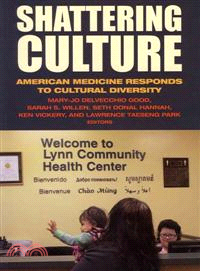
"Culture counts" has long been a rallying cry among health advocates and policymakers concerned with racial disparities in health care. A generation ago, the women’s health movement
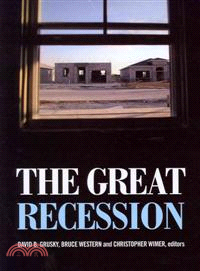
Officially over in 2009, the Great Recession is now generally acknowledged to be the most devastating global economic crisis since the Great Depression. As a result of the crisis, the United States lo
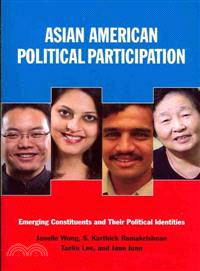
Asian Americans are a small percentage of the U.S. population, but their numbers are steadily risingfrom less than a million in 1960 to more than 15 million today. They are also a remarkably diverse p
Can the recent influx of immigrants successfully enter the mainstream of American life, or will many of them fail to thrive and become part of a permanent underclass?Achieving Anew examines immigrant
America confronts a jobs crisis that has two faces. The first is obvious when we read the newspapers or talk with our friends and neighbors: there are simply not enough jobs to go around. The second j
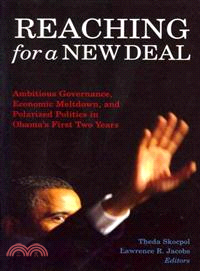
During his winning presidential campaign, Barack Obama promised to counter rising economic inequality and revitalize America’s middle-class through a series of wide-ranging reforms. His transformation
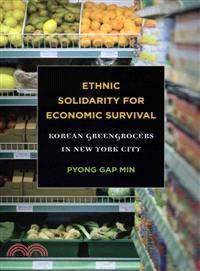
"Ethnic Solidarity for Economic Survival: Korean Greengrocers in New York City is an exemplary contribution to the literature on international migration, Asian American studies, ethnic economies, and
For many Americans, participation in community organizations lays the groundwork for future political engagement. But how does this traditional model of civic life relate to the experiences of today’s
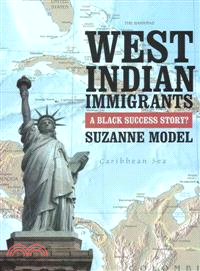
West Indian immigrants to the United States fare better than native-born African Americans on a wide array of economic measures, including labor force participation, earnings, and occupational prestig
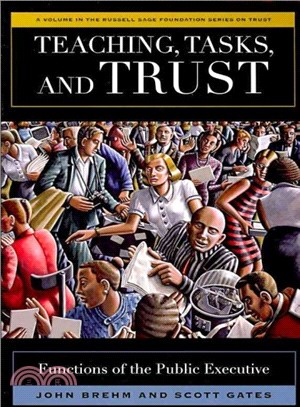
The mere word “bureaucracy” brings to mind images of endless lines, piles of paperwork, and frustrating battles over rules and red tape. But some bureaucracies are clearly more efficient and responsiv
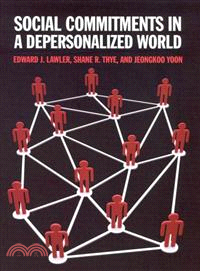
As individuals’ ties to community organizations and the companies they work for weaken, many analysts worry that the fabric of our society is deteriorating. But others counter that new social networks
One in four American adults doesn’t have a bank account. Low-income families lack access to many of the basic financial services middle-class families take for granted and are particularly susceptible
College campuses provide ideal natural settings for studying diversity: they allow us to see what happens when students of all different backgrounds sit side by side in classrooms, live together in re
"In The Colors of Poverty Ann Chih Lin and David Harris bring together a stellar roster of scholars to argue that racial inequality does not stem from a single powerful socioeconomic disadvantage, bu
"Homelessness is a transient condition for most of those afflicted, but is a continuing frustration for urban policy. This provocative volume engages public health scholars as well as planners, polic
Unemployment among black Americans is twice that of whites. Myriad theories have been put forward to explain the persistent employment gap between blacks and whites in the U.S. Structural theorists po
Over the past three decades, the contours of American social, economic, and political life have changed dramatically. The post-war patterns of broadly distributed economic growth have given way to sta
The rancorous debate over the future of Social Security reached a fever pitch in 2005 when President Bush unsuccessfully proposed a plan for private retirement accounts. Although efforts to reform Soc
Poverty among the elderly is sharply gendered—women over sixty-five are twice as likely as men to live below the poverty line. Older women receive smaller Social Security payments and are less likely
Teen childbearing has risen to frighteningly high levels over the last four decades, jeopardizing the life chances of young parents and their offspring alike, particularly among minority communities.
Conventional wisdom holds that trust is essential for cooperation between individuals and institutions—such as community organizations, banks, and local governments. Not necessarily so, according to e
One important aim of social science research is to provide unbiased information that can help guide public policies. However, social science is often construed as politics by other means. Nowhere is t