“On the day of the Great Fall he left nothing, nothing at all behind.”The latest work by Peter Handke, one of our greatest living writers, chronicles a day in life of an aging actor as he makes his wa
The poems in this new volume by Abdourahman A. Waberi are introspective and inquisitive, reflecting a deep spiritual bond—with words, with the history of Islam and its great poets, with the land
As the Syrian war has raged over the past several years, the world has watched in horror. And that horror is particularly concentrated on the city of Aleppo, which has been subject to almost incompara
Peter Handke, a giant of Austrian literature, has produced decades of fiction, poetry, and drama informed by some of the most tumultuous events in modern history. But even as these events shaped his w
In this companion to Urs Widmer’s novel My Mother’s Lover, the narrator is again the son who pieces together the fragments of his parents’ stories. Since the age of twelve,
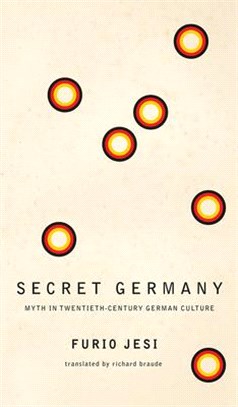
In the decades before the rise of the Third Reich, “Secret Germany” was a phrase used by the circle of writers around the poet Stefan George to describe a collective political and poetic p
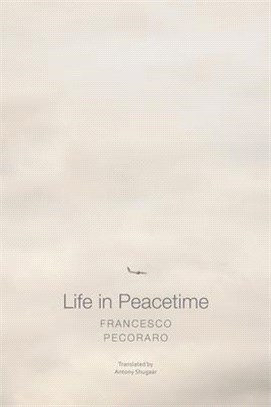
When Life in Peactime opens, on May 29, 2015, engineer Ivo Brandani is sixty-nine years old. He’s disillusioned and angry—but morbidly attached to life. As he makes a day-long trip home fr
Arwa Salih was a member of the political bureau of the Egyptian Communist Workers Party, which was founded in the wake of the Arab–Israeli War and the Egyptian student movement of the early 1970
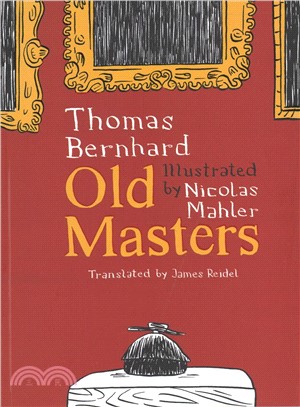
Thomas Bernhard’s Old Masters has been called his “most enjoyable novel” by the New York Review of Books. It’s a wild satire that takes place almost entirely in front of Tintor
“I now no longer use the better words.” Ilse Aichinger (1921–2016) was one of the most important writers of postwar Austrian and German literature. Born in 1921 to a Jewish mother, s
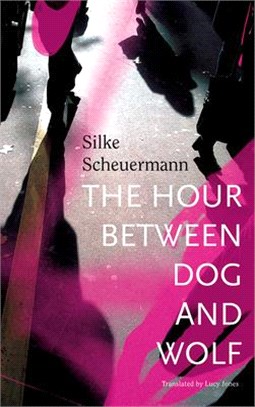
Musician Ann Hidden suspects her partner, Thomas, isn’t telling her everything. So one dark night, she secretly follows him to an unfamiliar house in the Paris suburbs, where he disappears insid
A young woman who has been living abroad returns to her hometown of Frankfurt am Main in Germany. Her sister Ines—a beautiful, impetuous painter—who still lives there, soon appears and promptly asks f
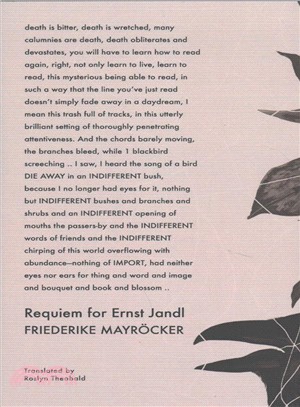
Austrian poet and playwright Ernst Jandl died in 2000, leaving behind his partner, poet Friederike Mayröcker—and bringing to an end a half century of shared life, and shared literary work. Mayröcker i
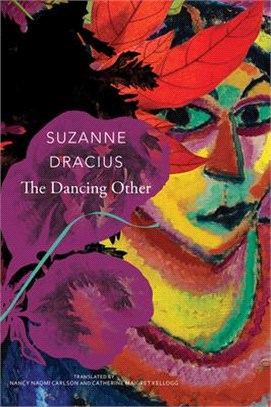
The Dancing Other takes readers to France and Martinique to reveal the struggles of people who belong both places, but never quite feel at home in either. Suzanne Dracius tells the story of Rehvana, a
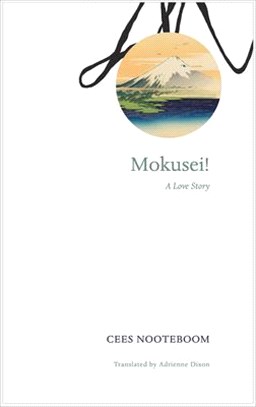
Two men talk in Tokyo. One, a Belgian, is a diplomat. The other, Dutch, is a photographer. What, they wonder, is the real face of Japan? How can they get beyond the European idea of the nation and its
Toby Litt is one of that rare breed of fiction writers who never writes the same book twice: every time out, he takes an unexpected new tack—and his readers happily follow. ?Told in the form of
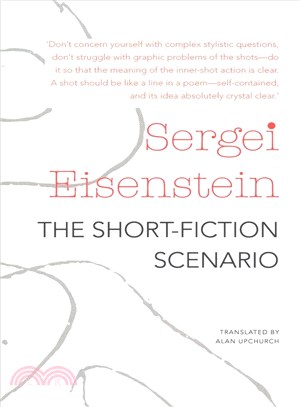
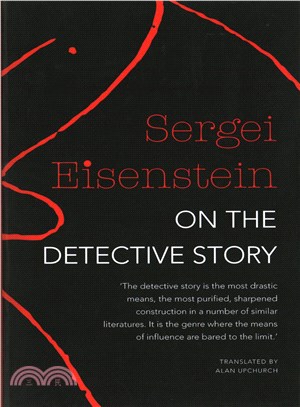
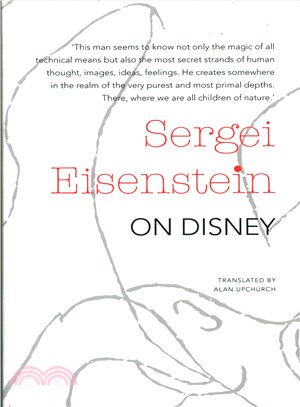
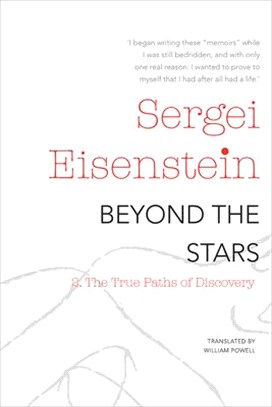
Few figures in cinema history are as towering as Russian filmmaker and theorist Sergei Mikhailovitch Eisenstein (1898–1948). Not only did Eisenstein direct some of the most important and lasting
Few figures in cinema history are as towering as Russian filmmaker and theorist Sergei Mikhailovitch Eisenstein (1898–1948). Not only did Eisenstein direct some of the most important and lasting
Few figures in cinema history are as towering as Russian filmmaker and theorist Sergei Mikhailovitch Eisenstein (1898–1948). Not only did Eisenstein direct some of the most important and lasting
Few figures in cinema history are as towering as Russian filmmaker and theorist Sergei Mikhailovitch Eisenstein (1898–1948). Not only did Eisenstein direct some of the most important and lasting
Few figures in cinema history are as towering as Russian filmmaker and theorist Sergei Mikhailovitch Eisenstein (1898–1948). Not only did Eisenstein direct some of the most important and lasting
Celebrated Indian playwright Mahesh Elkunchwar has experimented with many forms of dramatic expression in a career that now spans more than four decades, producing works that range from the realist to
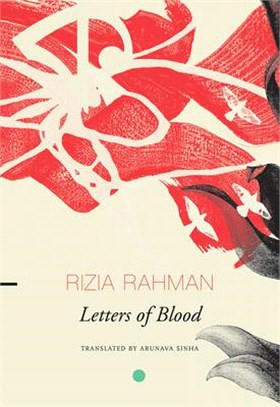
Bengali writer Riza Rahman is the author of more than fifty novels, as well as countless short stories, set in Bangladesh and bringing to life the difficult, mostly forgotten lives of its poorest and
It’s the mid-to-late 1800s and the British have banished Wajid Ali Shah—the nawab of Awadh in Lucknow—to Calcutta. To the sound of the soulful melody of the sarangi, the mercurial courtesan Laayl-e Aa
As speaking animals, we continuously make use of an unassuming grammatical particle, without suspecting that what is at work in its inconspicuousness is a powerful apparatus, which orchestrates langua
Winner of the 2015 Arno Reinfrank Literaturpreis “Ruven Preuk stands apart from the village, on an August day in 1911, and listens.” Thus begins an epic bildungsroman about the life of Ruven Preuk, so
Max Frisch (1911–91) was a giant of twentieth-century German literature. When Frisch moved into a new apartment in Berlin’s Sarrazinstrasse, he began keeping a journal, which he came to call the Berli
Beloved Austrian writer Thomas Bernhard (1931–89) began his career in the early 1950s as a poet. Over the next decade, Bernhard wrote thousands of poems and published four volumes of intensely wrought
During a 1960 interview, East German writer Christa Wolf was asked a curious question: would she describe in detail what she did on September 27th? Fascinated by considering the significance of a sing
In the historic tradition of calendar stories and calendar illustrations, author and film director Alexander Kluge and celebrated visual artist Gerhard Richter have composed December, a collection o
The Aftermath of War brings together essays written in Sartre’s most creative period, just after World War II. Sartre’s extraordinary range of engagement is manifest, with writings on post-war America
Philosopher Jean-Paul Sartre counted among his friends and associates some of the most esteemed intellectuals, writers, and artists of the twentieth century. In Portraits (Situations IV), Sartre colle
Bolivia’s foremost social and political theorist, Rene Zavaleta Mercado held diplomatic and ministerial posts with the Revolutionary Nationalist Movement in the 1950s and ’60s, before eventually align
Today, we believe that the map is a copy of the Earth, without realizing that the opposite is true: in our culture the Earth has assumed the form of a map. InBlinding Polyphemus, Franco Farinelli eluc
One night, German philosopher Hans Blumenberg returns to his study to find a shocking sight—a lion lying on the floor as if it’s the most natural thing in the world. The lion stretches comfortably on
Since premiering his pioneering linguistic experiment I Love XXX in Beijing nearly twenty-five years ago, Meng Jinhui has been credited with revitalizing Chinese theater by popularizing the avant-gard
A few years after the deadly 2011 terror attack in Norway’s Utoya Island, Otto and Sofie are attempting to put the pieces of their life back together without their beloved daughter, who was murdered a
Bhaskar Chakrabarti’s poetry is synonymous with the romantic melancholia inherent to Calcutta. His trenchant poetic voice was one of the most significant to emerge in the 1960s and ’70s—perhaps the mo
Chandrasekhar Kambar is one of the most accomplished Indian writers working today. The author of six novels in the Kannada language, Kambar’s stories all include the archetypical Mother, named Karimay
Most discussions on the India’s First War of Independence from British colonial rule in 1857 have centered on the role played by the Mughal emperor, the nawab of Awadh, and other sundry members of mos