For nature lovers as well as cooks, there's plenty to whet the appetite in this unique field guide-cum-cookbook. Starting with the first plants ready for eating in the early spring (watercress and net
The improvements in the technology, artistry, and distribution of motion pictures coincided with the traumas of modern Germany. It is hardly to be wondered that filmmakers frequently turned their came
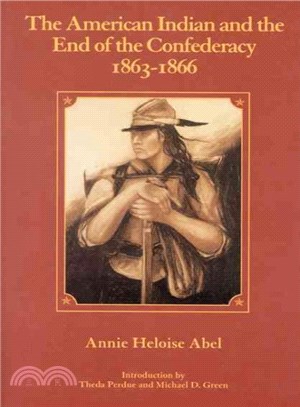
Late in April 1861, President Lincoln ordered Federal troops to evacuate forts in Indian Territory. That left the Five Civilized Tribes—Cherokees, Chickasaws, Choctaws, Creeks, and Seminoles—essential
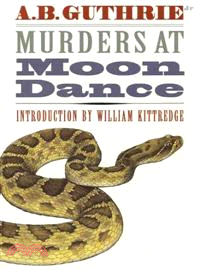
At a difficult and sad time in his family life, A. B. Guthrie, Jr., turned for surcease to reading western and whodunit novels. In his autobiography, The Blue Hen's Chick (also a Bison Book), he touch
This classic history is filled with colorful pathmarkers like Jedediah Smith, John C. Fremont, and Kit Carson; with packers, home seekers, and mail couriers; and with horse thieves and enslavers of In
The Hudson's Bay Company had been operating for nearly two centuries when young Isaac Cowie joined it in 1867. He sailed from the Shetland Islands to Rupert's Land, finally reaching York Factory, wher
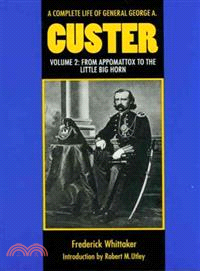
This first biography of General George A. Custer was published late in 1876, only months after the disaster at the Battle of the Little Big Horn. A Complete Life was the beginning of a legend, and Frd
Much has been written about the forced removal of thousands of Cherokee Indians to present-day Oklahoma in the 1830s. Many of them died on the Trail of Tears. But until recently historians have largel
In the second volume of his classic exploration of the Spanish-Jewish community, Baer covers such major historical events as the Spanish Inquisition and the Expulsion of the Jews from Spain. This work
John Bell Hood, a native of Kentucky bred on romantic notions of the Old South and determined to model himself on Robert E. Lee, had a tragic military career, no less interesting for being calamitous.
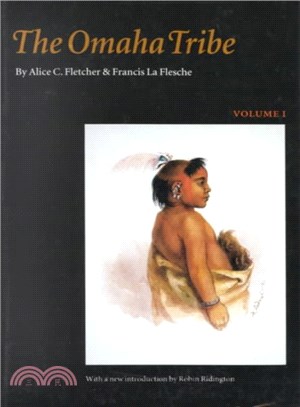
The Omaha Tribe is considered by some anthropologists to be the most important and comprehensive study ever written about a Native American tribe. First published in 1911 as a report of the Bureau of
The Cherokees: A Population History is the first full-length demographic study of an American Indian group from the protohistorical period to the present. Thornton shows the effects of disease, warfar
Originally published in 1915, when Jennings Cropper Wise was commandant of the Virginia Military Institute, The Long Arm of Lee has never been surpassed as an authoritative study of the Confederate ar
The Dawn Builder, originally published in 1910, was John G. Neihardt’s first novel. At the center of it is a one-eyed, peg-legged man named Waters. He comes to Fort Calhoun, Nebraska Territory, in 186
After prolonged resistance against tremendous odds, Geronimo, the Apache shaman and war leader, and Naiche, the hereditary Chiricahua chief, surrendered to General Nelson A. Miles near the Mexican bor
Moral decadence did not contribute to the fall of the Roman Empire, but political instability that was most strongly reflected in a weakened army did, writes Hans Delbruck in volume 2 of History of th
The son of French immigrants who settled in Maryland, Charles Larpenteur was so eager to see the real American West that he talked himself into a job with the Rocky Mountain Fur Company in 1833. When
No one survived in Custer's immediate command, but other soldiers fighting in the Battle of the Little Big Horn on June 25-26, 1876, were doomed to remember the nightmarish scene for decades after. Th
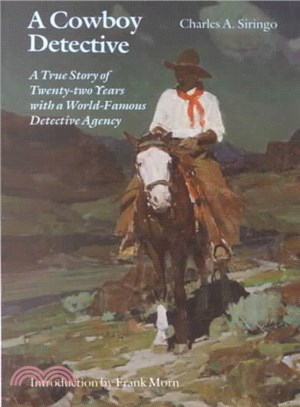
After years of cowboying, Charles A. Siringo had settled down to store-keeping in Caldwell, Kansas, when a blind phrenologist, traveling through, took the measure of his "mule head" and told him that
The study of animal behavior throws light on everything said to be “natural”: social and family relations, mating, communication, and learning. Comparative Perspectives in Modern Psychology illustrate
Distributed by the University of Nebraska Press for Caxton PressIn these pages the reader will find a description of the history of the Oregon Trail - from past to present. Inside the reader will fin
On a frosty day in November 1831, Rebecca Burlend and her husband, John, and their five children debarked at New Orleans after a long voyage from England. They took a steamboat up the Mississippi to S
Here is the fascinating and little-known story of the Galvanized Yankees, who stood watch over a nation that they had once sought to destroy. They were Confederate soldiers who were recruited from Uni
Regarded throughout the English-speaking world as the standard English translation of the Holy Scriptures, the JPS TANAKH has been acclaimed by scholars, rabbis, lay leaders, Jews, and Christians alik
"The Sioux Indians came into my life before I had any preconceived notions about them," writes Mari Sandoz about the visitors to her family homestead in the Sandhills of Nebraska when she was a child.
This volume is a continuation of the autobiography of John G. Neihardt All Is But a Beginning offering a final glimpse into his fascinating life. Covering the years 1901-1908, he weaves a mosaic of pe
First published in 1848, What I Saw in California has long been recognized as the foremost trail guide for the Forty-niners. Almost overnight, Edwin Bryant became their authority on how to survive the
"The plowshare may well have destroyed more options for future generations than the sword," writes Wes Jackson in a review of practices that have brought U.S. agriculture to the edge of disaster. Till
Nephew to Sitting Bull, chief of the Sioux, Pte San Hunka (White Bull) was a famous warrior in his own right. He had been on the warpath against whites and other Indians for more than a decade when he
More than five thousand Negro cowboys joined the round-ups and served on the ranch crews in the cattleman era of the West. Lured by the open range, the chance for regular wages, and the opportunity to
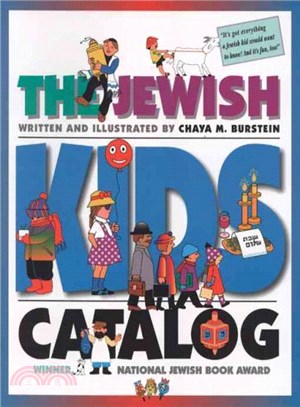
Everything a kid could want to know about being Jewish, in one volume! This book is a fun-filled, illustrated look at key people and events in Jewish history; at holidays and customs; at the origins o
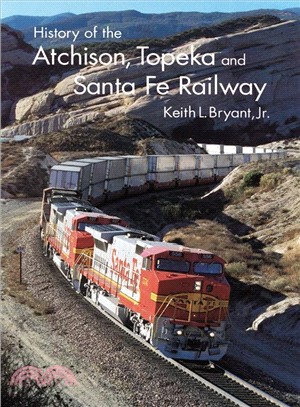
In 1859, Cyrus K. Holliday envisioned a railroad that would run from Kansas to the Pacific, increasing the commerce and prosperity of the nation. With farsighted investors and shrewd management, the A
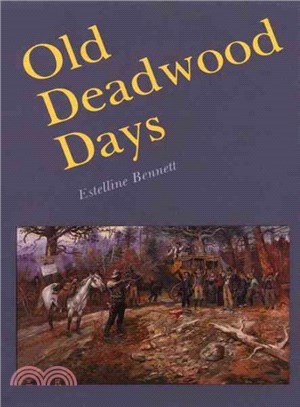
For roughnecks in search of trouble, Deadwood was the place to go. An outlaw town—its very beginnings as a mining camp violated government treaties with the Sioux—Deadwood soon acquired a reputation t
Throughout his long and lusty life, James P. Beckwourth epitomized much of the best and the worst of a fabulous breed, the mountain men of the early West. Trapper, hunter, guide, horse thief, Indian f
Slogum House "lay on the winter flat of Oxbow like the remains of some great, hulking animal that had foraged the region long ago, leaving its old gray carcass to dry and bleach at the foot of the hog
Written during World War II and its immediate aftermath, the eighteen stories of The Women on the Wall move from women to war and back again, but it is the women who remain central. There are Alma, a
Charles Alexander Eastman (1858-1939) was a mixed-blood Sioux. His maternal grandmother, daughter of Chief Cloudman of the Mdewankton Sioux, was married to a well-known western artist, Captain Seth Ea
The exploration and conquest of the Pacific Northwest is the dominant theme of Land of Giants, a book which (in the words of William O. Douglas) "gives one a sense of participation in moulding the man
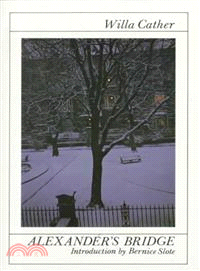
Willa Cather's first published novel, set in Boston, London, and Paris, is the story of a man unable to resolve the contradictions in his own nature. The central figures are Bartley Alexander, a world