'Working in Health' addresses two key questions related to health workforce policy in developing countries:‧ What is the impact of government wage bill policies on the size of the health wage bill and
Now in its second edition, this guide to public-private participation (PPP) is designed for policymakers in the public sector who need private investment in infrastructure in order to secure economic
The World Bank, the World Trade Organization, and the Organization for Economic Co-operation and Development collaborated on the research project, which culminated in a June 2005 symposium in Geneva,
Enhancing the role of private sector partners in education can lead to significant improvements in education service delivery. However, the realization of such benefits depends in great part on the de
Although the circumstances in which Kenyan firms must do business have improved since 2004, including an increase in productivity, Kenyan firms still face an adverse business environment. 'An Assessme
As growth and development in Africa increase rapidly, investment in infrastructure projects will often be best accomplished through public-private partnership. This Project Preparation Guide offers th
Equity and growth are central concerns for development in Mexico. Specific inequalities in income, power, wealth, and status create and sustain economic institutions and policies that perpetuate these
Vietnam’s successes in the health sector are remarkable. Between 2000 and 2005, Vietnam achieved reductions in mortality rates for all ages, while some of its neighbors saw little change or even incre
‘Does Private Sector Participation Improve Performance in Electricity and Water Distribution?’ this question has proven deceptively difficult to answer in the context of utilities in developing econom
A breakthrough in measuring inequalities in health has shattered myths about the effectiveness of health systems in helping the poor. The resulting evidence on outcome inequality is overwhelming. Chil
Governments around the world, and particularly those in developing countries, face significant educational challenges. Despite progress in raising education enrollments at the basic education level, m
Written by economists at the World Bank and at universities in Latin America and Switzerland, this thought-provoking collection of reports by the Latin American Development Forum provides in-depth ana
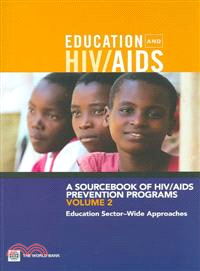
This Sourcebook aims to support efforts by countries to strengthen the role of the education sector in the prevention of HIV/AIDS. It was developed in response to numerous requests for a simple forum
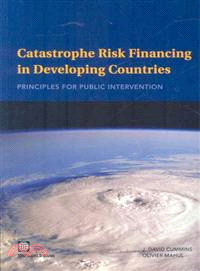
'Catastrophe Risk Financing in Developing Countries' provides a detailed analysis of the imperfections and inefficiencies that impede the emergence of competitive catastrophe risk markets in developin
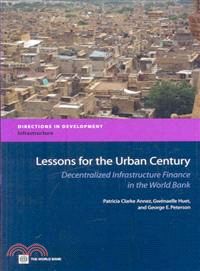
Land-based financing of urban infrastructure is growing in importance in the developing world. Why is it so difficult to finance urban infrastructure investment, when land values typically increase by
Economic growth rates in Sub-Saharan Africa have more than doubled in the past decade. This growth mainly stems from the rising prices of commodities and other natural resources. In order to sustain t
The World Bank commitment to Social Protection and Labor (SP&L) activities began in earnest in the late 1980s with the first social funds to help communities cope with short-term adverse impacts o
In most countries, parliament has the constitutional mandate to both oversee and hold government to account. In light of the increased focus on good governance, academics and legislative strengthening
Persuasive evidence demonstrates that gender equality in education is central to economic development. Despite more than two decades of accumulated knowledge and evidence of what works in improving ge
'Decentralization in Client Countries' assesses the effectiveness of Bank support for decentralization between fiscal years 1990 and 2007 in 20 countries, seeking to inform the design and implementati
Burundi, situated in the heart of the Great Lakes Region, is one of the poorest nations in the world. Beset by coups d'etats, presidential assassinations and genocide, the country has been caught in a
The world has passed a significant threshold: it is now more urban than rural. Urban areas under 1 million in size are projected to absorb a population increase of nearly one half billion in the next
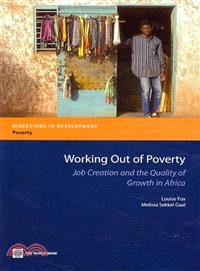
Governments in Africa and their stakeholders have been disappointed with the number of wage and salary jobs that have been created over the last decade or more. Even in countries that experienced both
Although necessary and often first rate, technocratic solutions alone have been ineffective in delivering real change or lasting results in governance reforms. This is primarily because reform program
The ability of the media to affect outcomes in economic and political markets has been well documented. News reporting and advertising influence consumer behavior in goods and services markets by reve
The commonly held perception is that businesses owned by women in the Middle East and North Africa are small and informal, that they're less sophisticated, and that they're huddled in low-value-added
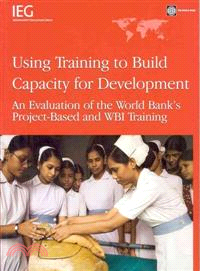
The World Bank finances about US$720 million in training every year, through both its lending projects and its in-house World Bank Institute (WBI). The evaluation found that while most of the training
Despite a low enrollment rate in higher education of 3 percent on average, in comparison with 8 percent in countries with comparable levels of development, Francophone African countries are currently
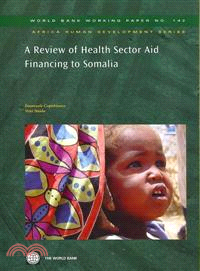
This study reviews aid flows to the health sector in Somalia over the period 2000-06. In close collaboration with the Health Sector Committee of the Coordination of International Support to Somalis, t
Much is going well with the effort to provide universal primary education in Sub-Saharan Africa. Gross enrollment rates have increased from 78 percent in 1998/99 to 91 percent in 2002/03; sizable inve
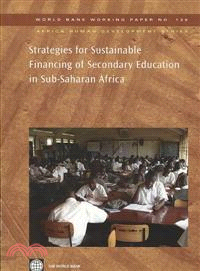
Investment in secondary schooling in Sub-Saharan Africa has been neglected since the World Conference on Education for All at Jomtien. The World Education Forum at Dakar began to recognize the growing
The five authors, who are experts in the field of energy management, were recruited by the World Bank to write this study on achieving energy efficiency in developing nations. Examples are drawn from
Air pollution in Tehran has become a major problem in recent years, due to the geographical position of the town, industries, and traffic. Most private and public vehicles are old and have no emission
This World Bank Working Paper discusses equity and efficiency issues in secondary education transitions in Sub-Saharan Africa. Its main purpose is to identify and analyze national, regional, and local
This study finds that pension reforms in recent years have improved the efficiency and sustainability of pension systems in the new member states of the European Union and Croatia. However, for many c
'Strategic Communication for Privatization, Public-Private Partnerships, and Private Participation in Infrastructure' reviews the experiences of the World Bank and its clients in employing public comm
'Global Monitoring Report 2008', the fifth in an annual series, is essential reading for those who wish to follow the global development agenda and debate in 2008. The year marks the midpoint toward t
'Risk-Based Supervision of Pension Funds' provides a review of the design and experience of risk-based pension fund supervision in countries that have been leaders in the development of these methods.
Although most policymakers and lay people assumed advances in technology would serve as the backbone of global development, few initially regarded sustainable growth as a key factor in globalization's
This annual compendium contains abstracts from studies in the World Bank Research Program that were initiated, ongoing, or completed from 2005 to 2007. Studies were in the fields of agriculture and ru