For more than a decade, higher education and research in the French-speaking countries of Africa has been in a state of severe crisis, stemming from an increasing disparity between available resources
Africa is on the move, demonstrating in recent years a significant potential for economic growth. Although the region still faces many challenges, it is also generating pockets of economic vitality in
Achieving Better Service Delivery Through Decentralization in Ethiopia examines the role decentralization has played in the improvement of human development indicators in Ethiopia.Ethiopia has made ma
In this latest entry of the WBI Development Studies series, the authors stress the importance of solid waste management (SWM) in developing countries, and how policies adopted in India in 2000 can be
This study describes the saga of how one community, instead of squatting in an informal settlement or invading a new plot of land, attempted to buy land legally and build their own houses in a peri-ur
'Global Economic Prospects 2008: Technology Diffusion in the Developing World' examines the state of technology in developing countries and the pace with which it has advanced since the early 1990s. I
'The Road Not Traveled: Education Reform in the Middle East and North Africa Region' evaluates the impact of past investment in education in the region and proposes a new approach to future education
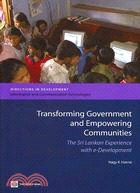
The drive to development has evolved a number of alternatives, one of which has been fostered heavily in Sir Lanka. E-commerce in Sri Lanka has contributed to the development of products and markets,
In this volume aimed at those in international and government organizations, case studies from countries such as Mozambique, Uganda, and the Ukraine articulate methods for measuring service delivery i
The current share of women in the world's international migrant population is close to one half. Despite the great number of female migrants and their importance for the development agenda in countrie
Brazil is a country of sharp disparities. The gap between the richest and the poorest citizens is one of the largest in the world. Inequality in Brazil is well-known, but its low mobility is not. Unti
As knowledge increasingly replaces raw materials and labor as a key resource in economic development, the availability of human knowledge and skills is critical in determining a country's rate of econ
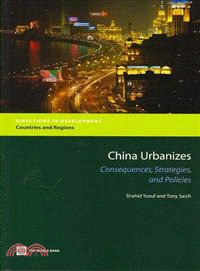
The key challenges facing China in the next two decades derive from the ongoing process of urbanization. China's urbanization rate in 2005 was about 43%. Over the next 10-15 years, it is expected to r
Access to financial services varies sharply around the world. In many developing countries less than half the population has an account with a financial institution, and in most of Africa less than on
Have gaps in health outcomes between the poor and better off grown? Are they larger in one country than another? Are health sector subsidies more equally distributed in some countries than others? Are
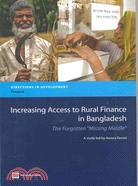
Since the mid-1990s, Bangladesh's banking sector has grown considerably. Despite the boom and the government's efforts to increase access in rural areas, rural financial markets have shrunk in relativ
Written for those involved in ensuring the elimination of stigma and inequity in access to care for those with HIV/AIDS, this gives specific examples of laws and regulations and practical advice. Its
Far reaching macro-economic and structural reforms combined with increases in government spending have been the primary drivers of Tanzania's growth acceleration. As growth in government spending slow
'Celebrating Reform 2007' features successful reforms in the 10 areas covered in the 'Doing Business' reports. These cases studies span the globe—from Serbia to El Salvador, from Egypt to Nigeria—and
This title evaluates reforms in the structure of intergovernmental relations in Eastern Europe since the breakup of the Soviet Union, focusing on eight recent EU accession countries: the Czech Republi
Public-private partnerships (PPPs) are popular around the world, in part because they allow governments to secure much-needed investment in public services without immediately having to raise taxes or
'Administrative Capacity in the New EU Member States' reviews progress made in the development of public management systems capable of meeting European standards in the new member states of the Europe
2006 proved to be a record year in foreign investment in power projects, albeit in only a small number of countries. In the meantime, firms who write insurance against political upheavals and terroris
This book is a practical guide for medical professionals with little or no business experience who are interested in establishing health care facilities in developing countries. It is an introduction
From the World Bank Institute's Knowledge for Development (K4D) program (launched in 1999), this volume presents analytical work and research on the knowledge economy in client countries. Using case s
Peru has made great strides in educational coverage. Although the gender balance is not perfect, it is at about the same level as that found in the rest of Latin America. However, Peru has an inequali
Large regional disparities in labor market indicators exist in Central Europe and the Baltic region. Such disparities appear to be persistent over time indicating, in part, a lack of flexibility in th
This volume analyzes the causes for informality in Latin America--the flawed relationship between citizens and their state shown in things like unprotected workers and underpayment of taxes--as well a
'Language, Literacy, and Learning in Primary Schools' is a synthesis of the findings arising from four years of policy research and development in Nigeria's primary schools that focused on the gap bet
This book discusses the issues and steps involved in building a lifelong learning system in China, including: a coherent policy framework, a sound incentive and institutional framework, a sound regula
This book analyzes the wide range of issues that should be taken into account in forest-related legislation. It stresses that forest law must be understood in the context of the broader legal framewor
Noncommunicable diseases (NCDs) are by far the major cause of death in lower-middle, upper-middle, and high-income countries; by 2015, they will also be the leading cause of death in low-income countr
This report is based on a study prompted by the need for improved effectiveness in the use of education resources in Uganda. Uganda's problem with increasing resource constraints for education is comm
Haiti is a resilient society whose rural communities in particular have developed coping mechanisms in response to a long history of underdevelopment and political instability. The country's religious
The striking upsurge in population growth rates in developing countries at the close of World War II gained force during the next decade. From the 1950s to the 1970s, scholars and advocacy groups publ
There is one asset that poor people have in abundance: labor. Thus, what distinguishes the poor from the non-poor in low income countries is, simply, their ability to sell labor at a good price. It sh
Great progress has been made in recent years in securing better access and financial protection against the cost of illness through collective financing of health care. Managing scarce resources effec
Half of small businesses in Kenya are owned and operated by women, but Kenya's women suffer significant inequities. This report by the World Bank asserts that business women in Kenya should be encoura
'Recruiting, Retaining and Retraining Secondary School Teachers and Principals in Sub-Saharan Africa' is based on country studies in Ethiopia, Ghana, Guinea, Madagascar, Tanzania and Uganda and an ext
'Structured Finance in Latin America' explores how structured finance mechanisms can channel pension savings to support projects in underserved sectors, deepen capital markets, and contribute to inves