This book is a case study of Vietnam's efforts to fight poverty using market-oriented land reforms. In the 1980s and 1990s, the country undertook major institutional reforms, and an impressive reducti
After almost a decade of successful macroeconomic management and several bold policy decisions, Indonesia is finally in a position of fiscal strength. Since 2006, Indonesia has freed up 'fiscal space'
Disability is an important issue for the transition countries of Eastern Europe and the former Soviet Union. Not only is a significant portion of their population either in poor health or disabled--wi
Increasingly the role of management and governance is recognized as important for providing and delivering effective services at all levels of education. In view of the growing demand for more and bet
This study finds that pension reforms in recent years have improved the efficiency and sustainability of pension systems in the new member states of the European Union and Croatia. However, for many c
The countries of Southeast Europe have undergone a significant transition over the past decade. Helped by macroeconomic stabilization and efforts in advancing structural reforms, real GDP growth has p
HIV/AIDS reverses life expectancy gains, erodes productivity, consumes savings and dilutes growth efforts, threatening the realization of the Millennium Development Goals (MDGs) in Africa.The report i
'Strategic Communication for Privatization, Public-Private Partnerships, and Private Participation in Infrastructure' reviews the experiences of the World Bank and its clients in employing public comm
Small states face special hurdles in achieving development gains. These states spend significantly more of their GDP on producing public goods and services, and they face higher connectivity costs tha
By 2010, youth will account for 28 percent of the population of Africa; Garcia and Fares (both economists, World Bank's Human Development Network) examine challenges African youths faces in their tran
'Risk-Based Supervision of Pension Funds' provides a review of the design and experience of risk-based pension fund supervision in countries that have been leaders in the development of these methods.
'Linking Education Policy to Labor Market Outcomes' examines current research and new evidence from Ghana and Pakistan—representative of two of the poorest regions of the world—to assess how education
This book is a case study of Vietnam's efforts to fight poverty using market-oriented land reforms. In the 1980s and 1990s, the country undertook major institutional reforms, and an impressive reducti
Although most policymakers and lay people assumed advances in technology would serve as the backbone of global development, few initially regarded sustainable growth as a key factor in globalization's
This annual compendium contains abstracts from studies in the World Bank Research Program that were initiated, ongoing, or completed from 2005 to 2007. Studies were in the fields of agriculture and ru
For more than a decade, higher education and research in the French-speaking countries of Africa has been in a state of severe crisis, stemming from an increasing disparity between available resources
HIV/AIDS reverses life expectancy gains, erodes productivity, consumes savings and dilutes growth efforts, threatening the realization of the Millennium Development Goals (MDGs) in Africa.The report i
Knowledge and its application are now widely recognized to be key sources of growth in the global economy. Putting knowledge to work allows countries to improve everyday life for their people, opening
Rural electrification can have many benefits-not only bringing lighting, but improving the quality of health care, spreading information and supporting productive enterprises. The extent of these bene
'The Migration and Remittances Factbook 2008' attempts to present the numbers and facts behind the stories of international migration and remittances, drawing on authoritative, publicly available data
This guide from the World Bank is a supplemental overview to the accompanying sourcebook presented on CD-ROM, which discusses how to improve the lives of those in urban slums. It contains 14 audiovisu
While Tanzania has been at the forefront of creating a positive legal framework and political context for gender equality, certain legal, regulatory, and administrative barriers still hinder women's f
Africa is on the move, demonstrating in recent years a significant potential for economic growth. Although the region still faces many challenges, it is also generating pockets of economic vitality in
Achieving Better Service Delivery Through Decentralization in Ethiopia examines the role decentralization has played in the improvement of human development indicators in Ethiopia.Ethiopia has made ma
Workers' remittances have become a major source of financing for developing countries and are especially important in Latin America and the Caribbean, which is at the top of the ranking of remittance
The world's attention to the countries of the Middle East and North Africa (MENA) region has often been dominated by headline issues: conflict, sanctions, political turmoil, and rising oil prices. Lit
Since 1980, China's economy has been the envy of the world. Is annual growth rate of more than 9 percent during this period makes China today the world's fourth-largest economy. And this sustained gro
Early childhood, from birth through school entry, was largely invisible worldwide as a policy concern for much of the twentieth century. Children, in the eyes of most countries, were 'appendages' of t
Improving the Business Environment in Latvia: The Impact of FIAS Assistance tracks the process through which the Foreign Investment Advisory Service (FIAS) of the World Bank Group advised the governme
Sub-Saharan Africa is a critical development priority—it has some of the world's poorest countries and during the past two decades the number of poor in the region has doubled, to 300 million—more tha
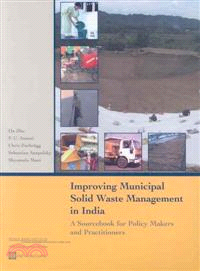
In this latest entry of the WBI Development Studies series, the authors stress the importance of solid waste management (SWM) in developing countries, and how policies adopted in India in 2000 can be
Produced by the staff of the International Bank for Reconstruction and Development/The World Bank for presentation at the "1st Summit Meeting of the India-Brazil-South Africa Dialogue Forum" held in B
This study describes the saga of how one community, instead of squatting in an informal settlement or invading a new plot of land, attempted to buy land legally and build their own houses in a peri-ur
The Caribbean Region is second only to Africa in the impact of HIV and AIDS. The Caribbean Community (CARICOM) has responded to this challenge by promoting a multisectoral response to the epidemic. UN
'The Road Not Traveled: Education Reform in the Middle East and North Africa Region' evaluates the impact of past investment in education in the region and proposes a new approach to future education
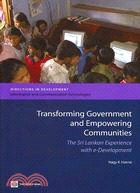
The drive to development has evolved a number of alternatives, one of which has been fostered heavily in Sir Lanka. E-commerce in Sri Lanka has contributed to the development of products and markets,
The current share of women in the world's international migrant population is close to one half. Despite the great number of female migrants and their importance for the development agenda in countrie
This edition of the 'Annual World Bank Conference on Development Economics' presents selected papers from the ABCDE Meetings, held May 29-30, 2006, in Tokyo, Japan. This volume presents papers on Infr
Brazil is a country of sharp disparities. The gap between the richest and the poorest citizens is one of the largest in the world. Inequality in Brazil is well-known, but its low mobility is not. Unti
As knowledge increasingly replaces raw materials and labor as a key resource in economic development, the availability of human knowledge and skills is critical in determining a country's rate of econ