This report from the World Bank examines the financial development in the Middle East and North Africa (MENA) region and ways to expand access to more diversified, competitive, and inclusive financial
This book offers an accessible introduction to the topic of impact evaluation and its practice in development. While the book is geared principally towards development practitioners and policymakers d
'Africa Development Indicators 2011' (ADI) provides the most detailed collection of data on Africa available. An essential tool for policy makers, researchers, and others interested in Africa's develo
Virtually every country in the world faces the challenge of designing the regulatory and financial mechanisms that ensure cost-effective procurement of generation to supply electricity demand. Histori
Examining innovative ways to address Africa’s infrastructure deficit is at the heart of this analysis. Africa’s infrastructure stock and quality is among the least developed in the world, a challenge
'The Little Data Book on External Debt' provides a quick reference for users interested in external debt stocks and flows, major economic aggregates, key debt ratios, and the currency composition of l
Using data extracted from data.worldbank.org, this pocket reference provides 213 country tables, with figures in the areas of people, environment, economy, states and markets, and global links. These
Using data extracted from data.worldbank.org, this pocket reference provides 211 country tables, with figures in key environmental areas such as forests and biodiversity. These are preceded by fourtee
Drawing on the existing knowledge of African development from previous publications, Yes Africa Can: Success Stories from a Dynamic Continent takes an in-depth look at 26 economic and social developme
The East Asia and Pacific region is characterized by wide variations in sources of healthcarefinancing, pooling of funds, purchasing of care services, and the extent to which thesepolicy instruments a
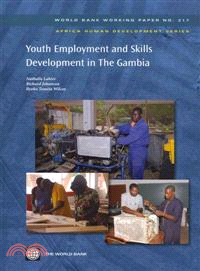
This is a World Bank Working Paper on employment and skills development among youth in the African country of The Gambia, where youth under 20, nearly half of the population, represent nearly 60 perce
This book offers an accessible introduction to the topic of impact evaluation and its practice in development. While the book is geared principally towards development practitioners and policymakers d
This report addresses the core components of enterprise activity, namely, the factors of production and the public infrastructure to support them. In the period just before the financial crisis, a nu
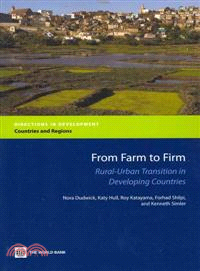
The process of rural-urban transformation presents both opportunities and challenges for development. If managed effectively, it can result in growth that benefits everyone; if managed poorly, it can
Since the private health sector is an important, and often dominant, provider of health services in Sub-Saharan Africa, it is the job of governments as the stewards of the health system to engage with
Small and medium enterprise (SME) support programs are a common feature of industrial policy in developing countries, but one whose effectiveness is not well known. Governments are motivated to suppo
This study of the role of Ghana's private sector in the country's health system employs a supply and demand approach to identify market, policy, and institutional weaknesses that could be addressed th
Since 1984, the World Bank has financed 87 Financial Management Information System (FMIS) projects in 51 countries totaling over US $2.2 billion, of which US $938 million was for FMIS related informat
'The Human Resources for Health Crisis in Zambia' is part of the World Bank Working Paper series. These papers are published to communicate the results of the Bank’s ongoing research and to stimulate
The book examines India’s experience with poverty reduction in a period of rapid economic growth. Marshalling evidence from multiple sources of survey data and drawing on new methods, the book asks h
Despite India’s record of rapid economic growth and poverty reduction over recent decades,rising inequality in the country has been a subject of concern among policy makers,academics, and activists al
The financial crisis, which began in the United States and Western Europe swiftly expanded into an economic crisis throughout developing countries. The Eastern Europe and Central Asia region was hit
The power sectors in Armenia, the Kyrgyz Republic, Romania, Serbia and the Ukraine were all relying upon former Soviet infrastructure that was wearing out and/or becoming obsolete. While the global fi
The World Bank Group has responded to the global economic crisis with a strong countercyclical expansion of financing. Its disbursements of $80 billion in the past two fiscal years were the largest am
Mobile Money is a booming industry in an increasing number of countries worldwide. The project results from increased demand for guidance and technical assistance from governments after the 2008 publi
This book, designed for policymakers, academics and researchers, and SEZ program practitioners, provides the first systematic and comprehensive analysis of SEZ programs in Sub-Saharan Africa. It is th
The report assesses the World Bank Group’s support for growth and productivity in the agriculture sector. Enhancing agricultural growth and productivity is essential to meeting the worldwide demand fo
This study from the Independent Evaluation Group draws lessons for development and climate change mitigation from the World Bank Group’s far-reaching portfolio of projects in energy, forestry, transpo
Developing countries lose an estimated US$20-40 billion each year through bribery, misappropriation of funds, and other corrupt practices. Much of the proceeds of this corruption find 'safe haven' in
This Peru Country Program Evaluation for the World Bank Group, 2003-2009 is part of IEG’s country program evaluation series. To date, IEG’s in-depth country evaluations have comprised IEG-WB Country A
The human resources crisis in the health sector has been gathering attention on the global stage. To date, however, most of this attention has focused on shortages of health human resources (HRH) at t
Historically countries of Eastern Europe and Central Asia have faced a number of obstacles in their transition to democracy and market-based economies. These obstacles include higher levels of corrupt
This report provides the most comprehensive and rigorous analysis of Iraqi income and expenditure in several decades. The report makes extensive use of the Iraq Household Socio-Economic Survey, the f
The World Bank, Japan International Cooperation Agency (JICA) Research Institute, and the Foundation for Advanced Studies on International Development (FASID), in collaboration with researchers affili
Now in its sixth edition, and with previous editions translated into 15 languages, this publication gives readers a broad and basic understanding of the key issues for each International Financial Rep
Science, Technology and Innovation in Uganda is part of the World Bank Studies series. These papers are published to communicate the results of the Bank’s ongoing research and to stimulate public disc
This book offers an accessible introduction to the topic of impact evaluation and its practice in development. While the book is geared principally towards development practitioners and policymakers d
Two years into the deepest global financial crisis in the post-war era, the world economy is still experiencing uneven economic recovery and financial weakness. Financial market conditions are signali
This World Bank publication brings together contributions from senior public pension fund officials, policy makers, regulators, and other practitioners in the governance and investment of pensions and
In the wake of the financial crisis of 2008, governments worldwide undertook massive fiscal interventions to stave off what otherwise would have likely been a system-wide financial and economic meltdo