A variety of analytic methods are described and evaluated through such case studies as winners and losers from trade reform in Morocco, the social impact of the Indonesian financial crisis, poverty al
Although this works well as a compendium of knowledge about standards of communication about development, it also makes the case for its systematic adoption in research, policies and practices. One of
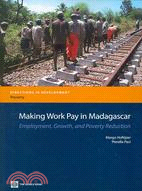
Poor people derive most of their income from work. However, there is insufficient understanding of the role of employment and earnings as a link between growth and poverty reduction, especially in low
The World Bank has commissioned this report on global regulatory institutions, and how "Doing Business" (DB) indicators are used to measure the role these institutions have in stimulating business gro
The Annual World Bank Conference on Development Economics (ABCDE) brings together the world's leading scholars and development practitioners for a lively debate on state-of-the-art thinking in develop
'Toward a Better Future' provides a comprehensive analysis of education development in Singapore since 1965, giving particular attention to the strategic management that has enabled Singapore to trans
Poor people derive most of their income from work. However, there is insufficient understanding of the role of employment and earnings as a link between growth and poverty reduction, especially in low
Poor people derive most of their income from work. However, there is insufficient understanding of the role of employment and earnings as a link between growth and poverty reduction, especially in low
Providing access to affordable, good quality HIV/AIDS medicines remains a challenge in Sub-Saharan Africa. Although patent protection is by no means the only barrier to access, it has significant impl
Although mandatory health insurance programs are being proposed or expanded in many developing countries, relatively little attention has been given to how these programs are governed. The available l
This paper explores an area of tertiary education that is currently understudied—the extent and nature of differentiation and articulation in African tertiary education systems. The overall finding of
'Developing Tests and Questionnaires for a National Assessment of Educational Achievement' is the second in the 'National Assessments of Educational Achievement' series. It is designed to help build c
Realizing the potential of young people in Latin America and the Caribbean is essential both to their well-being and to the region's long-term welfare. Young people are often seen as the source of pr
'The Little Data Book on External Debt' provides a quick reference for users interested in external debt stocks and flows, major economic aggregates, key debt ratios, and the currency composition of l
This report from the World Bank considers how Brazil can improve its competitiveness in the global economy through creation of human capital and the fostering of innovation. It summarizes conclusions
As the global economy rapidly changes and new technologies are introduced, more highly-skilled workers are required. In the countries of the Organization of Eastern Caribbean States (OECS), firms stru
This report, produced with the help of Madagascar's national education team in 2006-2007, is designed to contribute to ongoing education reform discussions. It analyzes the constraints to system expan
Given the lack of adequate universal social welfare for those unable to find jobs in the salaried formal sector, the livelihoods and well-being of most poor people depends heavily on their asset base.
The heterogeneity of social structures and cultural identities in many developing countries, together with traditional hierarchies, rivalries, and deep-seated biases, has perpetuated inequities. Inclu
Participatory development and government accountability depend in part on the existence of media that provide broad access to information from varied sources and that equip and encourage people to rai
This book is a case study of Vietnam's efforts to fight poverty using market-oriented land reforms. In the 1980s and 1990s, the country undertook major institutional reforms, and an impressive reducti
After almost a decade of successful macroeconomic management and several bold policy decisions, Indonesia is finally in a position of fiscal strength. Since 2006, Indonesia has freed up 'fiscal space'
Disability is an important issue for the transition countries of Eastern Europe and the former Soviet Union. Not only is a significant portion of their population either in poor health or disabled--wi
This study is based on research on secondary textbook and school library provision in Botswana, Cameroon, Cote d'Ivoire, Ghana, Kenya, Malawi, Rwanda, Tanzania, and Togo, as well as existing recent co
Increasingly the role of management and governance is recognized as important for providing and delivering effective services at all levels of education. In view of the growing demand for more and bet
The countries of Southeast Europe have undergone a significant transition over the past decade. Helped by macroeconomic stabilization and efforts in advancing structural reforms, real GDP growth has p
HIV/AIDS reverses life expectancy gains, erodes productivity, consumes savings and dilutes growth efforts, threatening the realization of the Millennium Development Goals (MDGs) in Africa.The report i
Small states face special hurdles in achieving development gains. These states spend significantly more of their GDP on producing public goods and services, and they face higher connectivity costs tha
By 2010, youth will account for 28 percent of the population of Africa; Garcia and Fares (both economists, World Bank's Human Development Network) examine challenges African youths faces in their tran
This book is a case study of Vietnam's efforts to fight poverty using market-oriented land reforms. In the 1980s and 1990s, the country undertook major institutional reforms, and an impressive reducti
Tanzania's annual real economic growth rate has in recent years been between 6 and 7 percent with Gross National Income equivalent to about US$340 per person. A “hidden” economy could potentially have
HIV/AIDS reverses life expectancy gains, erodes productivity, consumes savings and dilutes growth efforts, threatening the realization of the Millennium Development Goals (MDGs) in Africa.The report i
Knowledge and its application are now widely recognized to be key sources of growth in the global economy. Putting knowledge to work allows countries to improve everyday life for their people, opening
This guide from the World Bank is a supplemental overview to the accompanying sourcebook presented on CD-ROM, which discusses how to improve the lives of those in urban slums. It contains 14 audiovisu
Workers' remittances have become a major source of financing for developing countries and are especially important in Latin America and the Caribbean, which is at the top of the ranking of remittance
Early childhood, from birth through school entry, was largely invisible worldwide as a policy concern for much of the twentieth century. Children, in the eyes of most countries, were 'appendages' of t
Improving the Business Environment in Latvia: The Impact of FIAS Assistance tracks the process through which the Foreign Investment Advisory Service (FIAS) of the World Bank Group advised the governme
Sub-Saharan Africa is a critical development priority—it has some of the world's poorest countries and during the past two decades the number of poor in the region has doubled, to 300 million—more tha
'Building Science, Technology, and Innovation Capacity in Rwanda' presents the methodology, policy conclusions, and detailed action plans that emerged from a World Bank science, technology, and innova
Produced by the staff of the International Bank for Reconstruction and Development/The World Bank for presentation at the "1st Summit Meeting of the India-Brazil-South Africa Dialogue Forum" held in B