This evaluation assesses the effectiveness of the World Bank’s 2001 gender strategy and the results thereof. Covering the period fiscal 2002-08, the evaluation finds that the Bank made progress in ge
Drawing on the findings from responses to a survey conducted in 2008–09 from 114 central banks worldwide (of which 33 are in Africa), this paper aims to better understand how central banks and other n
The WDI CD ROM contains time series data for more than 200 economies from 1960-2008, single-year observations, and spreadsheets on many topics. It contains more than 1,000 country tables and the text
Innovation in all its Forms, Particularly Technological Innovation, has Become a Crucial Driver of growth, enhancing competitiveness and increasing social well-being in all economies of the world. In
The World Bank's new Eco2 Cities Initiative is strongly grounded in the realities and challenges faced by cities in developing countries. Over the past 30 years, Curitiba's sustained experiences have
A growing number of cities around the world have established systems for monitoring the quality of urban life. Many of those systems combine objective information with subjective opinions and cover a
Over the past decade, four major developments in global economic integration have shaped trade policy and the economic performance of countries within the Middle East and North Africa region: the eme
This book/CD-ROM report contains data tables of about 450 macroeconomic, sectoral, and social indicators in 53 African countries, with additional data on the CD-ROM. Data are given on areas such as na
The East Asia and Pacific region as a whole has made substantial progress in improving economic opportunities for women, but significant intraregional differences and important challenges remian, Asp
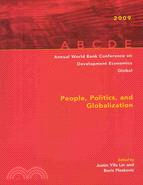
The Annual World Bank Conference on Development Economics (ABCDE) is one of the world's best-known series of conferences for the presentation and discussion of new knowledge on development. The confe
Utilizing standardized indicators from 2001 to 2008, 'Getting Finance in South Asia 2010' analyzes the financial performance and soundness of commercial banks in eight South Asian countries: Afghanist
Gender-Sensitive Approaches to the Extractive Industry in Peru was commissioned under the World Bank's Gender and Extractive Industries program and presents a detailed look at the importance of ensur
Telecommunications sector policy-makers and regulators have a wide range of instruments available to them that can be used to increase access to telecommunications services in rural and low-income are
Improving Primary Health Care Delivery in Nigeria is part of the World Bank Working Paper series. These papers are published to communicate the results of the Bank's ongoing research and to stimulate
'Managing Risk and Creating Value with Microfinance' brings together the latest information on microfinance institutional sustainability from leading international experts and microfinance practitione
The training and development of human capital in Sub-Saharan Africa (SSA) will help countries in the region diversify their economies, carry out economic transformation, and support sustainable growt
Rapid advances in information technology (IT) and the resulting global connectivity are fueling dynamic growth in the services sector. Demand for IT and IT-enabled services (ITES) is estimated to repr
Developing country governments and the development aid community are acutely aware of the need to find more effective ways to improve basic living conditions for the poor, as traditional approaches of
'The Little Data Book on Africa 2010' is a pocket edition of 'Africa Development Indicators 2010'. It contains some 115 key indicators on economics, human development, governance, and partnership and
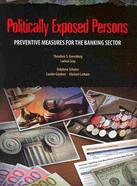
In recent years, revelations of grand corruption and the plunder of state assets have led to greater scrutiny of financial relationships with politically exposed persons (PEPs)—senior government offic
*What were the causes of the financial and economic crises of 2008-2009?*What intellectual and policy mistakes prevented academics and policymakers from anticipating the crisis?*What is the future of
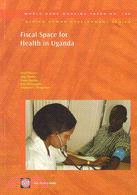
This paper reviews the performance of the health sector in Uganda. It addresses concerns in the Ugandan health community that health financing must be increased to improve health, nutrition, and popul
Published annually since 1978, the World Development Report has long been an influential publication and an essential reference on the world economy and the state of economic and social development. E
While some argue that trade liberalization has raised incomes and led to environmental protection in developing countries, others claim that it generates neither poverty reduction nor sustainability.
The World Bank East Asia and Pacific Economic Update 2010, Volume I, is the World Bank's comprehensive, twice-yearly review of the region's economies. In this edition. the Bank finds that, largely th
Countries in Sub-Saharan Africa have made substantial progress in universalizing primary school completion. Many young Africans are completing primary schooling, and many more will do so in the coming
Rural energy’s importance to the Bangladesh economy cannot be underestimated, The problems rural people face in obtaining safe, clean, and reliable energy supplies are not minor inconveniences. People
The development aid community has placed a great deal of emphasis on the need for rural mobility in Sub-Saharan Africa (SSA). Thus far, most development partners and governments in SSA have relied on
The prices of farm products are crucial determinants of the extent of poverty and inequality in the world.The vast majority of the world’s poorest households depend to a considerable extent on farming
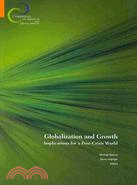
Over one year into its deepest global financial crisis in the post-war era, the world economy is entering a phase of economic recovery and financial stabilization. Financial market conditions are sign
Alternative Remittance Systems and Terrorism Financing: Issues in Risk Management is part of the World Bank Working Paper series. These papers are published to communicate the results of the Bank's on
Nigeria has a bold national vision of becoming one of the world’s top 20 economies by 2020. However, despite being the 8th most populous country in the world, it ranks 41st in terms of GDP and 161st i
The drug policies of wealthy consuming countries emphasize criminalization, interdiction, and eradication. Such extreme responses to social challenges risk unintended, costly consequences. The eviden
Emerging Europe and Central Asia, the region made up of the countries of Central and South East Europe (CSE) and the Commonwealth of Independent States (CIS), is a major energy supplier to both Easter
Governments in developing countries have been increasingly involved in the support of agricultural (crop and livestock) insurance programs in recent years. In their attempts to design and implement ag
Written for those who said to the authors (and for others in the same situation): “We know we need M and E, but we don’t know how to set up an M and E system, or how to make ours work well and provide
'Local and Community Driven Development: Moving to Scale in Theory and Practice' provides development practitioners with the historical background and the tools required to successfully scale up local
Over the past decade, Egyptian women have made significant progress in improving their economic and social status. The government’s commitment to women’s empowerment is strong at the highest political
The region of Eastern Europe and Central Asia (ECA) is already experiencing the consequences of climate change: increasing variability, warmer temperatures, altered hydrology. Events such as droughts,
Growth in the information and communication technology (ICT) sector has exploded over the past 20 years. Continuous dynamic market and technology developments in this sector have led to a phenomenon k