This book is a case study of Vietnam's efforts to fight poverty using market-oriented land reforms. In the 1980s and 1990s, the country undertook major institutional reforms, and an impressive reducti
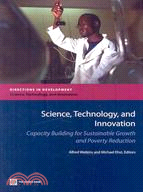
Although most policymakers and lay people assumed advances in technology would serve as the backbone of global development, few initially regarded sustainable growth as a key factor in globalization's
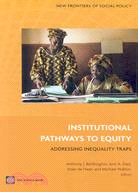
Questions of equity and inequality have moved to the center of debates on development and poverty reduction. This reflects growing awareness that even countries with high rates of growth can experien
This annual compendium contains abstracts from studies in the World Bank Research Program that were initiated, ongoing, or completed from 2005 to 2007. Studies were in the fields of agriculture and ru
Tanzania's annual real economic growth rate has in recent years been between 6 and 7 percent with Gross National Income equivalent to about US$340 per person. A “hidden” economy could potentially have
For more than a decade, higher education and research in the French-speaking countries of Africa has been in a state of severe crisis, stemming from an increasing disparity between available resources
Knowledge and its application are now widely recognized to be key sources of growth in the global economy. Putting knowledge to work allows countries to improve everyday life for their people, opening
Rural electrification can have many benefits-not only bringing lighting, but improving the quality of health care, spreading information and supporting productive enterprises. The extent of these bene
'The Migration and Remittances Factbook 2008' attempts to present the numbers and facts behind the stories of international migration and remittances, drawing on authoritative, publicly available data
While Tanzania has been at the forefront of creating a positive legal framework and political context for gender equality, certain legal, regulatory, and administrative barriers still hinder women's f
Workers' remittances have become a major source of financing for developing countries and are especially important in Latin America and the Caribbean, which is at the top of the ranking of remittance
The world's attention to the countries of the Middle East and North Africa (MENA) region has often been dominated by headline issues: conflict, sanctions, political turmoil, and rising oil prices. Lit
Since 1980, China's economy has been the envy of the world. Is annual growth rate of more than 9 percent during this period makes China today the world's fourth-largest economy. And this sustained gro
A companion to the bestseller, The Impact of Economic Policies on Poverty and Income Distribution, this title deals with theoretical challenges and cutting-edge macro-micro linkage models. The authors
Sub-Saharan Africa is a critical development priority—it has some of the world's poorest countries and during the past two decades the number of poor in the region has doubled, to 300 million—more tha
'Building Science, Technology, and Innovation Capacity in Rwanda' presents the methodology, policy conclusions, and detailed action plans that emerged from a World Bank science, technology, and innova
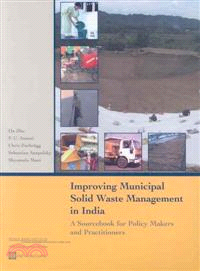
In this latest entry of the WBI Development Studies series, the authors stress the importance of solid waste management (SWM) in developing countries, and how policies adopted in India in 2000 can be
Produced by the staff of the International Bank for Reconstruction and Development/The World Bank for presentation at the "1st Summit Meeting of the India-Brazil-South Africa Dialogue Forum" held in B
This study describes the saga of how one community, instead of squatting in an informal settlement or invading a new plot of land, attempted to buy land legally and build their own houses in a peri-ur
The Caribbean Region is second only to Africa in the impact of HIV and AIDS. The Caribbean Community (CARICOM) has responded to this challenge by promoting a multisectoral response to the epidemic. UN
'Global Economic Prospects 2008: Technology Diffusion in the Developing World' examines the state of technology in developing countries and the pace with which it has advanced since the early 1990s. I
'The Road Not Traveled: Education Reform in the Middle East and North Africa Region' evaluates the impact of past investment in education in the region and proposes a new approach to future education
The drive to development has evolved a number of alternatives, one of which has been fostered heavily in Sir Lanka. E-commerce in Sri Lanka has contributed to the development of products and markets,
In this volume aimed at those in international and government organizations, case studies from countries such as Mozambique, Uganda, and the Ukraine articulate methods for measuring service delivery i
The current share of women in the world's international migrant population is close to one half. Despite the great number of female migrants and their importance for the development agenda in countrie
The role of public finance in reducing poverty is the focus of this volume, with discussion of case studies from Africa and Latin America. Moreno-Dodson and Wodon compile 12 chapters (including eight
The design of a federal system to deal with growth, stabilization, and regional and local development issues is the primary concern of this volume, edited by Anwar Shah. The book provides analytical t
Developing effective regulation for utilities has always depended on getting good accounting information on finances and operations. But reforms within the utility sector--such as promoting competitio
Brazil is a country of sharp disparities. The gap between the richest and the poorest citizens is one of the largest in the world. Inequality in Brazil is well-known, but its low mobility is not. Unti
As knowledge increasingly replaces raw materials and labor as a key resource in economic development, the availability of human knowledge and skills is critical in determining a country's rate of econ
The world's demand for food is expected to double within the next 50 years, while the natural resources that sustain agriculture will become increasingly scarce, degraded, and vulnerable to the effect
Poverty mapping, a technique that combines analysis of census and household survey information, has been developed by the Development Research Group in the World Bank as a means of understanding the d
Noting poor student performance, Vegas and Petrow summarize evidence on the impact of student learning on policies and programs and present policy options for improvement. They rely mostly on national
Access to financial services varies sharply around the world. In many developing countries less than half the population has an account with a financial institution, and in most of Africa less than on
Although women now account for half of the growing wave of international migration, insufficient attention has been paid to gender differences in migration patterns and economic impacts on origin and
China and India's new-found interest in trade and investment with Africa - home to 300 million of the globe's poorest people and the world's most formidable development challenge - presents a signific
This book provides profiles of over 50 countries with 54 development indicators about people, environment, economy, technology, infrastructure, trade and finance, all in one handy, pocket-sized volume
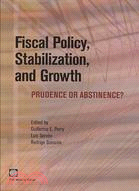
Perry et al. (economics and macroeconomics and growth, Latin American and the Caribbean Region and Development Economics, World Bank) assemble nine essays that consider how fiscal policy in Latin Amer
Islamic finance is emerging as a rapidly growing part of the financial sector in the Islamic world and is not restricted to Islamic countries, but is spreading wherever there is a sizable Muslim commu
Drawing upon recent analytical work prepared inside and outside the World Bank, this report identifies key lessons concerning the linkages between poverty and the environment. With a focus on the cont