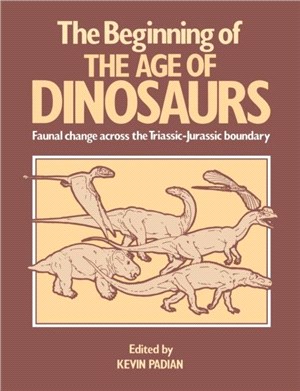
Around 210 million years ago, life on Earth experienced sweeping changes. Many archaic reptiles and mammalian predecessors became extinct and were replaced by dinosaurs, pterosaurs, crocodiles, turtles, mammals, and essentially all of the major modern vertebrate groups except the birds. This period of change, which took place over a period of approximately five to ten million years, ushered in the beginning of the 'Age of Dinosaurs,' a period that lasted 160 million years to the end of the Cretaceous 65 million years ago. In the past decade, paleontologists have come to know a great deal more about this crucial interval of time. New discoveries, ideas, and insights from scientists in many related- disciplines have created new paradigms about the beginning of the 'Age of Dinosaurs.' What were the animals that preceded the dinosaurs like? How did the dinosaurs originate, and what do we know of their early history? Was their ascent tied to evolutionary innovations, global climatic and eco