In effect Revelation and Theology is Schillebeeckx's general introduction to theology. Its fifteen chapters were originally published separately between 1954 and 1962, but the thematic collection offe
God, the Future of Man focuses on religion and secularisation, viewed from various vantage points: secularisation and God-talk; secularisation and the church's liturgy; secularisation and the church's
Volume 18 in the Collected Works of Erasmus series covers the period from 1 April 1531 to 30 March 1532. The most persistent theme in the letters is the fear, to which Erasmus had long been prey, that
After spending several months in England, Erasmus returned to Paris in the winter of 1500 and set about compiling a small anthology of classical proverbs known as the Adagiorum collectanea. This modes
Volume 58 in the Collected Works of Erasmus series contains, for the first time, the English translation of Erasmus’ Annotations on Paul’s Epistles to the Galatians and Ephesians. Erasmu
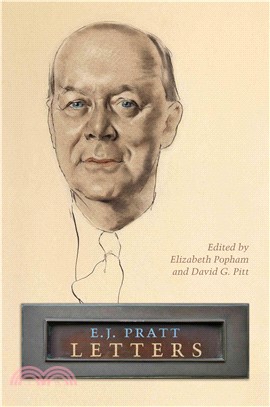
This edition of E.J. Pratt’s letters is the final volume in the Collected Works series. Because of Pratt’s role in the making of Canadian culture between and after the World Wars, his correspondence h
Many of the letters in this volume, which covers the period August 1530 to March 1531, reflect Erasmus' anxieties over events at the Diet of Augsburg (June-November 1530), at which the first of many a
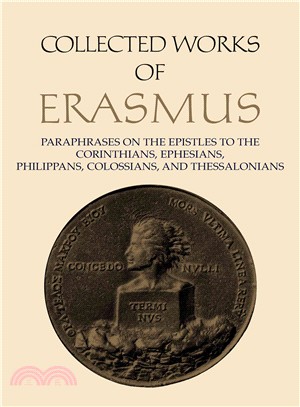
Erasmus yearned to make the New Testament an effective instrument of reform in society, church, and everyday life, and to this end he composed theParaphrases, in which the words of Holy Scripture prov
The Collected Works of Spinoza provides, for the first time in English, a truly satisfactory edition of all of Spinoza's writings, with accurate and readable translations, based on the best critical e
Among Erasmus of Rotterdam’s many influential treatises on theology during the early Reformation,Exomologesis (1524; revised 1530) and Ecclesiastes (1535) stand out as two of his most significant.Exom
Among the most important of Erasmus’ contributions to Christian humanism were his Greek text, new Latin translation, and annotations of the New Testament, an implicit challenge to the authority of the
Assembled for the young Prince William of Cleves, Erasmus’ Apophthegmata consists of thousands of sayings and anecdotes collected from Greek and Latin literature for the moral education of the future
In 1584, while living in the household of Michel de Castelnau, the French Ambassador to the court of Queen Elizabeth of England, Giordano Bruno completed three books of cosmological dialogues: The Ash
This is a new edition of this 1971 classic about the relationship between the modern world and the church. World and Church deals with the conflict between religiosity and life in the world. Deliber
Christ. The Christian Experiencein the Modern World is the second volume ofSchillebeeckx' ‘Jesus trilogy'. It focuseson the question of salvation for all people. Using seven 'anthropologicalconstants'
This is a new edition of the 1963 classic which gave Christological thought a new direction. As far back as his first major book Schillebeeckx propounded an anthropological approach to the sacraments.
This is a new and revised translation of Schillebeeckx' 1968 classic. God, the Future of Man contains Schillebeeckx's systematic elaboration on a number of lectures given during a tour of the USA in
The existence ofthe historical Jesus cannot be doubted. But who was Jesus of Nazareth? And whois he for us today? In this controversial work Schillebeeckx offers his'experiment': an informative and su
Asa result of the publication of Jesus. AnExperiment in Christology (volume 6) and Christ. The Christian Experience in the Modern World (volume 7), Schillebeeckxwas accused of denying the divinity of
The Church with a Human Face: A NewExpanded Theology of Ministry is a thorough anddetailed study of Church and ecclesiastical office, including Schillebeeckx'personal ideas on this topic. This volume
This is a unique selection of Edward Schillebeeckx' collection, translated into English here for the first time. This is a collection of essays from one of the most eminent Catholic theologians of the
Erasmus' humanistic approach to theology and biblical exegesis presented a shocking challenge to the theologians at the University of Paris, which had been dominated by scholastic theology for centuri
First published in 1987, Constructive Drinking is a series of original case studies organized into three sections based on three major functions of drinking. The three constructive functions are: that
Ernest Francisco Fenollosa: Published Writings in English is the very first collection of almost all of the writings of Ernest Fenollosa, ‘Father of Japanese Art’, published in his lifetime.To commemo
As part of his effort to make the Bible an effective instrument of reform in society, church, and everyday life, Erasmus composed the Paraphrases. In these series of texts, the Holy Scripture provides
This course on logic and theory of knowledge fell exactly midway between the publication of the Logical Investigations in 1900-01 and Ideas I in 1913. It constitutes a summation and consolidation of
In 1520, the reading public witnessed the eruption of a simmering conflict between Erasmus, the foremost advocate of the new biblical humanism, and Edward Lee, a younger scholar at the University of L
Part I is devoted to Niels Bohr's mission to promote an "open world" between nations, that is, full sharing of information in the scientific and technical, as well as in the cultural spheres the scien
This new volume of the CWE presents three of Erasmus' polemic works against Alberto Pio, Prince of Carpi. A leading diplomat of the period, patron of artists and humanists, and conservative Catholic,
Erasmus yearned to make the Bible an effective instrument of reform in society, church, and everyday life, and to this end he composed the Paraphrases, in which the words of Holy Scripture provide th
The letters in Volume 12 cover Erasmus' correspondence for all of 1526 and roughly the first quarter of 1527. This was a difficult period for Erasmus for various reasons, including two bouts of illnes
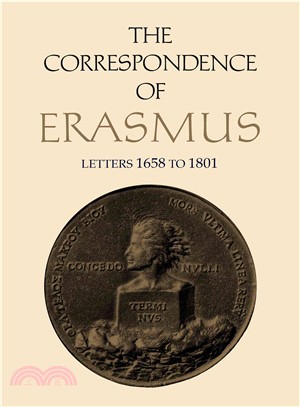
The correspondence of Erasmus has never been completely translated into English, although it has long been acknowledged to be one of the most illuminating sources for the history of northern humanism
Erasmus' controversies with French, Italian, Spanish, and German critics on theological, social, philological, educational, and other matters are contained in volumes 71-84 of the Collected Works. CWE
Erasmus' controversies with French, Italian, Spanish, and German critics on theological, social, philological, educational, and other matters are contained in volumes 71-84 of the Collected Works of E
This volume is divided into five parts. The title of the volume refers primarily to part I, which is by far the largest and comprises papers discussing the fundamental questions of biology and related