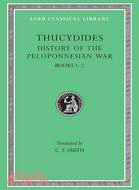
Thucydides of Athens, one of the greatest of historians, was born about 471 BCE. He saw the rise of Athens to greatness under the inspired leadership of Pericles. In 430, the second year of the Pelop
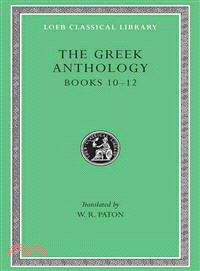
The Greek Anthology ('Gathering of Flowers') is the name given to a collection of about 4500 short Greek poems (called epigrams but usually not epigrammatic) by about 300 composers. To the collection
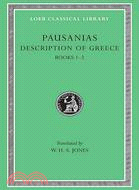
Pausanias, born probably in Lydia in Asia Minor, was a Greek of the 2nd century CE, about 120180, who travelled widely not only in Asia Minor, Palestine, Egypt and North Africa, but also in Gre
Plutarch (Plutarchus), ca. 45120 CE, was born at Chaeronea in Boeotia in central Greece, studied philosophy at Athens, and, after coming to Rome as a teacher in philosophy, was given consular r
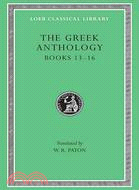
The Greek Anthology ('Gathering of Flowers') is the name given to a collection of about 4500 short Greek poems (called epigrams but usually not epigrammatic) by about 300 composers. To the collection
Caesar (C. Iulius, 10244 BCE), statesman and soldier, defied the dictator Sulla; served in the Mithridatic wars and in Spain; pushed his way in Roman politics as a 'democrat' against the senato
The Greek Anthology ('Gathering of Flowers') is the name given to a collection of about 4500 short Greek poems (called epigrams but usually not epigrammatic) by about 300 composers. To the collection
The Greek Anthology ('Gathering of Flowers') is the name given to a collection of about 4500 short Greek poems (called epigrams but usually not epigrammatic) by about 300 composers. To the collection
Theophrastus of Eresus in Lesbos, born about 370 BCE, is the author of the most important botanical works that have survived from classical antiquity. He was in turn student, collaborator, and succes
Procopius, born at Caesarea in Palestine late in the 5th century, became a lawyer. In 527 CE he was made legal adviser and secretary of Belisarius, commander against the Persians, and went with Belis
Plutarch (Plutarchus), ca. 45120 CE, was born at Chaeronea in Boeotia in central Greece, studied philosophy at Athens, and, after coming to Rome as a teacher in philosophy, was given consular r
If the work of Hippocrates is taken as representing the foundation upon which the edifice of historical Greek medicine was reared, then the work of Galen, who lived some six hundred years later, may
Theophrastus of Eresus in Lesbos, born about 370 BCE, is the author of the most important botanical works that have survived from classical antiquity. He was in turn student, collaborator, and succes
Dio Cassius (Cassius Dio), ca. 150 235 CE, was born at Nicaea in Bithynia in Asia Minor. On the death of his father (Roman governor of Cilicia) he went in 180 to Rome, entered the Senate, and u
Plutarch (Plutarchus), ca. 45120 CE, was born at Chaeronea in Boeotia in central Greece, studied philosophy at Athens, and, after coming to Rome as a teacher in philosophy, was given consular r
Cicero (Marcus Tullius, 10643 BCE), Roman lawyer, orator, politician and philosopher, of whom we know more than of any other Roman, lived through the stirring era which saw the rise, dictatorsh
Procopius, born at Caesarea in Palestine late in the 5th century, became a lawyer. In 527 CE he was made legal adviser and secretary of Belisarius, commander against the Persians, and went with Belis
One of the best known examples of the hagiographic novel, this is the tale of an Indian prince who becomes aware of the world's miseries and is converted to Christianity by the monk Barlaam. Barlaam
Satire blends with comic art in Lucian's tales, fantasies, and dialogues. With ebullient wit he mocks teachers of literature, the various philosophical schools, popular religions, historians and writ
Julian (Flavius Claudius Iulianus) "the Apostate", Roman Emperor, lived 331 or 332 to 363 CE. Born and educated in Constantinople as a Christian, after a precarious childhood he devoted himself to li
Augustinus (354430 CE), son of a pagan, Patricius of Tagaste in North Africa, and his Christian wife Monica, while studying in Africa to become a rhetorician, plunged into a turmoil of philosop
Augustinus (354430 CE), son of a pagan, Patricius of Tagaste in North Africa, and his Christian wife Monica, while studying in Africa to become a rhetorician, plunged into a turmoil of philosop