Martial artist Phillip Starr explains the "coiling power" of Jin and how to subtly refine it for a more relaxed but explosive force, which can be used with multiple fighting and martial arts styles.Ad
A respected Kung-Fu instructor shares a lineage using six cat and snake animal archetypes to deepen any martial arts practice and reach beyond the mat to help transform other physical, emotional, and
A guide to becoming faster, more powerful, and more effective in martial arts through correct body alignment and proper structureDrawing on decades of experience as both a student and a teacher, Phill
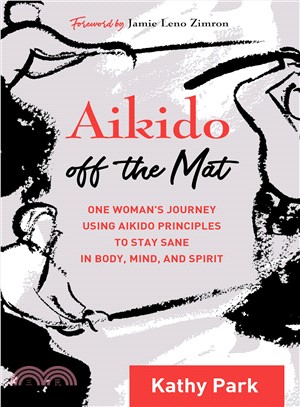
Kathy Park uses stories from her own life to illustrate how the principles of Aikido can be taken off the mat and out of the dojo to help us cope with the many challenges of life in an increasingly ch
A concise yet comprehensive history of traditional Okinawan and Japanese karate, with biographies of the great karate mastersThis first concise yet comprehensive history of traditional Okinawan and Ja
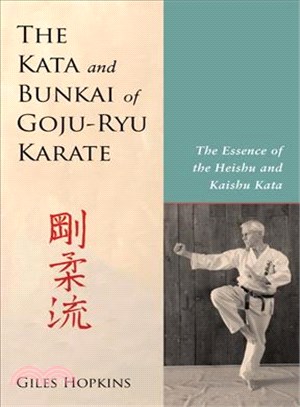
Explains the underlying martial principles (bunkai) of the classical forms (kata) of Goju-Ryu karate.Giles Hopkins draws on more than forty years of experience in the martial arts to dive deeply into
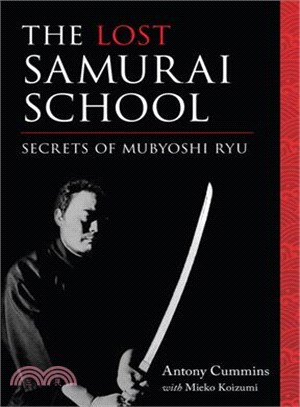
Available for the first time in English, this book is both an illustrated samurai arts manual and a groundbreaking historical account of the teachings of a Japanese samurai who formed a school known a
Drawing insights from classical military strategy, the Yijing (Book of Changes), and Chinese martial arts theory, Tom Bisio presents a fascinating exploration of how insights from these sources can be
Bagua Swimming Body Palms is the second book written by Wang Shujin, one of the world’s foremost exponents of Chinese internal martial arts and a renowned expert of Bagua Zhang. This volume continues
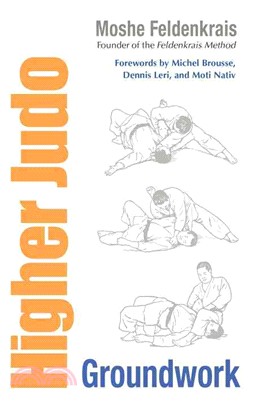
Dr. Moshe Feldenkrais is best known for pioneering the somatic therapy that bears his name. Less well known is that he was also one of the earliest European practitioners of the martial art of judo an
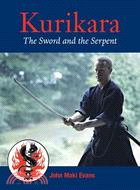
In Mikkyo—Japanese esoteric Buddhism—the dragon Kurikara symbolizes the internal energy developed through sword practice. Kurikara is a manifestation of the fierce bodhisattva Fudo
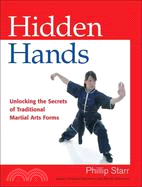
The solo forms or sets of a martial art may appear to be merely flashy performances or rote exercises for conditioning, and because of this many students disregard this aspect of their training. True
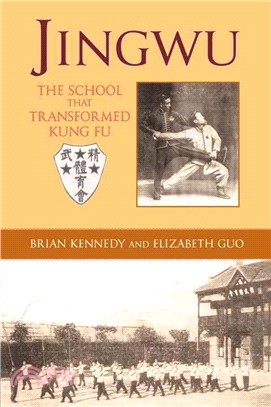
In 1909, because of their ties with the failed Boxer Rebellion and the rise of modern weaponry, Chinese martial arts were in serious danger of extinction. The Jingwu Association was formed to keep the
Originally published in Chinese in 1930, The Major Methods of Wudang Sword has become a contemporary classic in the field of traditional Chinese martial arts. Written by Huang Yuan Xiou, the disciple
The Dragon Bagua Zhang system of third-generation master Fu Zhen Song was one of the most powerful martial arts styles to emerge from 1920s China. Fu Zhen Song had a reputation as a skilled fighter an
Developed by Wang Lang over 300 years ago, Praying Mantis Kung Fu is the only martial art based on the fighting skills of an insect. This fascinating system utilizes swift, methodical movements for de
The art of Bagua Zhang is best known for its circular forms, yet linear fighting techniques have been incorporated into Bagua practice by many renowned masters. Liu Dekuan, a student of Dong Haichuan
The Kids’ Karate Workbook is an engaging workbook meant to be used at home by young people who want to supplement their regular Karate or Taekwondo training. Drawing on the author’s more than 20 years
Mary Stein took up aikido in her mid-fifties and quickly learned what it really means to face danger—both external and internal. In this powerful collection of short essays, she vividly describes le
In Martial Maneuvers, Phillip Starr demonstrates that while the internal martial arts—Taijiquan, Bagua Zhang, and Xingyi Quan—might be considered ineffective for practical self-defense, they in fact h
Wing Chun, also called Ving Tsun, is a popular system of kung fu designed centuries ago by a Buddhist nun and Shaolin master. Together, the two volumes of The Wing Chun Compendium offer a complete gui
The dao, a single-edged sword with a curved blade, is one of the most popular weapons in traditional Chinese martial arts. The art of Taiji Dao is a set of skills for using the dao, derived from the p
Master Wang Shujin (1904—1981) was one of the world’s foremost exponents of Chinese internal martial arts, with legendary expertise in the disciplines of Bagua Zhang, Taiji Quan, and Xingyi Quan. This
With the number of Aikido dojos in the U.S. estimated at up to 1,000, this Japanese martial art has never been more popular. This revised edition of the best-selling Aikido Exercises for Teaching and
The San Jie Gun, or three-section staff, is a traditional Chinese weapon consisting of three short wooden or metal rods linked by chain. Versatile and difficult, it can be flexible or rigid, long or s
Huang Bo Nien’s Xingyi Fist and Weapon Instruction was the first manual to systematically adapt a traditional Chinese martial art for modern military training. When it was first published in Chinese i
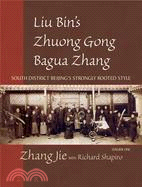
One of the three major orthodox internal styles of Chinese martial arts (along with Xing Yi Quan and Tai Ji Quan), Bagua Zhang (or Ba Gua Zhang) is also one of the most ancient and revered. The first
The urge to forge one’s character by fighting, in daily life as well as on the mat, appeals to something deep within us. More than a collection of fighting techniques, martial arts constitut
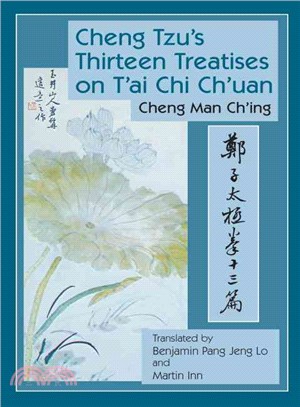
Millions of people worldwide practice t’ai chi, the most popular form of which was codified beginning in the 1960s by Cheng Man Ch’ing. In this scholarly yet practical book, Professor Cheng shows prec
Gordon Muir began his martial arts studies at the age of twelve, followed by years of serious study of a wide variety of disciplines including judo, kyokushinkai, karate, kempo, several kung fu styles
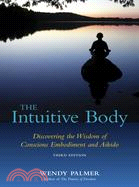
The Intuitive Body draws on the principles of the non-aggressive Japanese martial art aikido and meditation to present a fresh approach to cultivating awareness, attention, and self-acceptance. Author
Interest in a wide range of martial arts grows exponentially each year, but few practitioners understand the scientific forces that underlie these arts. The originators of ancient traditional systems
Ba gua is one of the internal styles of the Chinese martial arts, a "circular" walking technique that helps train the mind and body to recognize and accept change. Characterized by its spinning moveme
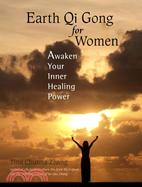
The special medical Qi Gong described in this book was developed and perfected over the course of 1,700 years by Taoists, traditional Chinese medical doctors, and Qi Gong experts in China to meet the
Secret training manuals, magic swords, and flying kung fu masters—these are staples of Chinese martial arts movies and novels, but only secret manuals have a basis in reality. Chinese martial arts mas