Northern Spain is the only part of Western Europe where anarchism played a significant role in political life of the twentieth century. Enjoying wide-ranging support among both the urban and rural wor
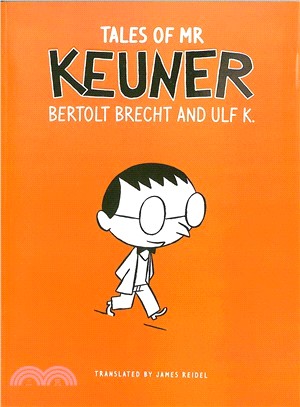
From the 1920s through the 1950s, Bertolt Brecht wrote a number of short, fictionalized comments on contemporary life, politics, and thought. Through the dramatic events of the first half of the twent
Thomas Mann’s novel Der Zauberberg (1913–1924) illustrates a change in the author’s conceptions of life, death, disease and Eros following World War I. Set in a Swiss tuberculosis sanatorium, the nove
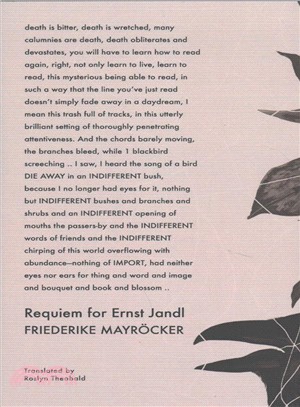
Austrian poet and playwright Ernst Jandl died in 2000, leaving behind his partner, poet Friederike Mayröcker—and bringing to an end a half century of shared life, and shared literary work. Mayröcker i
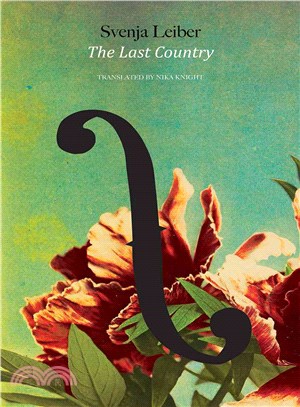
Winner of the 2015 Arno Reinfrank Literaturpreis “Ruven Preuk stands apart from the village, on an August day in 1911, and listens.” Thus begins an epic bildungsroman about the life of Ruven Preuk, so
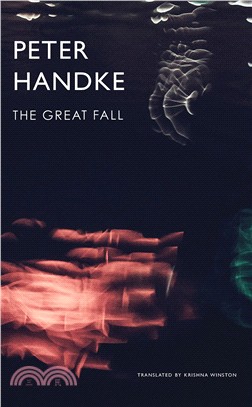
“On the day of the Great Fall he left nothing, nothing at all behind.”The latest work by Peter Handke, one of our greatest living writers, chronicles a day in life of an aging actor as he makes his wa
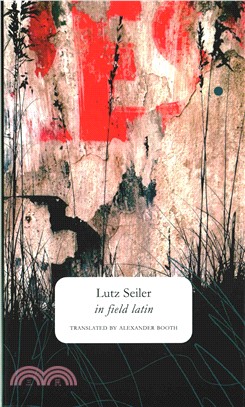
Lutz Seiler grew up in the former East Germany and has lived most of his life outside Berlin. His poems, not surprisingly, are works of the border, the in-between, and the provincial, marked by whispe
Includes: Gunther Anders, "Victims of Aggression"; Hannah Arendt, "From the Life of the Mind"; Ernst Bloch, "On Fine Arts in the Machine Age, From &quo
The thirteen stories of Michael Krüger’s The God behind the Window capture the poignancy and cynicism of late life through tales of misanthropic old men full of the mixture of wisdom a
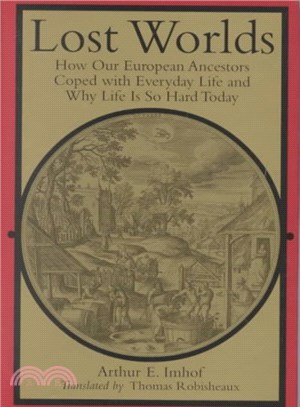
Reconstructs the world and daily life of Johannes Hooss, a 17th-century farmer in a remote Hessian village, arguing that his precarious existence built values which transcended individual life and gav
Singers Die Twice is the story of a life in music. One of Germany's best-known exponents of North Indian classical music, specifically dhrupad singing, Perer Pannke has traveled from his home in Ge
Brain (German, Northern Illinois University) examines German Enlightenment author Wezel's novel Robinson Krusoe (1779), a satirical, anti-utopian adaptation and continuation of Defoe's novel, and the
In February 1943 intermarried Germans gathered in Berlin’s Rosenstrasse to protest the feared deportation of their Jewish spouses. This book examines the competing representations of the Rosenstrasse
At the end of the First World War, German Jewish journalist, theater critic, and political activist Kurt Eisner (1867-1919), just released from prison, led a nonviolent revolution in Munich that depos
This is the first biography of the historian Karl Lamprecht, whose theories of historical method unleashed a bitter controversy, which colored the writing of history in Germany well into the twentieth
In diesem Buch geht der Autor der Frage nach, inwiefern sich die beiden Dramen Dorothea Angermann und Vor Sonnenuntergang Gerhart Hauptmanns von ihren Vorgängern unterscheiden und wie sie sich literat
Twenty-two years after his death, Thomas Bernhard’s work continues to fascinate, irritate, and please readers. This book analyzes Bernhard’s writings in the light of post-war Austrian history, challen
The period between the First World War and the fall of the Berlin Wall is often characterized as the age of extremes—while this era witnessed unprecedented violence and loss of human life, it also saw
Written at the crossroads of aesthetics and politics, Reproducing Enlightenment:Paradoxes of the Body Politic undertakes readings of literary and philosophical texts, ranging from Immanuel Kant, Mary
In the course of the 1970s, interdisciplinary German studies emerged in North America, breaking with what many in the field saw as a suffocating and politically tainted tradition of canon-based philol
I am an English-speaker. My mother tongue is English. I am also fluent in French, which I learned earlier in life. So when, about five years ago, I decided to start learning German, I thought at the t
I am an English-speaker. My mother tongue is English. I am also fluent in French, which I learned earlier in life. So when, about five years ago, I decided to start learning German, I thought at the t
Johann Wolfgang von Goethe, a dominant figure in European literature and intellectual life, was the creator of a new and influential visual culture. This volume investigates a new science of perceptio
Cultural life in the former German Democratic Republic (GDR) was strictly controlled by the ruling party, the SED, who attempted to dictate how people spent their free time by prohibiting privately or
Born of the dream of fostering a new caste of writers from working-class ranks, the «Movement of Writing Workers» (Bewegung schreibender Arbeiter) offers a paradigmatic view of the successes and failu
It was not a single work that denoted the transmission of Western thought from being imbued by Christianity to humanism, but the West-ostlicher Divan comes close. Shamel (German and Persian, Defense L
In August 1961, seventeen-year-old Rita Kuczynski was living with her grandmother and studying piano at a conservatory in West Berlin. Caught in East Berlin by the rise of the Berlin Wall while on a s