商品簡介
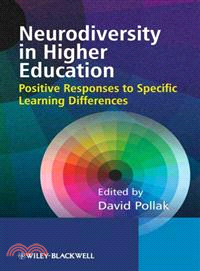
This edited collection offers screening, teaching and practical support for specific learning differences in Higher Education
Uses international case studies to explain how psychologists identify, assess and support a range of specific learning differences in students
The higher education sector has come to terms with dyslexia, but today� ™s students are disclosing a range of learning differences including dyspraxia, ADHD, Asperger� ™s Syndrome and dyscalculia
Institutions in all major Western countries are required by law to avoid disadvantaging students with special educational needs, so staff must be up to date on how to recognise and support them
Supported by an already popular website, Brain HE, with extra materials and colour photographs
作者簡介
Dr David Pollak is Principal Lecturer in Learning Support at De Montfort University. He runs the highly successful website brainhe.com. He has specialised in neurodiversity such as dyslexia for over 30 years, and is a UK National Teaching Fellow.
名人推薦
It makes a convincing, hopeful and original read for all academic lecturing staff, managers and policy makers. (The Skill Journal )
"The increasing numbers of neurodiverse students in HE raises many issues. A book which focuses on the positive, both in terms of the changes that have taken place in recent years and the exciting and challenging possibilities for change in the future, is therefore both timely and welcome. The book covers a wide range of topics, the student viewpoint is clearly presented throughout and the majority of contributors have personal experiences of neurodiversity in HE. All of this combines to produce a powerful and pertinent contribution to the debate and it should be required reading for all those who make decisions that affect the lives of students in HE."
–Ros Lehany, Dyslexia/Learner Support Tutor at Northern School of Contemporary Dance and Chair of the Association of Dyslexia Specialists in Higher Education
目次
List of Illustrations.
Notes on contributors.
Foreword (Sally Brown).
1. Introduction (David Pollak).
2. Neurodiversity, disability, legislation and policy development (Alan Hurst).
3. The psychological assessment of neurodiversity (David Grant).
4. Dyslexia (Ross Cooper).
5. Dyspraxia (Sharon Drew).
6. Dyscalculia (Clare Trott).
7. Asperger Syndrome: empathy is a two-way street (Nicola Martin).
8. Attention Deficit (Hyperactivity) Disorder - AD(H)D (Mary Colley).
9. Mental well-being (Kitty McCrea).
10. Assistive technology (E. A. Draffan).
11. Teaching, learning and assessment: "It’s not like you think" (Heather Symonds).
12. Conclusion: linking the strands together (David Pollak).