




滿額折
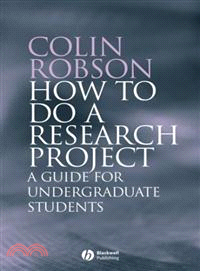
How To Do A Research Project - A Guide For Undergraduate Students
商品資訊
ISBN13:9781405114899
出版社:John Wiley & Sons Inc
作者:Robson
出版日:2006/12/19
裝訂/頁數:精裝/176頁
規格:23.5cm*15.2cm*1.9cm (高/寬/厚)
商品簡介
作者簡介
目次
商品簡介
In How to do a Research Project, Colin Robson has created an essential tool for students. Written specifically to address the needs and concerns of the undergraduate, this tightly focused volume guides students through the process of conducting and completing a research project and is relevant to all disciplines that require the use of social research methods.
Friendly and accessible, this text includes a number of accompanying support materials to aid students further. Closely integrated sets of end-of-chapter tasks covering all aspects of research projects from design to completion, as well as lists of suggested further reading, enhance each chapter. Additionally, an extensive associated website at www.blackwellpublishing.com/researchproject gives students access to a wide range of helpful materials relevant to their particular needs, making this book an invaluable resource.
Friendly and accessible, this text includes a number of accompanying support materials to aid students further. Closely integrated sets of end-of-chapter tasks covering all aspects of research projects from design to completion, as well as lists of suggested further reading, enhance each chapter. Additionally, an extensive associated website at www.blackwellpublishing.com/researchproject gives students access to a wide range of helpful materials relevant to their particular needs, making this book an invaluable resource.
作者簡介
Colin Robson is a Professor in the Centres for Applied Childhood Studies and Evaluation Studies at Huddersfield University, and chief consultant to a major international project on the education of children with disabilities, difficulties and disadvantages, OECD, Paris. He is the author of the bestselling Real World Research, (second edition, Blackwell, 2002).
目次
Acknowledegments.
Introduction.
PART I: Making preparations:.
Project planning checklist.
1 Preliminaries.
Recognizing realities.
As a student on a course.
If you are by yourself.
If you are doing this as part of your job.
To everybody.
Making it worthwhile.
Considering your audience(s).
Individual or group research?.
Types of group research.
Support groups.
Working together successfully.
Project milestones.
The structure of the book.
End-of-chapter tasks.
Further reading.
Chapter 1 tasks.
2 Approaches to research.
A concern for truth.
Different purposes of research.
Description.
Exploration.
Explanation.
Emancipation.
Research design.
The qualitative/quantitative divide.
Fixed and flexible designs.
Fixed designs.
Flexible designs.
Overview of some different research traditions.
Action research.
Case studies.
Documentary analysis.
Ethnographic research.
Evaluation research.
Experiments.
Grounded theory studies.
Surveys.
A note on feminist research.
Choosing an approach.
Further reading.
Chapter 2 tasks.
3 Developing your ideas.
Selecting a topic.
Replication research.
From a topic to research questions.
From research questions to a research design.
Do I really need research questions?.
Hypotheses.
Developing the design.
Finding and using sources.
Planning the search for sources.
Internet searching.
Library searching.
Asking the author.
Dealing with the sources.
Ethical considerations.
Ethics committees.
Ethics guidelines.
Avoiding the unethical.
Confirming your choices.
Further reading.
Chapter 3 tasks.
4 Selecting the method(s) of collecting data.
Trustworthiness and credibility.
Reliability.
Validity.
Research arguments.
Data collection methods.
Interviews.
Fully structured interviews.
Semi-structured interviews.
Unstructured interviews.
Group interviews.
Telephone interviews.
Using interviews in your project.
Questionnaires and diaries.
Questionnaires.
Diaries.
Using questionnaires or diaries in your project.
Tests and scales.
Using tests or scales in your project.
Observation – structured and participant.
Structured observation.
Participant observation.
Using observation in your project.
Using documents and other secondary sources.
Library research.
Unobtrusive measures.
Using documents in your project.
Other methods.
Using multiple methods.
Which method?.
Further reading.
Chapter 4 tasks.
PART II: Doing it:.
5 Practicalities of data collection.
Sampling and sample sizes.
Representative samples.
Non-probability samples.
Informed consent.
Laboratory research.
Gaining access for field research.
Formal and informal contracts.
Getting on and getting out.
Insider research.
Pilots.
Collecting the data.
What to do if you run into difficulties or out of time.
Further reading.
Chapter 5 tasks.
PART III: Making something of it:.
6 Analysing and interpreting your findings.
What this chapter tries to do.
Preparing for analysis.
Quantitative (numerical) data.
Categorical variables.
Ordered categorical variables.
Summarizing and displaying categorical data.
Continuous variables.
Calculating summary statistics with continuous variables.
Calculating variability.
Displaying continuous variables.
Statistical tests and statistical significance.
Effect sizes.
Clinical significance.
What test do I use?.
Qualitative data.
Data reduction and organization.
An example – the grounded theory approach to analysis.
Using specialist computer packages for qualitative data analysis.
Summary of qualitative data analysis.
Interpretation - what is going on here?.
Further reading.
Chapter 6 tasks.
7 Writing the report.
Planning and drafting.
Research arguments.
Claims.
Reasons and evidence.
Considering your audience(s) again.
Avoiding plagiarism.
Professional standards.
Language matters.
References.
Abstracts and executive summaries.
The first full draft.
Revising and polishing.
The final version.
Other forms of presentation.
A final word.
Further reading.
Chapter 7 tasks.
References and author index.
Subject index
Introduction.
PART I: Making preparations:.
Project planning checklist.
1 Preliminaries.
Recognizing realities.
As a student on a course.
If you are by yourself.
If you are doing this as part of your job.
To everybody.
Making it worthwhile.
Considering your audience(s).
Individual or group research?.
Types of group research.
Support groups.
Working together successfully.
Project milestones.
The structure of the book.
End-of-chapter tasks.
Further reading.
Chapter 1 tasks.
2 Approaches to research.
A concern for truth.
Different purposes of research.
Description.
Exploration.
Explanation.
Emancipation.
Research design.
The qualitative/quantitative divide.
Fixed and flexible designs.
Fixed designs.
Flexible designs.
Overview of some different research traditions.
Action research.
Case studies.
Documentary analysis.
Ethnographic research.
Evaluation research.
Experiments.
Grounded theory studies.
Surveys.
A note on feminist research.
Choosing an approach.
Further reading.
Chapter 2 tasks.
3 Developing your ideas.
Selecting a topic.
Replication research.
From a topic to research questions.
From research questions to a research design.
Do I really need research questions?.
Hypotheses.
Developing the design.
Finding and using sources.
Planning the search for sources.
Internet searching.
Library searching.
Asking the author.
Dealing with the sources.
Ethical considerations.
Ethics committees.
Ethics guidelines.
Avoiding the unethical.
Confirming your choices.
Further reading.
Chapter 3 tasks.
4 Selecting the method(s) of collecting data.
Trustworthiness and credibility.
Reliability.
Validity.
Research arguments.
Data collection methods.
Interviews.
Fully structured interviews.
Semi-structured interviews.
Unstructured interviews.
Group interviews.
Telephone interviews.
Using interviews in your project.
Questionnaires and diaries.
Questionnaires.
Diaries.
Using questionnaires or diaries in your project.
Tests and scales.
Using tests or scales in your project.
Observation – structured and participant.
Structured observation.
Participant observation.
Using observation in your project.
Using documents and other secondary sources.
Library research.
Unobtrusive measures.
Using documents in your project.
Other methods.
Using multiple methods.
Which method?.
Further reading.
Chapter 4 tasks.
PART II: Doing it:.
5 Practicalities of data collection.
Sampling and sample sizes.
Representative samples.
Non-probability samples.
Informed consent.
Laboratory research.
Gaining access for field research.
Formal and informal contracts.
Getting on and getting out.
Insider research.
Pilots.
Collecting the data.
What to do if you run into difficulties or out of time.
Further reading.
Chapter 5 tasks.
PART III: Making something of it:.
6 Analysing and interpreting your findings.
What this chapter tries to do.
Preparing for analysis.
Quantitative (numerical) data.
Categorical variables.
Ordered categorical variables.
Summarizing and displaying categorical data.
Continuous variables.
Calculating summary statistics with continuous variables.
Calculating variability.
Displaying continuous variables.
Statistical tests and statistical significance.
Effect sizes.
Clinical significance.
What test do I use?.
Qualitative data.
Data reduction and organization.
An example – the grounded theory approach to analysis.
Using specialist computer packages for qualitative data analysis.
Summary of qualitative data analysis.
Interpretation - what is going on here?.
Further reading.
Chapter 6 tasks.
7 Writing the report.
Planning and drafting.
Research arguments.
Claims.
Reasons and evidence.
Considering your audience(s) again.
Avoiding plagiarism.
Professional standards.
Language matters.
References.
Abstracts and executive summaries.
The first full draft.
Revising and polishing.
The final version.
Other forms of presentation.
A final word.
Further reading.
Chapter 7 tasks.
References and author index.
Subject index










購物須知
外文書商品之書封,為出版社提供之樣本。實際出貨商品,以出版社所提供之現有版本為主。部份書籍,因出版社供應狀況特殊,匯率將依實際狀況做調整。
無庫存之商品,在您完成訂單程序之後,將以空運的方式為你下單調貨。為了縮短等待的時間,建議您將外文書與其他商品分開下單,以獲得最快的取貨速度,平均調貨時間為1~2個月。
為了保護您的權益,「三民網路書店」提供會員七日商品鑑賞期(收到商品為起始日)。
若要辦理退貨,請在商品鑑賞期內寄回,且商品必須是全新狀態與完整包裝(商品、附件、發票、隨貨贈品等)否則恕不接受退貨。