商品簡介
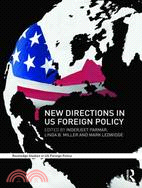
New Directions in US Foreign Policy is a state of the art overview of US foreign policy, providing a comprehensive account of the latest theoretical perspectives, the key actors and issues, and new policy directions. Offering a detailed and systematic outline of the field, this text:
Explains how international relations theories such as realism, liberalism and constructivism can help us to interpret US foreign policy
Examines the key influential actors shaping foreign policy, from political parties and think tanks to religious groups and public opinion
Explores the most important new policy directions from the 'war on terror' and relations with the UN to democracy promotion and 'imperialism'
Supplies succinct presentation of relevant case material, and provides recommendations for further reading and web sources for pursuing future research.
Written by a distinguished line-up of contributors actively engaged in original research on the topics covered, this text provides a unique platform for rigorous debate over the contentious issues that surround US foreign policy. This wide-ranging text is essential reading for all students and scholars of US foreign policy.
作者簡介
Inderjeet Parmar is Professor of Government and Head of the Department of Politics, University of Manchester, UK. He has published several monographs and is the co-editor of the Routledge Studies in US Foreign Policy series.
Linda B. Miller is Professor of Political Science, Emerita, at Wellesley College, USA. An international relations specialist, she also taught at Barnard, Harvard, and Brown and held research appointments at Princeton, Harvard, Columbia, and Brown, where she is currently Adjunct Professor (Research) at the Watson Institute. From 1999–2002, she was also Editor of the International Studies Review.
Mark Ledwidge is a lecturer in the Department of Politics, University of Manchester, UK.
目次
Introduction Inderjeet Parmar Part 1: Theorising Contemporary US Foreign Policy 1. Realism Thomas Kane 2. Constructivism, US Foreign Policy and the 'War on Terror' Richard Jackson and Matt McDonald 3. Neo-Conservatism: Theory and Practice Rob Singh 4. Liberalism and Neo-Liberalism Tim Lynch 5. Marxism and US Foreign Policy Doug Stokes Part II: Non-State Actors in U.S. Foreign Policy 6. Parties, Partisanship and US Foreign Policy: The Growing Divide Stephen Hurst 7. What were they thinking?: Think Tanks, the Bush Presidency and US Foreign Policy 8. Intellectuals and U.S. foreign policy Aggie Hirst 9. Christian Evangelicals and U.S. Foreign Policy Stuart Croft 10. American Foreign Policy after the Bush Administration: Insights from the Public Jim McCormick 11. Race, african-Americans and US Foreign Policy Mark Ledwidge Part III New Policy Directions 12. Transatlantic Relations and US Foreign Policy David Dunn 13. US National Security: Still an Ambiguous Symbol? Still an Illusion? Linda B. Miller 14. The Middle East in US Foreign Policy Linda B. Miller 15. The US and the UN: The Return of the Prodigal Son? Craig N Murphy 16. Democracy, promotion and the New Public Diplomacy Giles Scott-Smith and Martijn Mos 17. Illusions of Empire and the Spectre of Decline Michael Cox and Nicholas Kitchen 18. Internationally Recognized Core Labor Standards under the George W. Bush Administration Christopher Candland