商品簡介
Now in Paperback
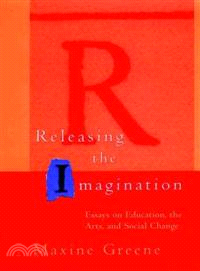
"This remarkable set of essays defines the role of imagination in general education, arts education, aesthetics, literature, and the social and multicultural context.... The author argues for schools to be restructured as places where students reach out for meanings and where the previously silenced or unheard may have a voice. She invites readers to develop processes to enhance and cultivate their own visions through the application of imagination and the arts. Releasing the Imagination should be required reading for all educators, particularly those in teacher education, and for general and academic readers."
--Choice
"Maxine Greene, with her customary eloquence, makes an impassioned argument for using the arts as a tool for opening minds and for breaking down the barriers to imagining the realities of worlds other than our own familiar cultures.... There is a strong rhythm to the thoughts, the arguments, and the entire sequence of essays presented here."
--American Journal of Education
作者簡介
MAXINE GREENE is professor of philosophy and education and William F. Russell Professor in the Foundations of Education (emeritus), Teachers College, Columbia University, where she is also founder of the Center for the Imagination. She teaches at the Lincoln Center for the Arts. A past president of AERA, AESA, and the Philosophy of Education Society, Greene's previous books include The Dialectic of Freedom (1988) and Landscapes of Learning (1978).
目次
Introduction: A Quest for Meaning
Part One: Creating Possibilities
1. Seeking Contexts
2. Imagination, Breakthroughs, and the Unexpected
3. Imagination, Community, and the School
4. Consciousness and the Public Space
5. Social Vision and the Dance of Life
6. The Shapes of Childhood Recalled
Part Two: Imagination and Education
7. Blue Guitars and the Search for Curriculum
8. Writing to Learn
9. Teaching for Openings
10. Art and Imagination
11. Texts and Margins
Part Three: Community in the Making
12. The Passions of Pluralism
13. Standards, Common Learnings, and Diversity
14. Multiple Voices and Multiple Realities