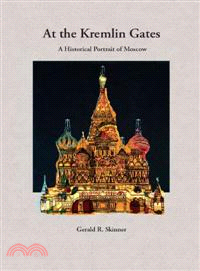
商品簡介
By tradition, Moscow is the easternmost bastion of western civilisation. Moscow has stood against invasion and war, pestilence and fire. It has been rejected by its own rulers, and its destruction has been planned by its dreamers and invaders alike. Yet it has survived.
How this happened is the story of historical accident, the vagaries of geography and economics---and upon occasion, sheer human will and faith. If Moscow has endured catastrophes barely imagined, it has also been the scene of creative brilliance. It holds a deep contradiction as being both the pilot-boat to hell, and a celestial city of the future.
This book is a portrait of Moscow through time. It has one constant, the Kremlin, at once the supreme metaphor of state power but also a symbol of Russian national identity. The tension between Moscow as an urban community and the Moscow of empire and belief is fundamental to the city's narrative. This is also a historical case-study of the growth, development and near-death experiences of a single city to become a living monument to its own survival. It will be of interest to travellers, urbanists and historians alike.
作者簡介
Gerald R. Skinner is a Canadian diplomat who has lived and worked in Moscow. In the 1960s he undertook graduate studies at Moscow State University, and was on assignment in Moscow during the August 1991 coup attempt and the subsequent collapse of the Soviet Union. He retired with the rank of Ambassador. He is now a tutor at the University of Oxford.