商品簡介
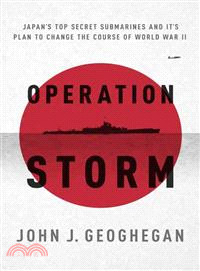
In 1941, the architects of Japan's sneak attack on Pearl Harbor planned a bold follow-up: a potentially devastating air raid—this time against New York City and Washington, DC. The classified Japanese program required developing a squadron of top secret submarines—the Sen-toku or I-400 class—which were the largest and among the most deadly subs of World War II. Incredibly, the subs were designed as underwater aircraft carriers, each equipped with three Aichi M6A1 attack planes painted to look like US aircraft. Called Seiran, the planes were concealed in a huge, watertight deck hangar and meant to appear suddenly over American cities as their Japanese name suggests: like a “storm from a clear sky.”
This operation remained unknowns to the Allies despite U.S. intelligence having broken the Japanese naval codes. Even more amazing is how close the Japanese came to pulling off their mission. In spite of seemingly insurmountable obstacles, including Allied air raids, mine-laden waters, fuel shortages, and a catastrophic depth-charge attack, the Sen-toku squadron was determined to complete their mission no matter what. But when the captain of an American combat sub inadvertently crossed paths with the squadron's flagship, what promised to be a routine sub patrol soon threatened to rekindle World War II with untold consequences for Japan's surrender ceremony only five days away.
作者簡介
John Geoghegan has written extensively about aviation history, underwater exploration and marine engineering for the New York Times Science Section, Smithsonian Air & Space, WIRED, Popular Science, Aviation History, Military Heritage, Flight Journal and the San Francisco Chronicle Sunday Magazine.