商品簡介
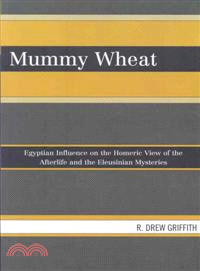
Griffith (classics, Queen's University, Kingston, Canada) is refreshingly honest about the controversial nature of his theory that the Greek Elysian Fields, first mentioned in the Odyssey were influenced by Egyptian beliefs in life after death. He goes so far in his acknowledgments as to quote negative opinions of scholars who read the manuscript. But, as he also points out, many theories have seemed nonsense until evidence proved them correct. Griffith bases his argument on his own deep knowledge of Classical Greek and Homer. He starts with a passage that always seemed out of place, the promise to Menelaus that he would not go to some dim underworld at death but to a place of beauty and joy. Searching for an answer he found similarities, both philological and philosophical, to the rich Egyptian beliefs. To this he added references in Homer that seem drawn from Egyptian art and literature. He then makes the connection from those beliefs to the Eleusinian cult of Demeter that stressed a joyful afterlife. The symbolism of the title comes from the wheat seeds left in Egyptian tombs to grow in the next world. While many Greek scholars may not agree with Griffith, the debate resulting from his work may lead to other connections that might have been overlooked. Annotation c2009 Book News, Inc., Portland, OR (booknews.com)
作者簡介
R. Drew Griffith is Professor of Classics at Queen's University at Kingston, Canada.