商品簡介
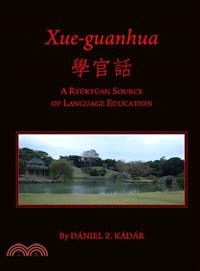
The Sino-Japonic manuscript Xue-guanhua/Gaku-kanwa (Learning Mandarin Chinese), compiled for students from the Ryukyu Kingdom, is a noteworthy historical Chinese educational source. It represents historical cross-cultural interactions between Okinawan residents in China and the locals in a wide variety of speech situations, and as such it is one of the few historical cross-cultural sources available on Chinese communication and social behaviour. Along with revealing norms of historical Chinese communication, Xue-guanhua provides a vivid description of Chinese social and cultural customs.
The present volume, which provides a detailed introduction and annotated translation of Xue-guanhua, is relevant not only to researchers but also to readers with interest in Chinese and Okinawan language and culture.
"The present book serves as a sourcebook of Chinese historical pragmatics, for language use before modernization, a guide on Chinese etiquette, morale and mores, a testimony to international contact in pre-modernity, and, due to English translation, as an excellent Chinese as a Foreign Language textbook for speakers of English. More than anything else, however, the Ryukyuan---Chinese relationship comes alive in this book . . . I must confess to envying Daniel Kadar for the excellent philological work he has done with this translation and publication."---Patrick Heinrich, Dokkyo University
作者簡介
Daniel Z. Kadar is a Research Fellow at the Department of Oriental Studies in the Research Institute for Linguistics, Hungarian Academy of Sciences. He has been carrying out research into historical pragmatics, intercultural communication and Sino---Japanese studies. His most recent publications include Politeness in Historical and Contemporary Chinese (with Y. Pan; London: Continuum), Historical Chinese Letter Writing (London: Continuum), Politeness in East Asia (edited with S. Mills; Cambridge: Cambridge University Press), and Politeness in China and Japan (with M. Haugh; Amsterdam: John Benjamins).