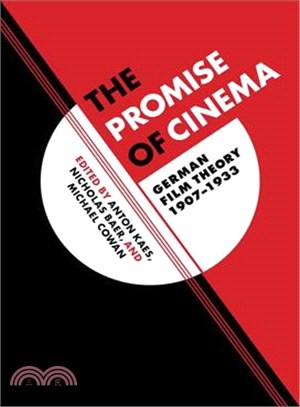
Rich in implications for our present era of media change, The Promise of Cinema offers an entirely new vision of early film theory. The volume conceives of "theory" not as a fixed body of canonical texts, but as a dynamic set of reflections on the very idea of cinema and the possibilities and hopes once associated with it. Excavating more than 275 primary texts from the vast archive of early-twentieth-century German writings, this ground-breaking book chronicles the rise of a medium that articulated and transformed the modern experience. The wide-ranging assemblage juxtaposes lesser-known essays by Bela Balazs, Walter Benjamin, and Siegfried Kracauer with interventions and polemics from writers in the realms of aesthetics, education, industry, politics, science, and technology, thus generating an expansive understanding of a burgeoning visual culture that is still with us today. The book also features programmatic texts from the Weimar avant-garde and from popular filmmakers such as Fritz Lang and F.W. Murnau. Nearly all the documents appear in English for the first time; each is annotated and contextualized. The most comprehensive collection of German writing on film available to date,The Promise of Cinema is an essential resource for students and scholars in film and media, cultural and intellectual history, and modernity studies.