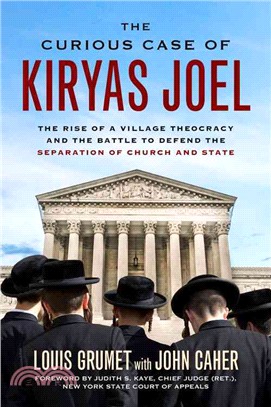
Twenty years ago, in the middle of the night and on the last day of session, the New York State Legislature created a publicly funded school district to cater to the interests of a religious sect called Kiryas Joel, an extremely insular group of Hasidic Jews that objects to, among other things, female school bus drivers. The sect had bought land in rural upstate New York, populated it solely with members of its faction, and created a village that, voting as a bloc, exerted extraordinary political pressure over Governor Mario Cuomo and both political parties in the Legislature. Marking the first time in American history that a governmental unit was established for a religious group, the legislature's action prompted years of litigation that eventually went to the Supreme Court.
As today's Court signals its willingness to view a religious viewpoint like any other speech and accord it equal protection, the 1994 caseThe Board of Education of the Village of Kiryas Joel v. Grumet stands as the most important legal precedent in the fight to uphold the separation of church and state. InThe Curious Case of Kiryas Joel, plaintiff Louis Grumet opens a window onto the Satmar Hasidic community, where language, customs, and dress have led to a cultural estrangement from neighboring communities, and details the inside story of his fight for the First Amendment and against New York's most powerful politicians, including his former mentor Mario Cuomo. Informed by key figures such as Governor George Pataki reflecting back on the case, media accounts, court transcripts, and more,The Curious Case of Kiryas Joel not only tantalizes with a peek at cynical power politics driven by votes and Supreme Court justice squabbling and negotiation; it provides an important demonstration of how a small, insular, and politically savvy religious group can grasp legal and political power. This story—a blend of politics, religion, cultural clashes, and constitutional tension—is an object lesson in the ongoing debate over freedomof vs. freedom from religion.