商品簡介
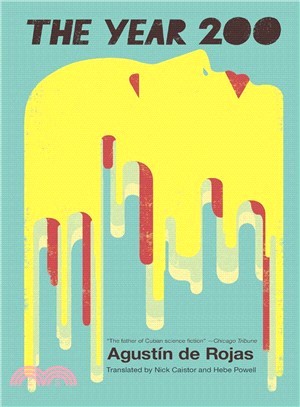
The crowning literary achievement of Cuban sci-fi's patron saint, and a vituperative examination of the Castro regime that combines cryogenic freezing, artificial intelligence, and surveillance with evil wizards, time travel, and killer robots in a gripping adventure story.
The peace of Tranquil Grove is violently disturbed when the Imperial Service's Hydras awake from a two hundred-year sleep and implant the consciousnesses of a sadistic, lascivious torturer and a desperate aging secret agent into the minds of a film-obsessed boy and his mother, an “emotional engineer.” Drawing as much from the realms of the adventure novel, spy thriller, and political satire as from hard science fiction and fantasy,The Year 200 is on the one hand steeped in hard science and prophetic in its address of cryogenic freezing, artificial intelligence, and surveillance, and on the other full of the action and intrigue brought on by evil wizards, time travel, and killer robots.
A cult classic and Cuban sci-fi father Agustin de Rojas's most popular work, The Year 200critiques the Castro regime by holding it against its own impossible standards. Released in 1990, just after the fall of the Berlin Wall and the onset of Sovietperestroika, the last book in de Rojas's sci-fi trilogy exposes the hypocrisy of a state on the brink of the devastating Special Period. When confronted with the polemical novel's “perfect” moral universe, in which Che Guevara's socialist principles are followed to the letter, the reader is forced to compare the optimistic future (and Castro's lofty rhetoric) with the crude reality of everyday Cuba in the late Soviet era, where art must be sanctioned by the government and bureaucracy stymies human progress. An imaginative and bold social extrapolation and nuanced political parable, The Year 200 brings contemporary trajectories to their logical extremes and asks, “What does ‘the greatest good for the greatest number' really mean?”
作者簡介
Agustin de Rojas (1949-2011) is the patron saint of Cuban science fiction. A professor of the history of theater at the Escuela de Instructores de Arte in Villa Clara, he authored a canonical trilogy of novels consisting ofEspiral (Spiral, 1982), for which he was awarded the David Prize; Una leyenda del futuro (A Legend of the Future, 1985); andEl ano 200 (The Year 200, 1990), all of which are scheduled for publication in English translation by Restless Books. While he was heavily influenced by Ray Bradbury and translated Isaac Asimov into Spanish, de Rojas aligned himself mostly with Soviet writers such as Ivan Yefremov and the brothers Arkady and Boris Strugatsky . After the fall of the Soviet Union, de Rojas stopped writing science fiction. He spent his final years persuaded—and persuading others—that Fidel Castro did not exist.
Nick Caistor is a British journalist, non-fiction author, and translator of Spanish and Portuguese literature. He has translated Cesar Aira, Paulo Coelho, Eduardo Mendoza, Juan Marse, and Manuel Vazquez Montalban, and he has twice won the Valle-Inclan Prize for translation. He regularly contributes to Radio 4, the BBC World Service, theTimes Literary Supplement, and the Guardian. He lives in Norwich, England.