商品簡介
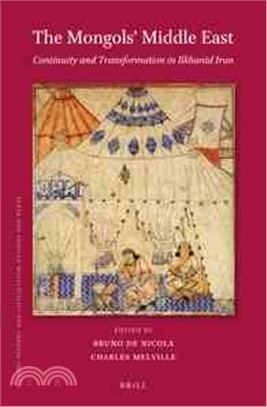
The Ilkhanate is the name by which historians refer to the political entity that governed present-day Iran, Azerbaijan and Eastern Anatolia between 1260 and 1335 (with a short afterlife that lasted until 1353). It is defined by the establishment of a dynasty of Mongol rulers descended from Chinggis Khan (d. 1227), by his son Tolui (d. 1232), and especially by the descendants of Hülegü (d. 1265). Studies in the second half of the twentieth century contributed to changing the view that the Mongols were mere barbarians and prepared the field for a new understanding of the Mongol Empire as a period when East and West were connected, and in which the Mongols were not only the military elite of this vast territory, but acted as cultural brokers, facilitating the exchange of goods, people and ideas from the Mediterranean to China. It is in this context that De Nicola and Melville aim to contribute to the history of the period. The book addresses various aspects of continuity and transformation in Mongol and local society in Iran in particular and the Middle East in general. Annotation ©2016 Ringgold, Inc., Portland, OR (protoview.com)
作者簡介
Charles Melville, Ph.D. (1978), University of Cambridge, is Professor of Persian History at the University of Cambridge and Fellow of Pembroke College. Bruno De Nicola, Ph.D. (2011), University of Cambridge, is Research Fellow in Middle Eastern Studies at the University of St. Andrews (UK).