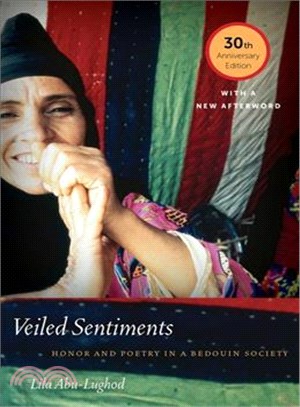
First published in 1986, Lila Abu-Lughod's Veiled Sentiments has proven a classic ethnography in the field of anthropology. During the late 1970s and early 1980s, Abu-Lughod lived with a community of Bedouins in the Western Desert of Egypt for nearly two years, studying gender relations and the oral lyric poetry through which women and young men express personal feelings. The poems are haunting, the evocation of emotional life vivid. But her analysis also reveals how deeply implicated poetry and sentiment are in the play of power and the maintenance of a system of social hierarchy. What begins as a puzzle about a single poetic genre becomes a reflection on the politics of sentiment and the complexity of moral cultures.
This thirtieth anniversary edition includes a new afterword that reflects on developments both in anthropology and in the lives of this community of Awlad 'Ali Bedouins who find themselves increasingly enmeshed in national political and social formations. The afterword ends with a personal meditation on the meaning—for all involved—of that radical experience we call anthropological fieldwork and how to meet the ethical responsibilities it presents to the ethnographer in an unequal world where knowledge travels.