商品簡介
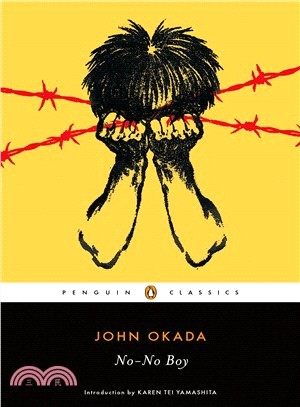
The first Japanese American novel: a powerful, radical testament to the experiences of Japanese American draft resisters in the wake of World War II
After their forcible relocation to internment camps during World War II, Japanese Americans were expected to go on with their lives as though nothing had happened, assimilating as well as they could in a changed America. But some men resisted. They became known as "no-no boys," for twice having answered "no" on a compulsory government survey asking whether they were willing to serve in the U.S. armed forces and to swear allegiance to the United States. No-No Boy tells the story of one such draft resister, Ichiro Yamada, whose refusal to comply with the U.S. government earns him two years in prison and the disapproval of his family and community in Seattle. A touchstone of the immigrant experience in America, it dispels the "model minority" myth and asks pointed questions about assimilation, identity, and loyalty.
作者簡介
John Okada (1923-1971) was born in Seattle, Washington, and was interned during World War II at the Minidoka War Relocation Center before joining the U.S. Air Force and earning the rank of sergeant. After the war, he finished his undergraduate degree at the University of Washington and earned a master's degree from Columbia University. His first and only novel, No-No Boy, was published in 1957. Okada died of a heart attack at the age of 47, leaving behind a wife and two children.
Karen Tei Yamashita (introduction) was a National Book Award finalist for her novel I Hotel, which won the California Book Award, the American Book Award, the Asian/Pacific American Librarians Association Award, and the Association for Asian American Studies Book Award. A recipient of the John Dos Passos Prize for Literature, she has been a U.S. Artists Ford Foundation Fellow and a University of California Presidential Chair for Feminist Critical Race and Ethnic Studies. She is a professor of literature and creative writing at the University of California, Santa Cruz.