商品簡介
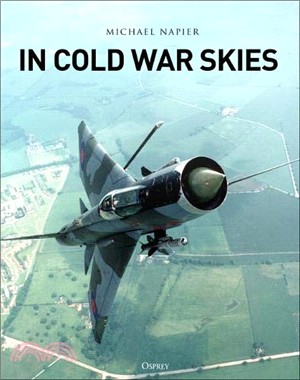
Throughout the second half of the 20th century, international relations across the globe were dominated by the Cold War between the USA and USSR and their respective allies. From 1949, until the fall of the Berlin Wall in 1989, US and Soviet strategic forces were deployed astride the Arctic Ocean in North America and Northern Russia, while the best-equipped armed forces that the world has ever seen faced each other directly across the ‘Iron Curtain’ in Europe. Those 40 years saw massive spending on military technology by both sides, not least in aircraft and the projection of air power. Each decade of the Cold War was characterised by re-equipment with more modern and ever more capable aircraft. During this period, a great number of interesting and unique aircraft types entered operational service. In Cold War Skies will describe and examine the air power of the major protagonists both at strategic and tactical levels throughout the 40 years of the Cold War. It will detail the strategic forces and land-based tactical aircraft used by the air forces of the USA, USSR, NATO, Warsaw Pact (WP) and the European non-aligned nations.
In Cold War Skies will open with a chapter covering the formation of NATO and the Warsaw Pact and will detail the structure of the US, USSR, NATO, WP and non-aligned air forces.Each of the subsequent four chapters, will cover a single decade, describing firstly the deployment of strategic offensive and defensive forces in North America and Northern Russia and secondly the situation in Europe, where the forces which faced each other across the Iron Curtain did so within command structures that largely covered the same geographical areas: in Scandinavia and the Baltic, NATO's Northern Region roughly matched the USSR's north-western Theatre of Military Operations (TMO). This region includes the non-aligned states of Sweden and Finland. The NATO Central Region and the Soviet Western TMO both covered Central Europe, which also includes non-aligned Switzerland and Austria. In Southern Europe and the Mediterranean, the NATO Southern Region matched the Soviet South-Western TMO, including both Yugoslavia and Spain. Within each chapter, the aircraft types will be described in the context of the units that operated them and the roles in which they were used.
The volume will comprise 50,000 words supported by approximately 240 high-quality images. As well as descriptions of aircraft and operational units, the books include a wide range of first-hand accounts of operational flying during the Cold War.