It’s widely agreed that inequality has become the key political issue of our time. In Peak Inequality, Danny Dorling—an early proponent of rapidly reducing economic inequalities—brin
The Equality Effect is almost magical. In more equal countries, human beings are generally happier and healthier, there is less crime, more creativity and higher educational attainment. Danny Dorling
Since the great recession hit in 2008, the 1% has only grown richer while the rest find life increasingly tough. The gap between the haves and the have-nots has turned into a chasm. While the rich hav
In All That is Solid Danny Dorling offers an agenda-shaping look at the UK's dangerous relationship with housing - and how it's all going to come crashing down Housing was at the heart of the financia
Part of a series of twelve books tied to the twelve lines of the London Underground, this title tells the darkly humorous tales of the author's escapades on the Tube. It tells the stories of the peopl
This new edition of The Population of the UK explains how geography - in the widest sense - makes a difference to life outcomes. Fully revised and updated, and now printed in four color, the text expl
This new edition of The Population of the UK explains how geography - in the widest sense - makes a difference to life outcomes. Fully revised and updated, and now printed in four color, the text expl
The No-Nonsense Guide to Equality discusses the positive effects that equality can have, using examples and case studies from across the globe, including many from the United States. It examines the l
Housing was at the heart of the financial collapse, and our economy is now precariously reliant on the housing market. In this groundbreaking new book, Danny Dorling argues that housing is the definin
In this incisive introduction to the subject, Danny Dorling and Carl Lee reveal geography as a science which tackles all of the biggest issues that face us today, from globalization to equality, from
Fully updating the 2001 volume People and Places: A 2001 Census Atlas of the UK, this authoritative book will be essential reading for anyone interested in the current social geography of the United K
Fully updating the 2001 volume People and Places: A 2001 Census Atlas of the UK, this authoritative book will be essential reading for anyone interested in the current social geography of the United K
American life expectancy is three years less than that of people in France or Sweden. Scottish men live two years less than English men. Women in poor communities across Europe die ten years earlier t
Should the United Kingdom be in or out of the European Union? Are people in the EU worried about losing their national identity? How important is politics in a European’s day-to-day life? In the run-u
The British electoral system treats parties disproportionately and differentially. This original study of the fourteen general elections held between 1950 and 1997 shows that the amount of bias in th
Many of us think of European countries as discreet entities?their own languages, cultures, food, and economies squarely contained within their national boundaries. But in fact Europe is at once a unif
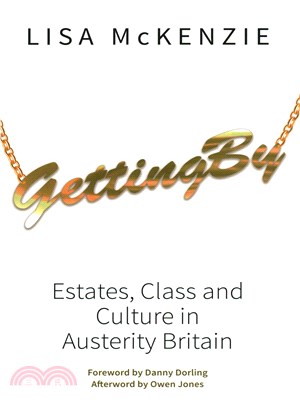
The poor in the UK have been increasingly stigmatised over the last 30 years, and the cultural and symbolic aspects of being working class today are as significant to inequality as the economic circum
This lively, colourful and innovative pack has been designed specifically for use as a teaching aid and learning resource for students of geography, sociology, social policy and related social science
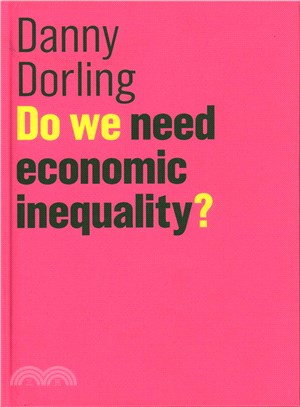
Although economic inequality provokes widespread disquiet, its supposed necessity is rarely questioned. At best, a basic level of inequality is seen as a necessary evil. At worst, it is seen as i
Demography is not destiny. As Giacomo Casanova explained over two centuries ago: 'There is no such thing as destiny. We ourselves shape our own lives.' Today we are shaping them and our societies more
Demography is not destiny. As Giacomo Casanova explained over two centuries ago: 'There is no such thing as destiny. We ourselves shape our own lives.' Today we are shaping them and our societies more
Although economic inequality provokes widespread disquiet, its supposed necessity is rarely questioned. At best, a basic level of inequality is seen as a necessary evil. At worst, it is seen as i
How do you draw a map of 100,000 places, of more than a million flows of people, of changes over time and space, of different kinds of spaces, surfaces and volumes, from human travel time to landscape