In this study of the Lit de Justice assembly, Sarah Hanley draws on history, legend, ritual, and discourse to show how constitutional ideologies were propagated in the Grand-chambre of the Parlement o
According to the Marxist interpretation still dominant in Japanese studies, the last century and a half of the Tokugawa period was a time of economic and demographic stagnation. Professors Hanley and
According to the Marxist interpretation still dominant in Japanese studies, the last century and a half of the Tokugawa period was a time of economic and demographic stagnation. Professors Hanley and
In this study of the Lit de Justice assembly, Sarah Hanley draws on history, legend, ritual, and discourse to show how constitutional ideologies were propagated in the Grand-chambre of the Parlement o
Perinatal Mental Health is an invaluable reference for nurses, midwives and other health professionals working with this client group, covering current thinking on the causes of mothers’ mood di
While little has been written about the USS Arkansas, this battleship carried the state’s name through two world wars, a Mexican invasion, and into the atomic age. The USS Arkansas, measuring almost t
Anchored around the county seat of Jasper with a population of less than 500 and one of the most picturesque courthouse squares in the state, Newton County is a nature lover's dream. The majority of t
Hot Spring County was established in 1829, and its county seat, Malvern, was laid out as a station on the Cairo and Fulton Railroad in 1873. A remarkable diversity of agricultural, timber, and mineral
In this visual history—the Hanley brothers’ most extensive book yet—readers will trace many towns’ humble beginnings, with wooden-frame structures lining rutted dirt streets teeming with wagon
When Union soldiers returned North after the Civil War, they brought home stories of a sparsely populated area with bountiful timber and potential for homes and farms. Over the next 50 years, first by
From the 1890s through the 1920s, the postcard was an extraordinarily popular means of communication, and many of the postcards produced during this "golden age" can today be considered works of art.
In turn-of-the-century America, "Wish you were here" was an often-penned phrase used on the backs of postcards that had been purchased for a few pennies and mailed with a one-cent stamp.Taken from a c
Arkansas seceded from the Union in 1861, opening a chapter in the state's history that would change its destiny for decades. An estimated 6,862 Arkansas Confederate soldiers died from battle and disea
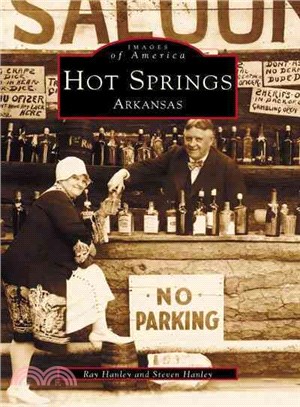
From its rise in the 1800s until well into the twentieth century, Hot Springs was a famed resort known worldwide. The grand hotels and world-class bath houses that sprang up around the government-prot
During the "Golden Age of Postcards," a craze that swept the nation in the early 1900s, postcard photographers captured images of everyday life in small towns all over the country. In this tradition,