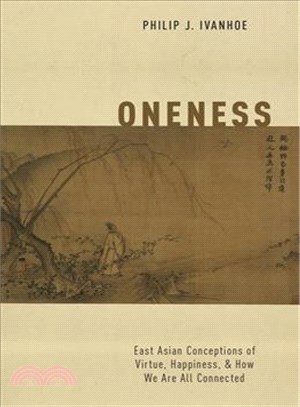
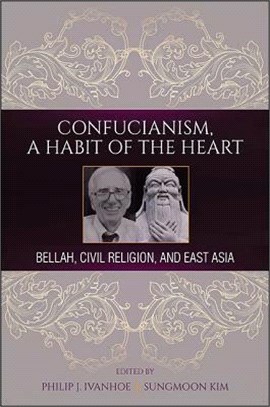
At the center of a constellation of key ideas in East Asian philosophical traditions, there lies a conception of oneness among human beings. Human beings are intricately and inextricably intertwined
Recent interest in Confucianism has a tendency to suffer from essentialism and idealism, manifested in a variety of ways. One example is to think of Confucianism in terms of the views attributed to on
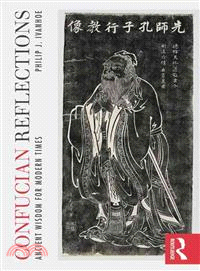
Confucian Reflections: Ancient Wisdom for Modern Times is about the early Chinese Confucian classic the "Analects" Lunyu, attributed to the founder of the Confucian tradition, Kongzi (551-479 bce) and
Confucian Reflections: Ancient Wisdom for Modern Times is about the early Chinese Confucian classic the "Analects" Lunyu, attributed to the founder of the Confucian tradition, Kongzi (551-479 bce) and
Zhang Xuecheng (1738–1801) has primarily been read as a philosopher of history. This volume presents him as an ethical philosopher with a distinctive understanding of the aims and methods of Co
This book is a collaborative, comaprative study of the relgious thought of Zhuangzi, a fourthcentury B.C.E. Chinese Daoist, and Soren Kierkegaard, a nineteenth century Danish Christian. After offering
With contributions by some of the best and most significant contemporary Korean philosophers, this important volume provides an overview of the different debates, problems, figures and periods that ma
With contributions by some of the best and most significant contemporary Korean philosophers, this important volume provides an overview of the different debates, problems, figures and periods that ma
Although Freud makes only occasional, brief references to China and Chinese culture in his works, for almost a hundred years many leading Chinese intellectuals have studied and appropriated various Fr
Scholars of East Asian philosophy and religion explore attitudes and concepts concerning death in early China. Their topics include preparations for an afterlife in ancient China, concepts of death an
Known throughout East Asia as Mengzi, or "Master Meng," Mencius (391-308 B.C.E.) was a Chinese philosopher of the late Zhou dynasty, an instrumental figure in the spread of the Confucian tradition, a
Through diverse interpretations of the 3rd century BCE Chinese classic better known in the West as the Tao-te cing , nine international contributors including one of the first PhDs in China elucidate
The Chinese philosophical text Zhuangzi was written by Zhuangzi in the fourth century BCE. With humor and relentless logic Zhuangzi attacks claims to knowledge about the world, especially evaluative k
Known throughout East Asia as Mengzi, or "Master Meng," Mencius (391-308 B.C.E.) was a Chinese philosopher of the late Zhou dynasty, an instrumental figure in the spread of the Confucian tradition, an
Working Virtue is the first substantial collective study of virtue theory and contemporary moral problems. Leading figures in ethical theory and applied ethics discuss topics in bioethics, professiona
A collection of essays by leading sinologists, historians, and philosophers, challenging and extending the work of David Nivison, whose contributions range across moral philosophy, religious thought,
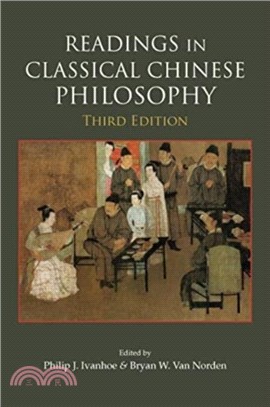
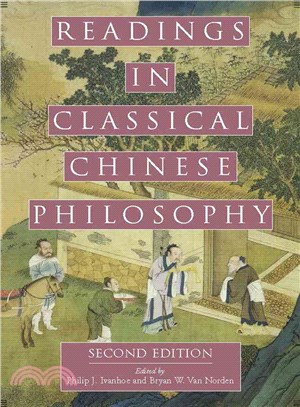
This new edition offers expanded selections from the works of Kongzi (Confucius), Mengzi (Mencius), Zhuangzi (Chuang Tzu), and Xunzi (Hsun Tzu); two new works, the dialogues Robber Zhi and White Hors
A consideration of Confucian ethics as a living ethical tradition with contemporary relevance. A consideration of Confucian ethics as a living ethical tradition with contemporary relevance.
This thought-provoking work presents Confucianism as a living ethical tradition with contemporary relevance. While acknowledged as one of the world's most influential philosophies, Confucianism's sign
The criminal class was seen as a violent, immoral and dissolute sub-section of Victorian London's population. Making their living through crime and openly hostile to society, the lives of these crimin
The idea that the self is inextricably intertwined with the rest of the world—the “oneness hypothesis”—can be found in many of the world’s philosophical and religious traditions. Oneness provides ways