The twentieth century has witnessed the blossoming of Western culture: new technology; communications and transportation systems; social, political, educational, agricultural, and medical advances. Bu
Excerptost pleasing and beautiful exhibitions are but signs, and that they begin to spoil and rot the moment they are treated as achievements.What we need is something which will enable us to interpre
Democracy and Education by John Dewey. In Democracy and Education, Dewey argues that the primary ineluctable facts of the birth and death of each one of the constituent members in a social group det
This collection of literature attempts to compile many of the classic works that have stood the test of time and offer them at a reduced, affordable price, in an attractive volume so that everyone can
Our schools are troubled with a multiplication of studies, each in turn having its own multiplication of materials and principles. Our teachers find their tasks made heavier in that they have come to
This collection of literature attempts to compile many of the classic works that have stood the test of time and offer them at a reduced, affordable price, in an attractive volume so that everyone can
14 of the American philosopher's most influential essays appear here, offering profound reflections on many different aspects of knowledge, reality, and epistemology, including the relationship of tho
Originally appearing in 1922, Dewey's treatise on social and moral aspects of psychology discusses the essential components of human nature. Focusing on the roles of habit, impulse, and intelligence,
In Liberalism and Social Action, John Dewey (1859-1952), one of America's leading social philosophers, surveys the history of liberal thought from John Locke to John Stuart Mill, in his search to fin
America's most renowned social philosopher John Dewey shines his powerful intellect on the serious public and cultural issues surrounding the place of the individual in a technologically advanced soci
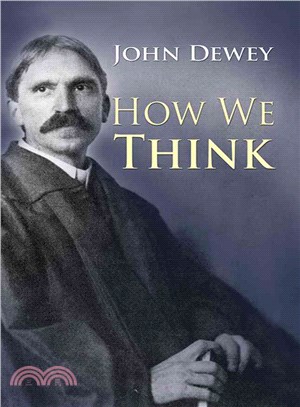
The dean of American philosophers shares his views on methods of training students to think well. His considerations include inductive and deductive logic, interpreting facts, concrete and abstract t
Experience and Education is the best concise statement on education ever published by John Dewey, the man acknowledged to be the pre-eminent educational theorist of the twentieth century. Written more
Preeminent American philosopher and educator John Dewey (1859-1952) rejected Hegelian idealism for the pragmatism of William James.In this collection of informal, highly readable essays, originally pu
John Dewey’s Democracy and Education addresses the challenge of providing quality public education in a democratic society. In this classic work Dewey calls for the complete renewal of public educatio
John Dewey, one of America's greatest popular philosophers and educators, emphasizes the importance of critical thinking and the vital role education should play.In this progressive work, written more
This edition brings Dewey's educational theory into sharp focus, framing his two classic works by frank assessments, past and present, of the practical applications of Dewey's ideas. In addition to a
This volume also includes a collection of essays entitled The Educational Fron-tier, Dewey’s articles on logic, the out-lawry of war, and philosophy for the En-cyclopedia of the Social Sciences, and h
With the exception of The Quest for Cer-tainty (Volume 4) this fifth volume brings together Dewey’s writings for the 1929?1930 period. During this time Dewey published 4 books and 50 articles on philo
A collection of all of Dewey’s writings for 1920 with the excep-tion of Letters from China and Japan. A Modern Language Association Committee on Scholarly Editions textual edition. The nineteen items
First published in 1899, The School and Society describes John Dewey’s experiences with his own famous Laboratory School, started in 1896. Dewey’s experiments at the Labora-tory School reflected his o
Except for Democracy and Education, the 53 items in Volume 10 include all of Dewey’s writings from 1916–1917, the years when he moved into politics and began to write about topics of general public in
During the three years embraced by Volume 7, Dewey published twenty articles and reviews, one of the articles of monograph-length, “The Psychology of Social Behavior,” one small book, Interest and Eff
This fifth volume of the Middle Works contains Ethics by John Dewey and his former colleague at the University of Michigan, James H. Tufts, which ap-peared as one of the last in the Holt American Scie
William James, remarking in 1909 on the differences among the three leading spokesmen for pragmatism—himself, F. C. S. Schiller, and John Dewey—said that Schiller’s views were essential-ly “psychologi
By 1907, the first of the three years em-braced by Volume 4, Dewey had aban-doned thoughts of a possible career in the administration of higher education and was firmly established as a leading member
One of America's greatest philosophers outlines a faith that is not confined to sect, class, or race. He describes a positive, practical, and dynamic faith, verified and supported by the intellect and
In this book Dewey sought to at once synthesize, criticize, and expand upon the democratic (or proto-democratic) educational philosophies of Rousseau and Plato. He saw Rousseau's philosophy as overemp
This anthology is a thorough introduction to classic literature for those who have not yet experienced these literary masterworks. For those who have known and loved these works in the past, this is a