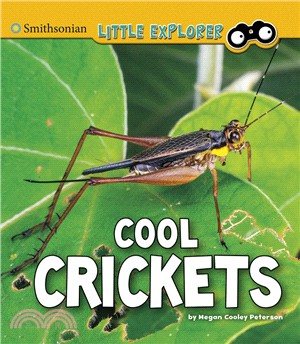
Chirping fills the night air, and you know crickets must be nearby! But did you also know that each species has its own unique song? Or that these tiny jumpers have ears on their legs? Meet cool crick
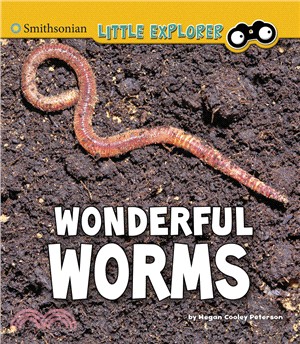
Dig in the dirt and you'll find . . . worms! But did you know that many live underwater? Or that some can grow as long as 9 feet? Excite kids' natural curiosity with this Smithsonian Little Entomologi
What was that sound? Introduce early readers preK-2 to sound and how it plays a part in their everyday lives. Find out how sound is made, how it travels, and how we can hear it. Readers explore the ba
Get moving! Introduce early readers preK-2 to motion and how it plays a part in their everyday lives. Find out what motion is, what is fast, what is slow, and how gravity fits in. Readers explore the
Matter matters! Introduce early readers preK-2 to matter and how it plays a part in their everyday lives. Find out what matter is, the states of matter, and how matter can change. Readers explore the
Yellowstone National Park is mostly in Wyoming, with some of the park in Montana and Idaho. Hike to learn about the trails, springs, geysers, and wildlife in this national park.
What makes a dragonfly a dragonfly? What are the most dashing dragonflies from around the world? Carefully leveled, engaging text supports life science curriculum related to classification, behavior,
What makes a grasshopper a grasshopper? What are the grandest grasshoppers from around the world? Carefully leveled, engaging text supports life science curriculum related to classification, behavior,
What makes an ant an ant? What are the coolest ants from around the world? Carefully leveled, engaging text supports life science curriculum related to classification, behavior, life cycles, and more.