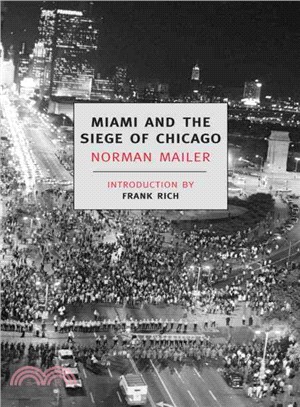
1968. The Vietnam War was raging. President Lyndon Johnson, facing a challenge in his own Democratic Party from the maverick antiwar candidate Eugene McCarthy, announced that he would not seek a secon
One of the first examples of "new journalism" daringly combines reportage with a novelistic style and garnered Mailer his first Pulitzer Prize and a National Book Award in 1968.
Tells the scarcely credible story of the Apollo 11 mission. This book is suffused with Mailer's obsession both with the astronauts themselves and with his own anxieties and terrors about the extremity
Published at the height of the McCarthy era, Norman Mailer’s audacious novel of socialism is at once an elegy and an indictment, a sinuous moral thriller and an intellectual slugfest. Wounded during W
Amid the cactus wilds some two hudred miles from Hollywood lies a privileged oasis called Desert D'Or. It is a place for starlets and would-be starlets, directors, studio execs, and the well-groomed l
Norman Mailer’s dazzlingly rich, deeply evocative novel of ancient Egypt breathes life into the figures of a lost era: the eighteenth-dynasty Pharaoh Rameses and his wife, Queen Nefertiti; Menenhetet,
No career in modern American letters is at once so brilliant, varied, and controversial as that of Norman Mailer. In a span of more than six decades, Mailer has searched into subjects ranging from Wor
When Why Are We in Vietnam? was published in 1967, almost twenty years after The Naked and the Dead, the critical response was ecstatic. The novel fully confirmed Mailer's stature as one of the most
Reissue of a modern classic - the book that catapulted Norman Mailer to fame on its first publication in 1948. Based on Mailer's own experience of military service in the Philippines during World War