"Having been exposed early in life to the dangers of extreme nationalism, journalist and historian Walter Laqueur chose to align his thinking with Victor Hugo's ideal of a "European Brotherhood" where
First published in the 1980s, The Political Psychology of Appeasement contains some of the most influential political journalism of the 1970s. The author, a leading contemporary historian and commenta
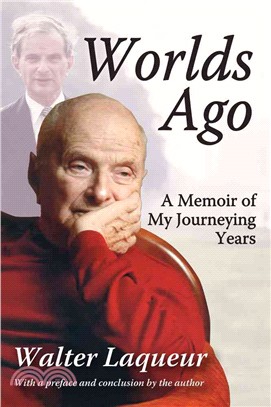
"Originally published in 1993, Worlds Ago is not only about politics of the times, but also about the world into which Walter Laqueur was born and raised and the world that shaped him: pre-war Germany
"Originally published in 1993, Worlds Ago is not only about politics of the times, but also about the world into which Walter Laqueur was born and raised and the world that shaped him: pre-war Germany
This collection of previously-published essays (although some have been substantially reworked) by the well-known historian Laqueur is loosely tied together by the eponymous theme, which also addresse
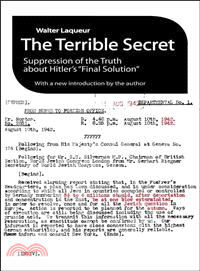
This book seeks to answer three vital questions about the worldwide response to Hitler's "Final Solution" When did information about the genocide first become known to Jews and non-Jews? Through what
This is a selection of essays written during the first decade of the twenty-first century, by a figure widely acknowledged as the conscience of European liberalism. In Walter Laqueur’s lifetime, there
The term "Weimar culture," while generally accepted, is in some respects unsatisfactory, if only because political and cultural history seldom coincides in time. Expressionism was not born with the de
Assassinations, bombings, hijackings, diplomatic kidnappings-terrorism is the most publicized form of political violence. The history of terrorism goes back a very long time, but the very fact that th
Despite political changes since 1989 the relationship between these two nations remains the most important issue in European politics. This study of what Russians and Germans have thought of each othe
This is a major survey and assessment of U.S. intelligence activities over the last forty-five years. It offers a systematic and authoritative evaluation of American intelligence-gathering machinery:
Young Germany explores the revolt of the younger generation in Germany from 1896 to 1933. It is a readable history of the Free Youth Movement, one of the most significant factors in shaping modern Ger