This book presents the framework for a new, comprehensive approach to cognitivescience. The proposed paradigm, enaction, offers an alternative to cognitive science's classical,first-generation Computa
If we are material beings living in a material world -- and all the scientificevidence suggests that we are -- then we must find existential meaning, if there is such a thing, inthis physical world. W
In this novel account of distinctively human social cognition, Tadeusz Zawidzkiargues that the key distinction between human and nonhuman social cognition consists in our complex,diverse, and flexible
This collection reports on the latest research on an increasingly pivotal issue for evolutionary biology: cooperation. The chapters are written from a variety of disciplinary perspectives and utilize
People can be disgusted by the concrete and by the abstract -- by an object they find physically repellent or by an ideology or value system they find morally abhorrent. Different things will disgust
Established wisdom in cognitive science holds that the everyday folk psychologicalabilities of humans--our capacity to understand intentional actions performed for reasons--areinherited from our evolu
Where does the mind stop and the rest of the world begin? In their famous 1998 paper"The Extended Mind," philosophers Andy Clark and David J. Chalmers posed this question andanswered it provocatively:
The study of consciousness has advanced rapidly over the last two decades. And yetthere is no clear path to creating models for a direct science of human experience or forintegrating its insights with
Emotional intelligence (or EI)--the ability to perceive, regulate, and communicateemotions, to understand emotions in ourselves and others--has been the subject of best-sellingbooks, magazine cover st
Over the last three million years or so, our lineage has diverged sharply from thoseof our great ape relatives. Change has been rapid (in evolutionary terms) and pervasive. Morphology,life history, so
In this largely antimetaphysical treatment of free will and determinism, MarkBalaguer argues that the philosophical problem of free will boils down to an open scientificquestion about the causal histo
The contemporary discipline of biolinguistics is beginning to have the feel of scientific inquiry. Biolinguistics--especially the work of Noam Chomsky--suggests that the design of language may be "per
In Psychiatry in the Scientific Image, Dominic Murphy looks atpsychiatry from the viewpoint of analytic philosophy of science, considering three issues: how weshould conceive of, classify, and explai
Social neuroscience uses the methodologies and tools developed to measure mental andbrain function to study social cognition, emotion, and behavior. In this collection John Cacioppo,Penny Visser, and
How human musical experience emerges from the audition of organized tones is a riddleof long standing. In The Musical Representation, Charles Nussbaum offers aphilosophical naturalist's solution. Nuss
In this groundbreaking book, Jonathan Waskan challenges cognitive science's dominant model of mental representation and proposes a novel, well-devised alternative. The traditional view in the cognitiv
The explanatory power of economic theory is tested by the phenomenon of irrationalconsumption, examples of which include such addictive behaviors as disordered and pathologicalgambling. Midbrain Mutin
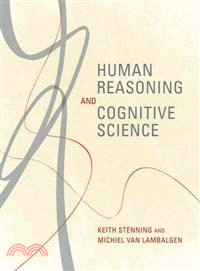
In Human Reasoning and Cognitive Science, Keith Stenning andMichiel van Lambalgen--a cognitive scientist and a logician--argue for the indispensability ofmodern mathematical logic to the study of huma
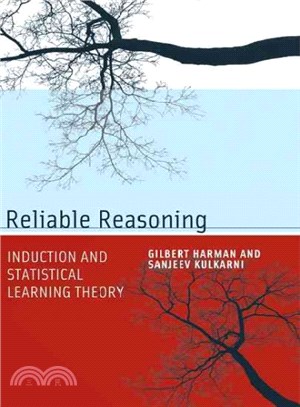
In Reliable Reasoning, Gilbert Harman and Sanjeev Kulkarni -- aphilosopher and an engineer -- argue that philosophy and cognitive science can benefit fromstatistical learning theory (SLT), the theory
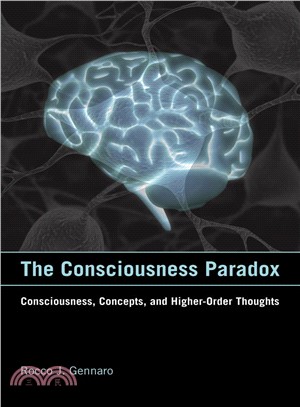
Consciousness is arguably the most important area within contemporary philosophy ofmind and perhaps the most puzzling aspect of the world. Despite an explosion of research fromphilosophers, psychologi
Contemporary discussions of the success of science often invoke an ancient metaphorfrom Plato's Phaedrus: successful theories should "carve nature at its joints." But isnature really "jointed"? Are th
Contemporary discussions of the success of science often invoke an ancient metaphorfrom Plato's Phaedrus: successful theories should "carve nature at its joints." But isnature really "jointed"? Are th
While philosophers of mind have been arguing over the status of mentalrepresentations in cognitive science, cognitive scientists have been quietly engaged in studyingperception, action, and cognition
In Body Language, Mark Rowlands argues that the problem of representation--how it ispossible for one item to represent another--has been exacerbated by the assimilation ofrepresentation to the categor
If we are material beings living in a material world--and all the scientific evidencesuggests that we are--then we must find existential meaning, if there is such a thing, in thisphysical world. We mu
Animals live in a world of other minds, human and nonhuman, and their well-being andsurvival often depends on what is going on in the minds of these other creatures. But do animalsknow that other crea
People can be disgusted by the concrete and by the abstract -- by an object they findphysically repellent or by an ideology or value system they find morally abhorrent. Different thingswill disgust di
This volume brings together contributions by prominent researchers in the fields of language processing and language acquisition on topics of common interest: how people refer to objects in the world
In Laws, Mind, and Free Will, Steven Horst addresses the apparent dissonance betweenthe picture of the natural world that arises from the sciences and our understanding of ourselves asagents who think
Do you dream in color? If you answer Yes, how can you be sure? Before you recount your vivid memory of a dream featuring all the colors of the rainbow, consider that in the 1950s, researchers found t
Modern psychology began with the adoption of experimental methods at the end of thenineteenth century: Wilhelm Wundt established the first formal laboratory in 1879; universitiescreated independent ch
This book presents the framework for a new, comprehensive approach to cognitive science. The proposed paradigm, enaction, offers an alternative to cognitive science's classical, first-generation Comp
Most philosophical explorations of responsibility discuss the topic solely in terms of metaphysics and the "free will" problem. By contrast, these essays by leading philosophers view respon
Most philosophical explorations of responsibility discuss the topic solely in terms of metaphysics and the "free will" problem. By contrast, these essays by leading philosophers view respon
The causal theory of action (CTA) is widely recognized in the literature of the philosophy of action as the "standard story" of human action and agency—the nearest approximation in th
"Arguments against radical enhancement have too often in the past been characterized by irrationalism and mysticism. Nicholas Agar presents the first cogent case for the rationality of opposing radica
The causal theory of action (CTA) is widely recognized in the literature of the philosophy of action as the "standard story" of human action and agency—the nearest approximation in th
"The idea that physics could shape human activity goes back to Pythagoras, but as our understanding of the natural sciences deepens, this insight seems to gain in significance. Drawing from both the t
How do novel scientific concepts arise? In Creating Scientific Concepts, Nancy Nersessian seeks to answer this central but virtually unasked question in the problem of conceptual change. She argues t
A leading expert on evolution and communication presents an empirically based theory of the evolutionary origins of human communication that challenges the dominant Chomskian view.