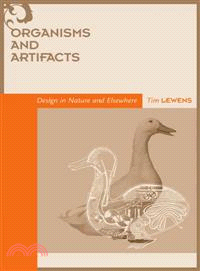
In Organisms and Artifacts, Tim Lewens investigates the analogical use of thelanguage of design in evolutionary biology. Uniquely among the natural sciences, biology usesdescriptive and explanatory te
In this book, Alan Berger further develops the new theory of reference -- as formulated by Kripke and Putnam -- applying it in novel ways to many philosophical problems concerning reference and existe
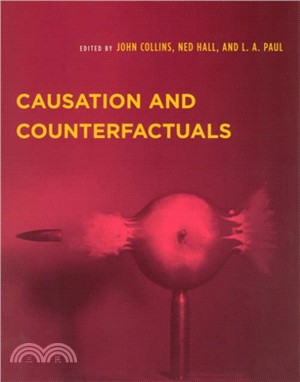
One philosophical approach to causation sees counterfactual dependence as the key to the explanation of causal facts: for example, events c (the cause) and e (the effect) both occur, but had c not oc
The diversity of topics discussed in this book reflects the breadth of Judith Jarvis Thomson's philosophical work. Throughout her long career at MIT, Thomson's straightforward approach and emphasis on
The study of the relationship between natural language and spatial cognition has the potential to yield answers to vexing questions about the nature of the mind, language, and culture. The fifteen ori
This long-awaited work by prominent Harvard psychologist Stephen Kosslyn integrates a twenty-year research program on the nature of high-level vision and mental imagery. Image and Brain marshals insig
The first systematic examination of Hilary Putnam's arguments against computational functionalism challenges each of Putnam's main arguments. With mind-brain identity theories no longer dominant in
Are women and men biologically destined to be in perpetual conflict? Does evolutionary genetics adequately explain sexual aggression? Such questions have been much debated in both the media and academ
Experiences and feelings are inherently conscious states. There is something it islike to feel pain, to have an itch, to experience bright red. Philosophers call this sort ofconsciousness "phenomenal
This wide-ranging collection of essays is inspired by the memory of the cognitive psychologist John Macnamara, whose influential contributions to language and concept acquisition have provided the bas
The essays range across fields foundational to cognitive science, including perception, attention, memory, and language, using formal, experimental, and neuroscientific approaches to issues of represe
Humans were thought to be unique among the species in having minds, but recent results showing the richness and diversity in animal psychology makes this view untenable. Yet there remains the question
This investigation on the borderlines of metaphysics, everyday geometry and the theory of perception seeks to answer two basic questions: Do holes really exist? If they do, what are they? Holes are am
Many philosophers believe that normative ethics is in principle independent of psychology. By contrast, the authors of these essays explore the interconnections between psychology and moral theory. Th
How do humans understand and process language? The 18 contributions in Lexical Representation and Process provide a coherent and well-documented frame of reference for a field of study that is becomi
In this provocative study, Robert Cummins takes on philosophers, both old and new, who pursue the question of mental representation as an abstraction, apart from the constraints of any particular theo
The last decade saw the arrival of a new player in the creation/evolution debate—the intelligent design creationism (IDC) movement, whose strategy is to act as "the wedge" to overturn
Albrecht Dürer's famous portrayal of creative effort in paralysis, the unsurpassed masterpiece of copperplate engraving titled Melencolia I, has stood for centuries as a pictorial summa of knowledge
The poet Jean de La Fontaine famously dedicated his Fables in 1668 to Louis XIV's son, declaring in verse that "animals I choose/to proffer lessons that we all might use." Less well known is that La
The ultimate goal of the cognitive sciences is to understand how the brain works--howit turns "matter into imagination." In Imagination and the Meaningful Brain, psychoanalyst ArnoldModell claims that
In Real Natures and Familiar Objects Crawford Elder defends, with qualifications, theontology of common sense. He argues that we exist -- that no gloss is necessary for the statement"human beings exis
This theoretical guide for speech-language pathologists, neuropsychologists, neurologists, and cognitive psychologists describes the linguistic and psycholinguistic basis of aphasias that are a result
These essays explore cognitively oriented empirical trials that use AI programming as a modeling methodology and that can provide valuable insight into a variety of learning problems. New perspectiv
In this study, Don Ross explores the relationship of economics to other branches of behavioral science, asking, in the course of his analysis, under what interpretation economics is a sound empirical
In this important book, Drew Khlentzos explains the antirealist argument from a realist perspective. He defends naturalistic realism against the antirealist challenge, and he considers the consequence
Death and the Idea of Mexico is the first social, cultural, and political history ofdeath in a nation that has made death its tutelary sign. Examining the history of death and of thedeath sign from si
In Crypto Anarchy, Cyberstates, and Pirate Utopias, Peter Ludlow extends the approachhe used so successfully in High Noon on the Electronic Frontier, offering a collection of writingsthat reflects the
Neural Network Learning and Expert Systems is the first book to present a unified and in-depth development of neural network learning algorithms and neural network expert systems. Especially suitable
Emotion and addiction lie on a continuum between simple visceral drives such as hunger, thirst, and sexual desire at one end and calm, rational decision making at the other. Although emotion and addic
Genetic algorithms are playing an increasingly important role in studies of complexadaptive systems, ranging from adaptive agents in economic theory to the use of machine learningtechniques in the des
This volume of Ned Block's writings collects his papers on consciousness, functionalism, and representationism. A number of these papers treat the significance of the multiple realizability of mental
Western philosophy has long been divided between empiricists, who argue that human understanding has its basis in experience, and rationalists, who argue that reason is the source of knowledge. A cen
This collection of essays serves both as an introduction to Ruth Millikan'smuch-discussed volume Language, Thought, and Other Biological Categories and as an extension andapplication of Millikan's cen
In this landmark work on early conceptual and lexical development, Ellen Markmanexplores the fascinating problem of how young children succeed at the task of inducing concepts.Backed by extensive expe
An introduction to the science and practice of autonomous robots that reviews over 300 current systems and examines the underlying technology.Autonomous robots are intelligent machines capable of perf
For much of the twentieth century, philosophy and science went their separate ways.In moral philosophy, fear of the so-called naturalistic fallacy kept moral philosophers fromincorporating development
In this book, G. Lynn Stephens and George Graham examine verbal hallucinations and thought insertion as examples of what they call "alienated self-consciousness." In such cases, a subject is
A Choice Outstanding Academic Title for 1999Academic debates about pluralism and truth have become increasingly polarized in recent years. One side embraces extreme relativism, deeming any talk of obj