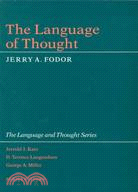
In a compelling defense of the speculative approach to the philosophy of mind, Jerry Fodor argues that, while our best current theories of cognitive psychology view many higher processes as computatio
The present confrontation of Communist China and the United States, on which the future of peace in Asia hinges, is merely the latest phase in a continuing historical process--the remaking of China's
The coup is the most frequently attempted method of changing government, and the most successful. Coup d' ?tat outlines the mechanism of the coup and analyzes the conditions--political, military, and
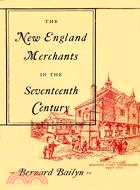
By the middle of the eighteenth century the merchants were dominant figures in the northern American colonies, powerful economically, politically, and socially. But in New England this preeminence ha
The life of Keats provides a unique opportunity for the study of literary greatness and of what permits or encourages its development. Its interest is deeply human and moral, in the most capacious sen
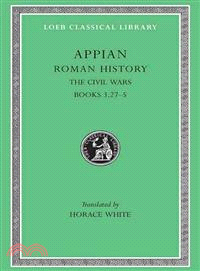
Appian (Appianus) was a Greek official of Alexandria. He saw the Jewish rebellion of 116 CE, and later became a Roman citizen and advocate and received the rank of eques (knight). In his older years h
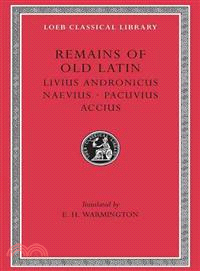
The Loeb edition of early Latin writings is in four volumes. The first three contain the extant work of seven poets and surviving portions of the Twelve Tables of Roman law. The fourth volume contains
This comparative analysis aids the fieldworker in identifying fossil proboscidean bones from early man sites. It also describes the skulls, mandibles, and posteranial skeletons of forty families of bi
Aristotle, great Greek philosopher, researcher, reasoner, and writer, born at Stagirus in 384 BCE, was the son of Nicomachus, a physician, and Phaestis. He studied under Plato at Athens and taught the
The philosopher Philo was born about 20 BCE to a prominent Jewish family in Alexandria, the chief home of the Jewish Diaspora as well as the chief center of Hellenistic culture; he was trained in Gree
The philosopher Philo was born about 20 BCE to a prominent Jewish family in Alexandria, the chief home of the Jewish Diaspora as well as the chief center of Hellenistic culture; he was trained in Gree
The first comprehensive history of modern poetry in English from the 1890s to the 1920s, this book embraces an era of enormous creative variety--the formative period during which the Romantic traditio
For teachers and students of Petrarch, Durling's edition of the poems has become the standard one. Readers have praised the translation as both graceful and accurate, conveying a real understanding of
The left hand has traditionally represented the powers of intuition, feeling, and spontaneity. In this classic book, Jerome Bruner inquires into the part these qualities play in determining how we kno
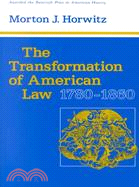
In a remarkable book based on prodigious research, Morton J. Horwitz offers a sweeping overview of the emergence of a national (and modern) legal system from English and colonial antecedents. He trea
In writing about sixteenth-century France, Lucien Febvre looked for those changes in human consciousness that explain the process of civilization—the most specific and tangible examples of men’s exper
Based mainly on State Department materials, but addressing generic problems of organizational politics as well, this book provides a fresh, intelligent, and lively account of bureaucratic behavior.
One of the most eminent historians of our time offers here a perceptive guide to the study of history. Truth in History teaches how to read, how to analyze, how to discriminate. It is as helpful to t
Critic, arbiter of taste, renowned authority on Renaissance painting and oracle to millionaire art collectors, Bernard Berenson was the most formidable presence in the art world for more than thirty y
George Gordon Byron was a superb letter-writer: almost all his letters, whatever the subject or whoever the recipient, are enlivened by his wit, his irony, his honesty, and the sharpness of his observ
Charles Olson is often described as one of the most influential American poets of the last quarter century; some would rather describe him as a cult figure, prophet of the Black Mountain poets and the
Upon publication in the late 1970s this book was the first major historical analysis of twentieth-century Cuba. Focusing on the way Cuba has been governed, and in particular on the way a changing elit
George Gordon Byron was a superb letter-writer: almost all his letters, whatever the subject or whoever the recipient, are enlivened by his wit, his irony, his honesty, and the sharpness of his observ
J. Bronowski was both a distinguished mathematician and a poet, a philosopher of science and a literary critic who wrote a well-known study of William Blake. Dr. Bronowski’s very career was founded on
Schizophrenia: Science and Practice brings together the work of many of today's most distinguished authorities in psychiatry. From diverse perspectives, these specialists review what is presently know
Pragmatism is the most famous single work of American philosophy. Its sequel, The Meaning of Truth, is its imperative and inevitable companion. The definitive texts of both works are here available fo
John Scott looks at the characteristics, stylistic evolution, ceramic relationships, and dating of the Danzantes of Monte Albán. The volume includes an illustrated catalogue of the reliefs and an appe
In the last third of the nineteenth century the American city grew from a crowded merchant town, in which neatly everybody walked to work, to the modern divided metropolis. The street railway created
The journals from 1854 to 1861 show the ripeness of Emerson's thought overshadowed by the gravest problem of his time--slavery. In addition to completing English Traits (1856) and Conduct of Life (186
The patrolman has the most difficult, complex, and least understood task in the police department. Much less is known of him than of his better publicized colleague, the detective. In this important
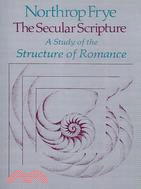
Northrop Frye's thinking has had a pervasive impact on contemporary interpretations of our literary and cultural heritage. In his Anatomy of Criticism, a landmark in the history of modern critical th
Josephus, soldier, statesman, historian, was a Jew born at Jerusalem about 37 CE. A man of high descent, he early became learned in Jewish law and Greek literature and was a Pharisee. After pleading i
George Gordon Byron was a superb letter-writer: almost all his letters, whatever the subject or whoever the recipient, are enlivened by his wit, his irony, his honesty, and the sharpness of his observ
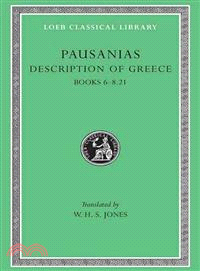
Pausanias, born probably in Lydia in Asia Minor, was a Greek of the 2nd century CE, about 120?180, who travelled widely not only in Asia Minor, Palestine, Egypt and North Africa, but also in Greece an
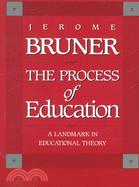
In this classic argument for curriculum reform in early education, Jerome Bruner shows that the basic concepts of science and the humanities can be grasped intuitively at a very early age. He argues persuasively that curricula should he designed to foster such early intuitions and then build on them in increasingly formal and abstract ways as education progresses.Bruner's foundational case for the spiral curriculum has influenced a generation of educators and will continue to be a source of insight into the goals and methods of the educational process.
This volume launches a far-reaching exploration into the meaning, manifestations, and significance of ethnicity in modern society and politics. The authors seek neither to celebrate nor to deplore eth