India has 150GW of renewable energy potential, about half in the form of small hydropower, biomass, and wind and half in solar, cogeneration, and waste-to-energy. Developing renewable energy can help
This volume uses recent research from the World Bank to document and analyze the bidirectional relationship between poverty and migration in developing countries. The case studies chapters compiled in
Urbanization and growing wealth in developing countries portend a large increase of demand for modern energy services in residential, commercial and public-service buildings in the coming decades. Pu
Public Expenditure Tracking Surveys (PETS) are a tried and tested methodology to identify delays in financial and in-kind transfers, leakages, and other inefficiencies in government programs. This gui
Services negotiations are an integral element in designing and implementing programs to liberalize and deregulate trade unilaterally, bilaterally, and multilaterally in both developing and advanced e
This book fills a large gap in the literature on trade in services. It focuses on the dynamics of trade and investment liberalization in a sector of considerable technical and regulatory complexity—fi
The training and development of human capital in Sub-Saharan Africa (SSA) will help countries in the region diversify their economies, carry out economic transformation, and support sustainable growt
Governments in developing countries have been increasingly involved in the support of agricultural (crop and livestock) insurance programs in recent years. In their attempts to design and implement ag
Bolivia's informal economic sector is the largest in Latin America, and women-owned businesses tend to be overrepresented in the informal sector and to be less profitable than firms in the formal sect
Starting in 1994, Cameroon introduced regulatory and market-based reforms to regulate access to its rainforests, balance public and private interests in those forests, and integrate wider economic, cu
Fiscal discipline and public sector efficiency became prominent issues in Latin America and the Caribbean in the late 1980’s following external debt crises that troubled many countries in the region.
People with disabilities in Sierra Leone are disadvantaged in regards to their access to social services and the economic opportunities available to them. Oftentimes, they are marginalized and their
This survey assembles recent theoretical and empirical advances in the literature on economic informality and analyzes the causes and costs of informality in developed and developing economies. Using
Vanuatu is a traditional and largely patriarchal society; women have extremely low representation in Parliament and in other decision-making bodies. Despite this, women are increasingly involved in pr
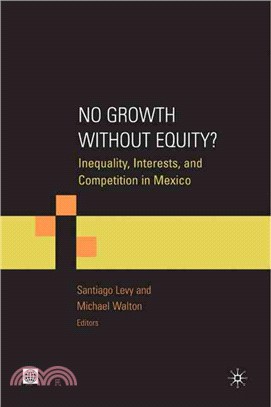
Equity and growth are central concerns for development in Mexico. Specific inequalities in income, power, wealth, and status create and sustain economic institutions and policies that perpetuate these
In most countries, parliament has the constitutional mandate to both oversee and hold government to account. In light of the increased focus on good governance, academics and legislative strengthening
'Decentralization in Client Countries' assesses the effectiveness of Bank support for decentralization between fiscal years 1990 and 2007 in 20 countries, seeking to inform the design and implementati
The ability of the media to affect outcomes in economic and political markets has been well documented. News reporting and advertising influence consumer behavior in goods and services markets by reve
The commonly held perception is that businesses owned by women in the Middle East and North Africa are small and informal, that they're less sophisticated, and that they're huddled in low-value-added
Air pollution in Tehran has become a major problem in recent years, due to the geographical position of the town, industries, and traffic. Most private and public vehicles are old and have no emission
This World Bank Working Paper discusses equity and efficiency issues in secondary education transitions in Sub-Saharan Africa. Its main purpose is to identify and analyze national, regional, and local
'Strategic Communication for Privatization, Public-Private Partnerships, and Private Participation in Infrastructure' reviews the experiences of the World Bank and its clients in employing public comm
'The Road Not Traveled: Education Reform in the Middle East and North Africa Region' evaluates the impact of past investment in education in the region and proposes a new approach to future education
In this volume aimed at those in international and government organizations, case studies from countries such as Mozambique, Uganda, and the Ukraine articulate methods for measuring service delivery i
Written for those involved in ensuring the elimination of stigma and inequity in access to care for those with HIV/AIDS, this gives specific examples of laws and regulations and practical advice. Its
'Recruiting, Retaining and Retraining Secondary School Teachers and Principals in Sub-Saharan Africa' is based on country studies in Ethiopia, Ghana, Guinea, Madagascar, Tanzania and Uganda and an ext
Contributors from universities and institutions from around the world (including the World Bank) participated in a conference sponsored by the World Bank and its partners and held in Budapest, Hungary
Empirical insights on household behavior and electricity consumption patterns in this book reveal that, in Europe and Central Asia, the erosion of tariff based subsidies has disproportionately affecte
Mineral taxation is a significant factor in the achievement of development, and this report gives key practical issues in tax administration, revenue distribution and reporting. This covers general ta
The analysis of the distributional impact of policy reforms on the well-being or welfare of different stakeholder groups, particularly on the poor and vulnerable, has an important role in the elaborat
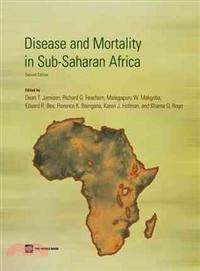
This report provides policy makers and those working in the health sector with information on the nature and extent of health problems in Sub-Saharan Africa and the health care strategies that show th
'Judicial Systems in Transition Economies' looks at the experience of countries in Central and Eastern Europe and the Baltics (CEE) and the Commonwealth of Independent States (CIS) as they reform thei
The World Bank's Poverty Reduction and Economic Management network held an international, interdisciplinary workshop in 2003 to explore how to monitor and evaluate empowerment in large programs, and t
Roma are the largest minority group in Europe and are the major poverty risk group in Central and Eastern Europe. Poverty rates from recent World Bank poverty studies are striking. In Bulgaria, Roma w
"Books, Buildings, and Learning Outcomes examines the impact of World Bank-supported educational reforms introduced in Ghana since 1986 and related investment projects in support of basic education. A
In the 1970s and early 1980s, Vietnam's economic performance was dismal, and Vietnam was one of the poorest countries in the world. With the adoption of new market-oriented policies in the late 1980's
Rapid and sustained growth, in excess of 5% per annum, is key for sustained poverty reduction in Yemen. However, the achievement of such a target is challenging and necessitates aggressive changes in
The economies in the Middle East and North Africa (MENA) region are diverse in many ways, making it difficult to develop a common social protection strategy. Countries differ in size and per capita in
This book analyzes the cultural heritage sector in the Middle East and North Africa region and the World Bank's policy and operational experiences in this sector over the past six years—1996 to 2001.
"The past three decades have seen impressive advances in development in the East Asia and Pacific (EAP) region. Gains in income and education have been accompanied by reductions in high levels of infa