For the World Bank and its partners, the ever-present test is to deliver results-to lift people out of poverty and promote socially and environmentally sustainable development. Achieving such success
Developing countries need additional, cross-border capital channeled into their private sectors to generate employment and growth, reduce poverty, and meet the other Millennium Development Goals. Inno
In most countries, parliament has the constitutional mandate to both oversee and hold government to account. In light of the increased focus on good governance, academics and legislative strengthening
The Doing Business series provides research, data, and analysis on regulationin 181 economies across 10 areas of the business life cycle. Doing Business2009 identifies top reformers in business regula
Upon signing the Millennium Declaration in 2000, the international community committed itself to eight development goals with timebound targets and measurable indicators. The third of these eight goal
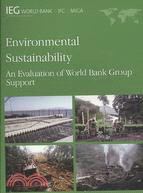
This evaluation assesses the Bank Group's support for environmental sustainability—in both the public and private sectors—over the past 15 years. It identifies several crucial constraints that need to
Drawn from material presented at the September 2006 workshop and essential to the organization's World Development Report for 2008, this material reflects key research and policy from Europe, the US a
This title is part of an initiative by the World Bank to develop standard indicators to measure the performance and soundness of the financial sector in the South Asia region and help pinpoint where p
In recent years, the world has seen both massive destruction caused by natural disasters and immense financial and physical support for the victims of these calamities. So that these natural hazards d
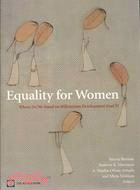
Persuasive evidence demonstrates that gender equality in education is central to economic development. Despite more than two decades of accumulated knowledge and evidence of what works in improving ge
'Decentralization in Client Countries' assesses the effectiveness of Bank support for decentralization between fiscal years 1990 and 2007 in 20 countries, seeking to inform the design and implementati
This report brings together a significant amount of analytical work sponsored by the World Bank and many African and other International partners about the necessity for high quality secondary educati
Looking for accurate, up-to-date data on development issues? 'World Development Indicators', the World Bank's respected statistical publication presents the most current and accurate information on gl
Now in its second edition, the Little Data Book on Information and Communication Technology 2008 presents at-a-glance tables for over 140 economies. The book shows the most recent national data on key
The authors (all of the World Bank) conduct an econometric analysis of systemic, cross-country, and time-series data concerning private participation in the electricity, telecommunication, and water s
A pocket edition of the Bank's World Development Indicators intended as a quick reference for users of the mother volume and its online versions. Tables list data for 800 indicators in the areas of pe
Over the past few years, the countries of Eastern Europe and the Former Soviet Union have seen rapid productivity growth that has driven up living standards and reduced poverty. 'Unleashing Prosperity
The story of Mozambique is one of successful transformation. Since 1994, when it faced a decimated infrastructure, a weak economy, and fragile institutions, it has sustained high economic growth and h
This thematic study consists of case studies of Ghana, Malawi, and Uganda, as well as, a review of studies undertaken over the past ten years on education in Africa with particular attention to girls'
Burundi, situated in the heart of the Great Lakes Region, is one of the poorest nations in the world. Beset by coups d'etats, presidential assassinations and genocide, the country has been caught in a
Accurate weather and climate services can help mitigate weather disasters, support the productivity of smallholding and commercial agriculture, conserve energy, and promote safe transportation. This s
Rapid growth in Eastern Europe and the former Soviet Union since the Russian financial crisis of 1998 has moved 50 million people—out of 400 million—out of absolute poverty. This has been brought abou
Irrigation has made a major contribution to poverty reduction in the past decades, enabling higher yields and better nutrition. Despite these achievements, large-scale irrigation schemes have usually
Governments are challenged to make an innovation-friendly climate while simultaneously ensuring that business development remain sustainable. Criminal use of the technology—terrorist financing and mon
Ecuadorian society has overcome adversity with great determination over the past few years. Periodic economic crises, external shocks, and even natural disasters tested the country's ability to cope w
For humanitarian reasons and the concern for households' economic and health security, the health sector is at the center of global development policy. Developing countries and the international commu
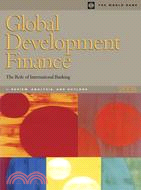
'Global Development Finance' - the World Bank's annual report on the external financing of developing countries - provides monitoring and analysis of development finance, identifying key emerging tren
A variety of analytic methods are described and evaluated through such case studies as winners and losers from trade reform in Morocco, the social impact of the Indonesian financial crisis, poverty al
Data relating to environmental concerns and opportunities has been abstracted from World Development Indicators to provide a handy pocket reference. Agriculture, energy, emissions and pollution, and w
Although this works well as a compendium of knowledge about standards of communication about development, it also makes the case for its systematic adoption in research, policies and practices. One of
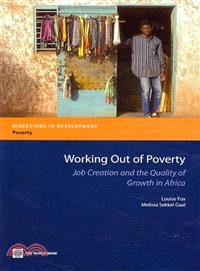
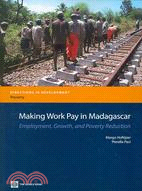
Poor people derive most of their income from work. However, there is insufficient understanding of the role of employment and earnings as a link between growth and poverty reduction, especially in low
The World Bank has commissioned this report on global regulatory institutions, and how "Doing Business" (DB) indicators are used to measure the role these institutions have in stimulating business gro
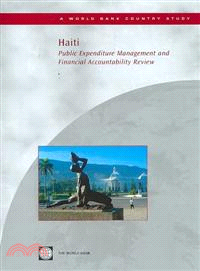
This book summarizes the key findings and policy recommendations of a comprehensive diagnosis of a Public Expenditure Management and Financial Accountability Review (PEMFAR). The PEMFAR is an exercise
The Annual World Bank Conference on Development Economics (ABCDE) brings together the world's leading scholars and development practitioners for a lively debate on state-of-the-art thinking in develop
Governments in Africa and their stakeholders have been disappointed with the number of wage and salary jobs that have been created over the last decade or more. Even in countries that experienced both
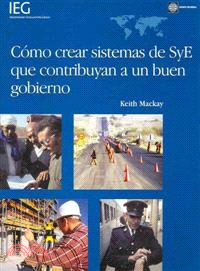
A growing number of governments are working to improve their performance by creating systems to measure and help them understand their performance. These systems for monitoring and evaluation (M and E
'Global Development Finance'—the World Bank's annual report on the external financing of developing countries—provides monitoring and analysis of development finance, identifying key emerging trends a
Although necessary and often first rate, technocratic solutions alone have been ineffective in delivering real change or lasting results in governance reforms. This is primarily because reform program
Poor people derive most of their income from work. However, there is insufficient understanding of the role of employment and earnings as a link between growth and poverty reduction, especially in low
Poor people derive most of their income from work. However, there is insufficient understanding of the role of employment and earnings as a link between growth and poverty reduction, especially in low